How big are they?

I’ve added these dimensioned drawings to all of the miniatures in my shop, because there can be a lot of confusion about scale when it comes to miniatures.

D&D is nominally 28mm scale, but what does that mean when it comes to miniature gnomes? The grid for D&D is 1″ squares, and each square represents 5′ (60 inches). So the actual scale is 1:60.

A 6′ tall (72″) human would be 1.2 inches (30.5mm) at this scale. Because of the history of wargaming, some people would measure from the bottom of the foot to the eyeline (ignoring hats and helmets) and see that is was around 28mm, while others might measure the whole figure and see it around 32mm…However, the true scale for the game is still 1:60
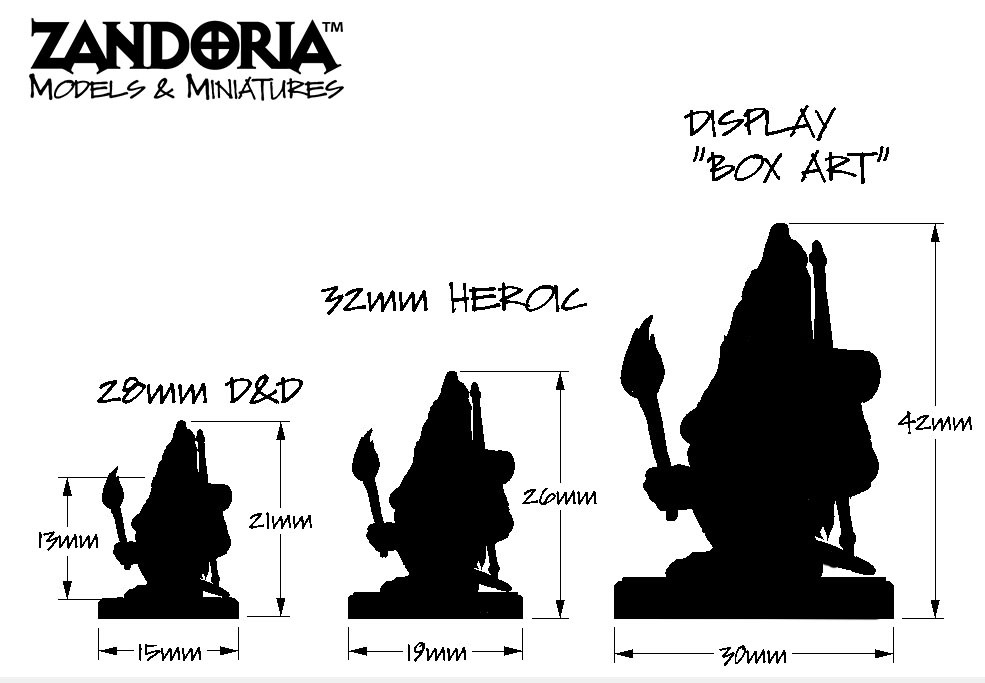
A Gnome is only around 3′ tall in D&D, and a Gonk Gnome maybe 2′-3′ which will mean that they are a lot shorter than a human. At 1:60 scale, a gnome might stand between 15-18mm tall (not including his cap)! A Gonk would be a little shorter, about 12-15mm without a cap.

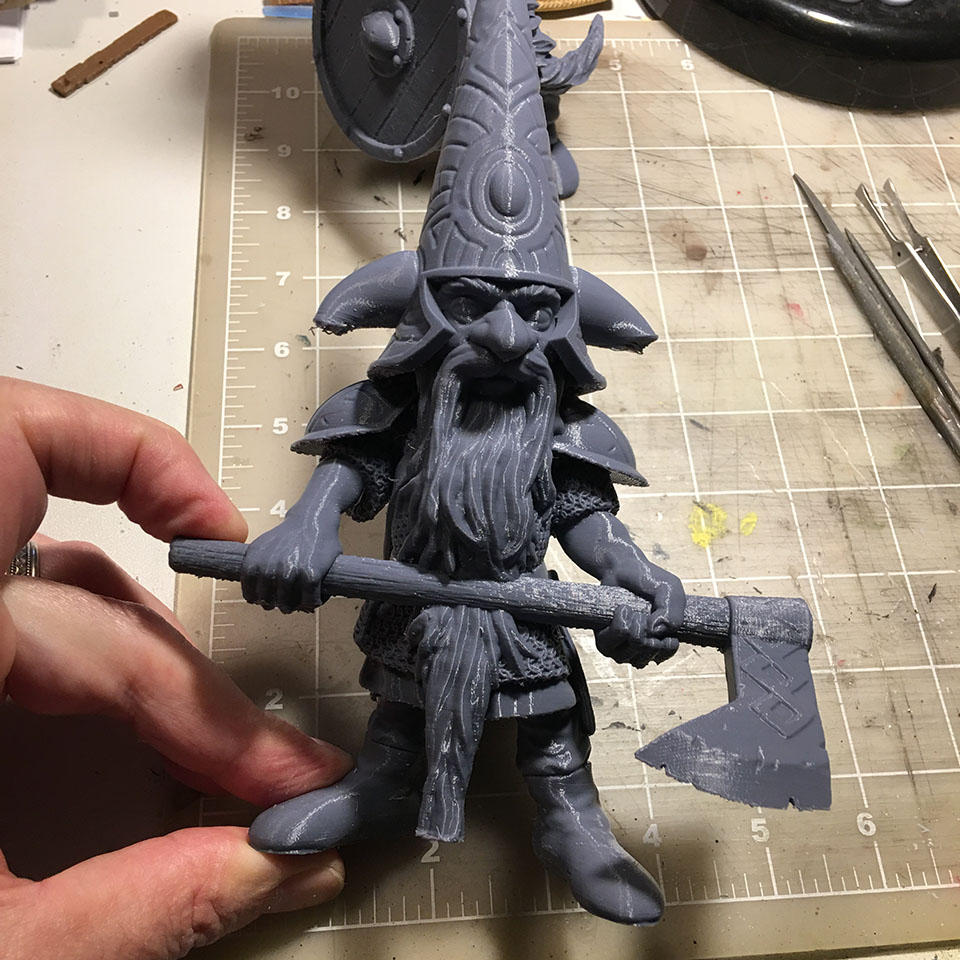
Now what gets confusing is the “Scale creep” where the miniatures started getting bigger, and called “28mm Heroic”–which itself is not actually any scale! and then the oversized minis started to be called 32mm scale. And since the advent of 3Dprinting, the sizes of the minis has gotten all over the place!
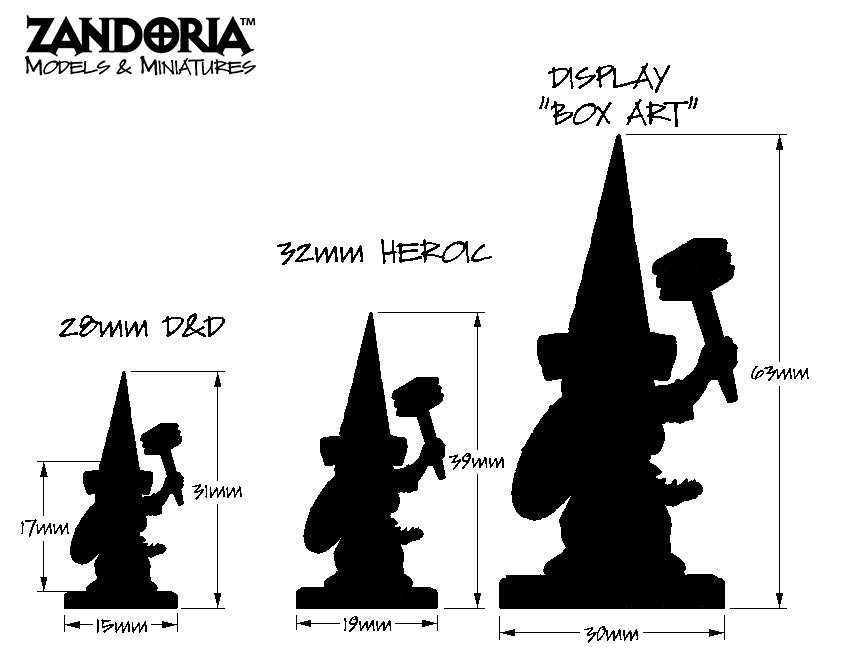
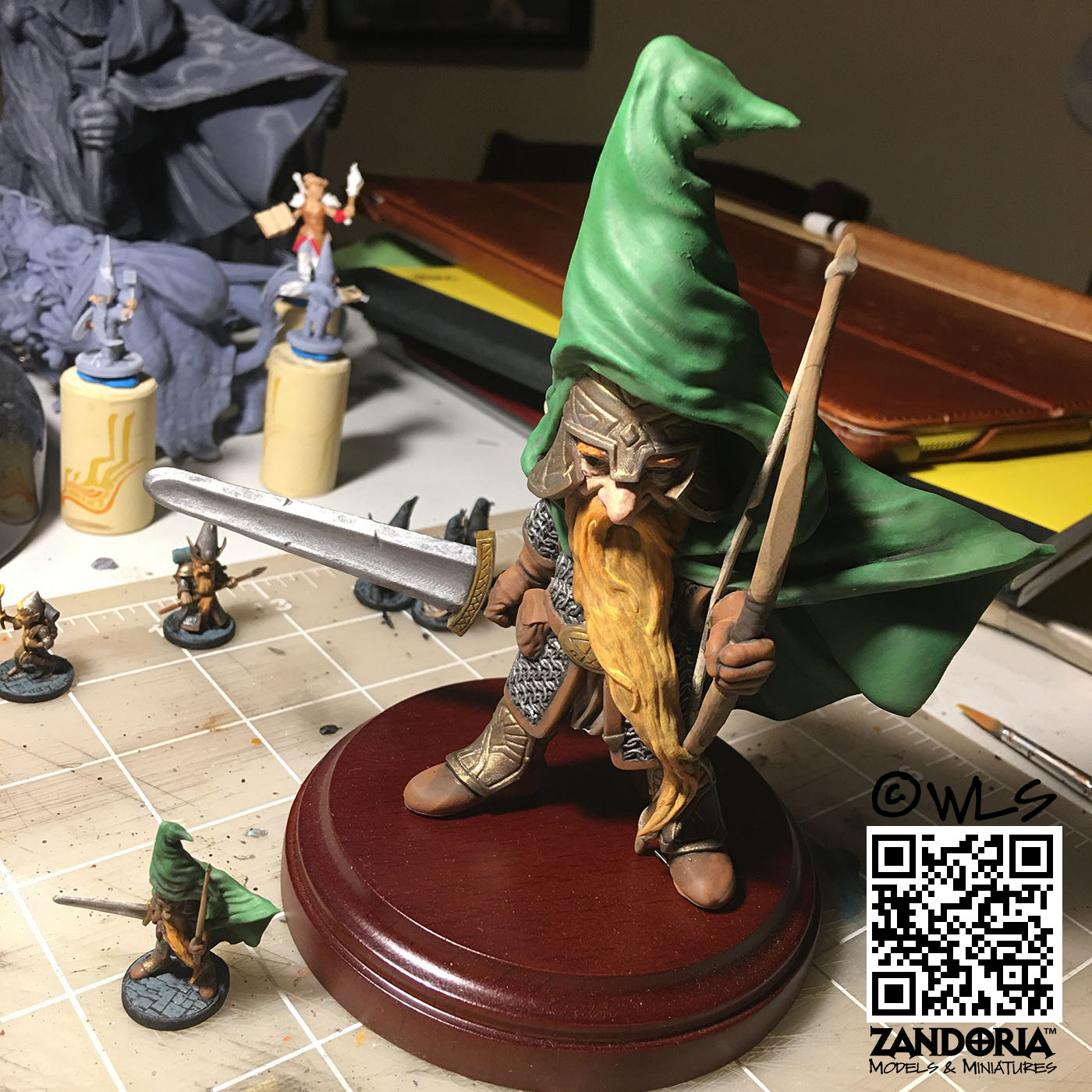
This is the reason for the dimensions in my shop. The 28mm D&D is the default, which is true to 1:60 scale to match the grid. I am also selling the 32mm Heroic size (which is 125% of the original), and a Display/”Box Art” size which is 200% of the original–This is for miniature painters, and collectors who want to be able to see more details, rather than for playing the game.
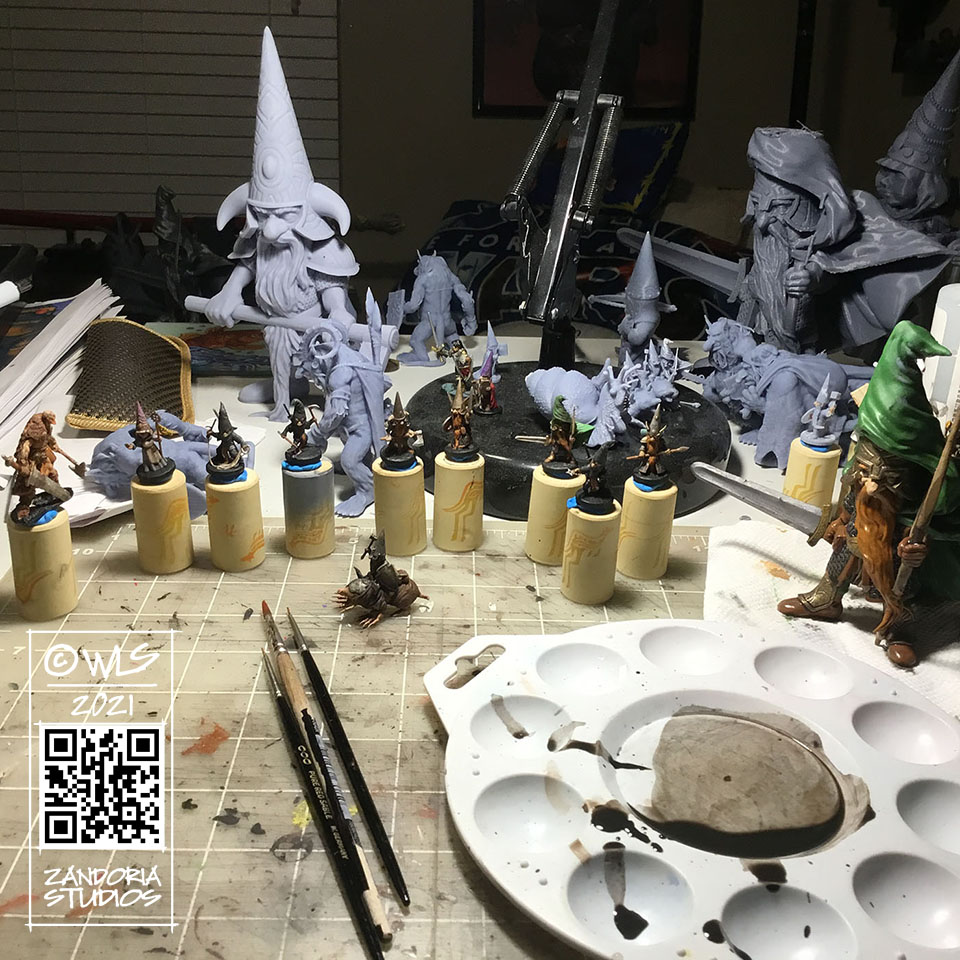
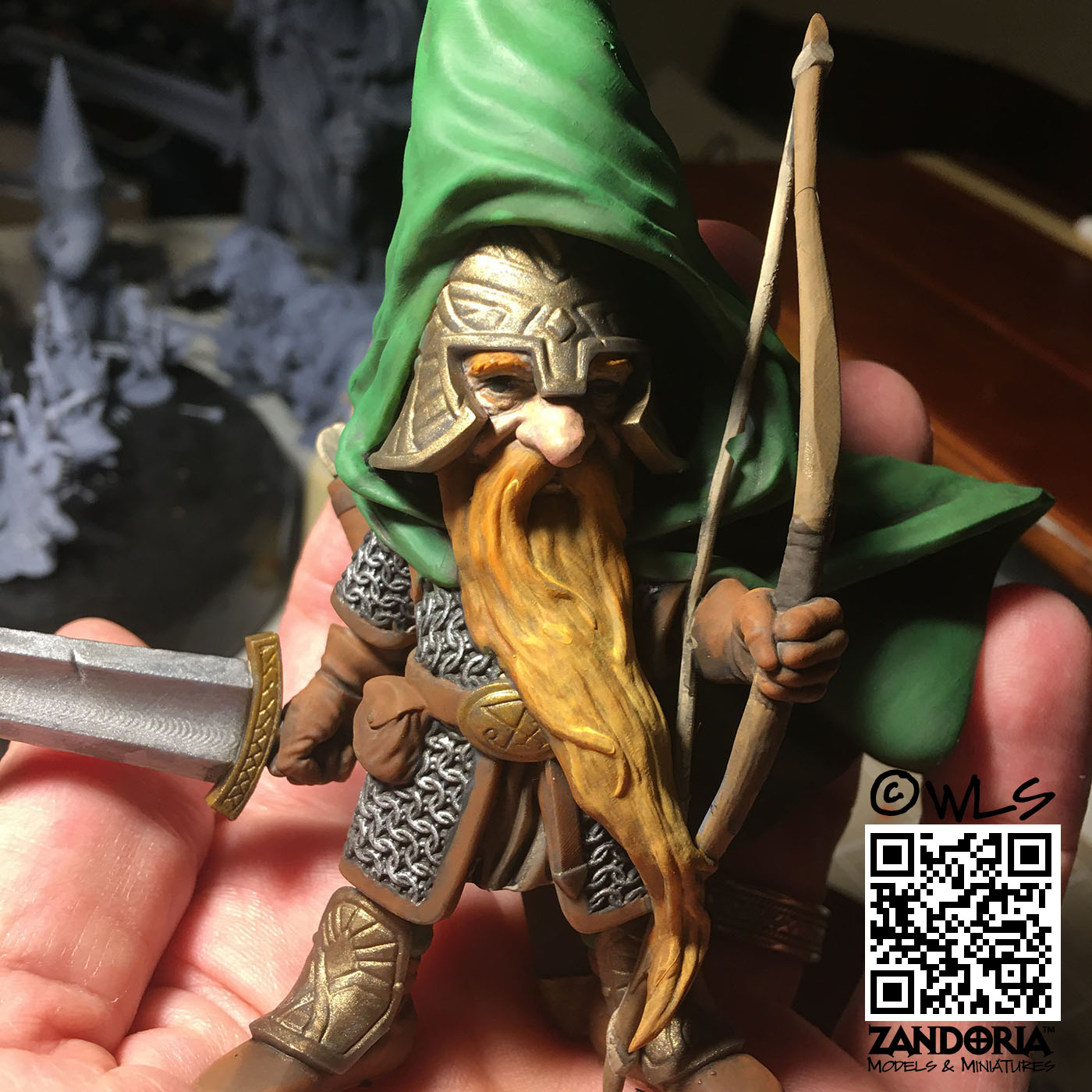
Painting 3Dprinted Miniatures

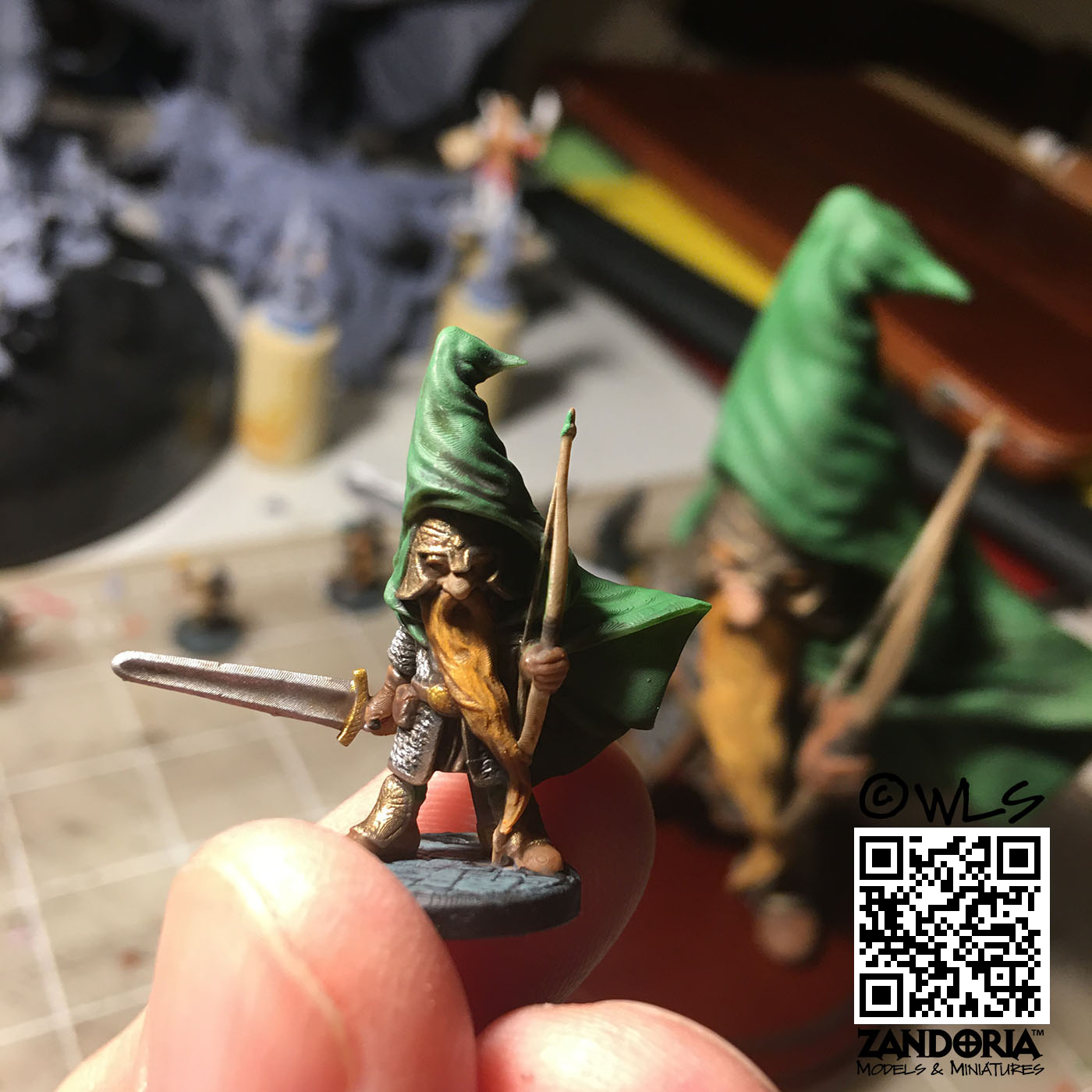
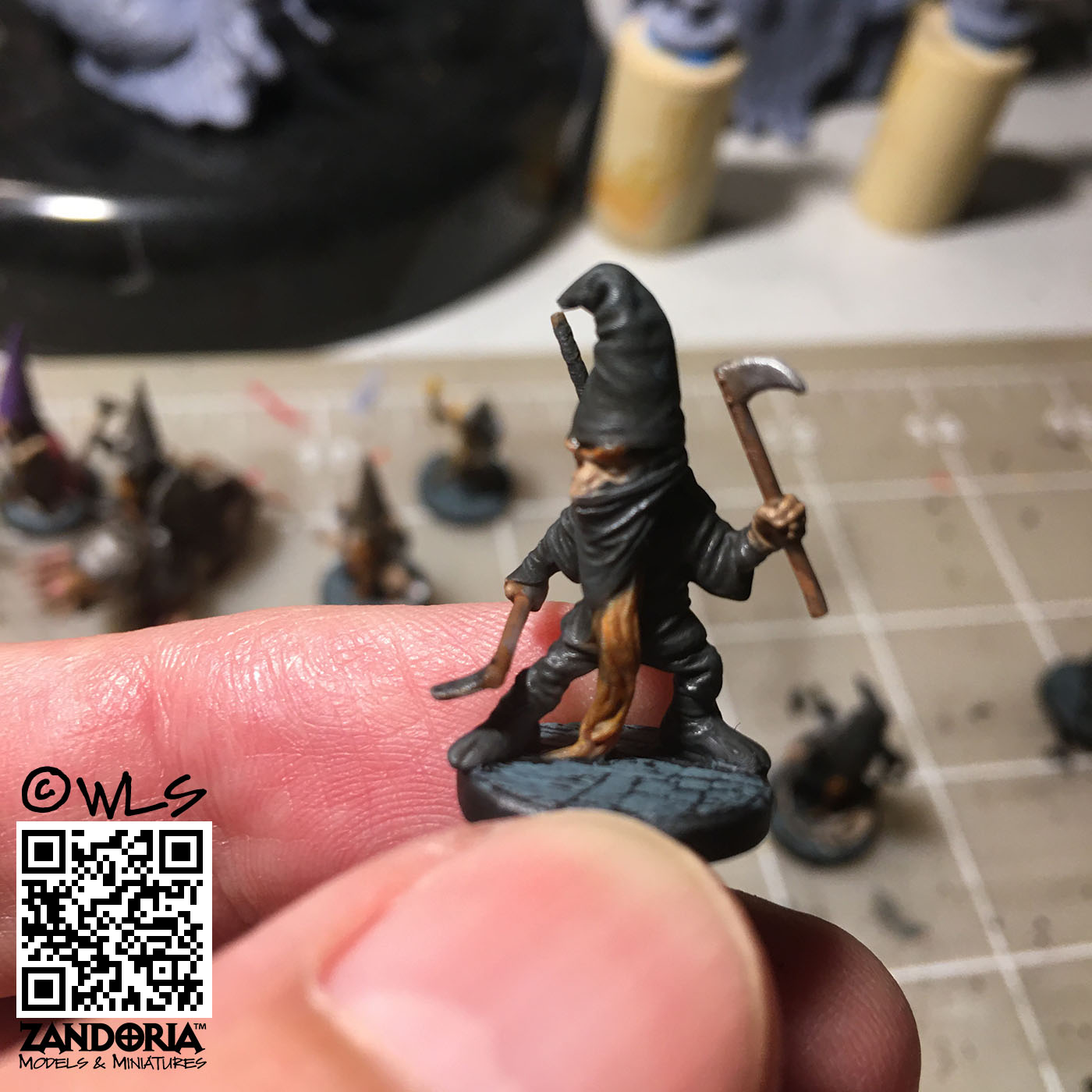
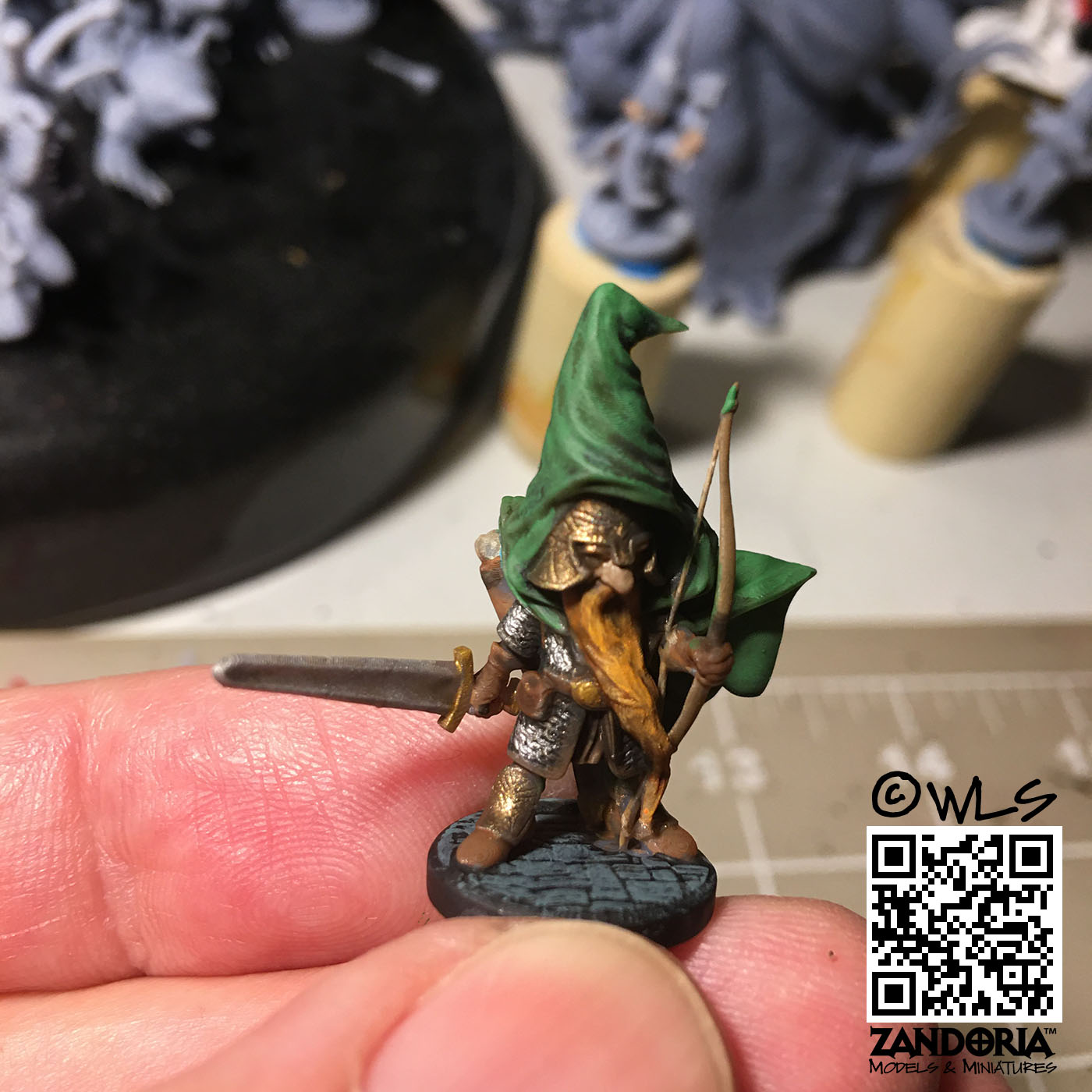
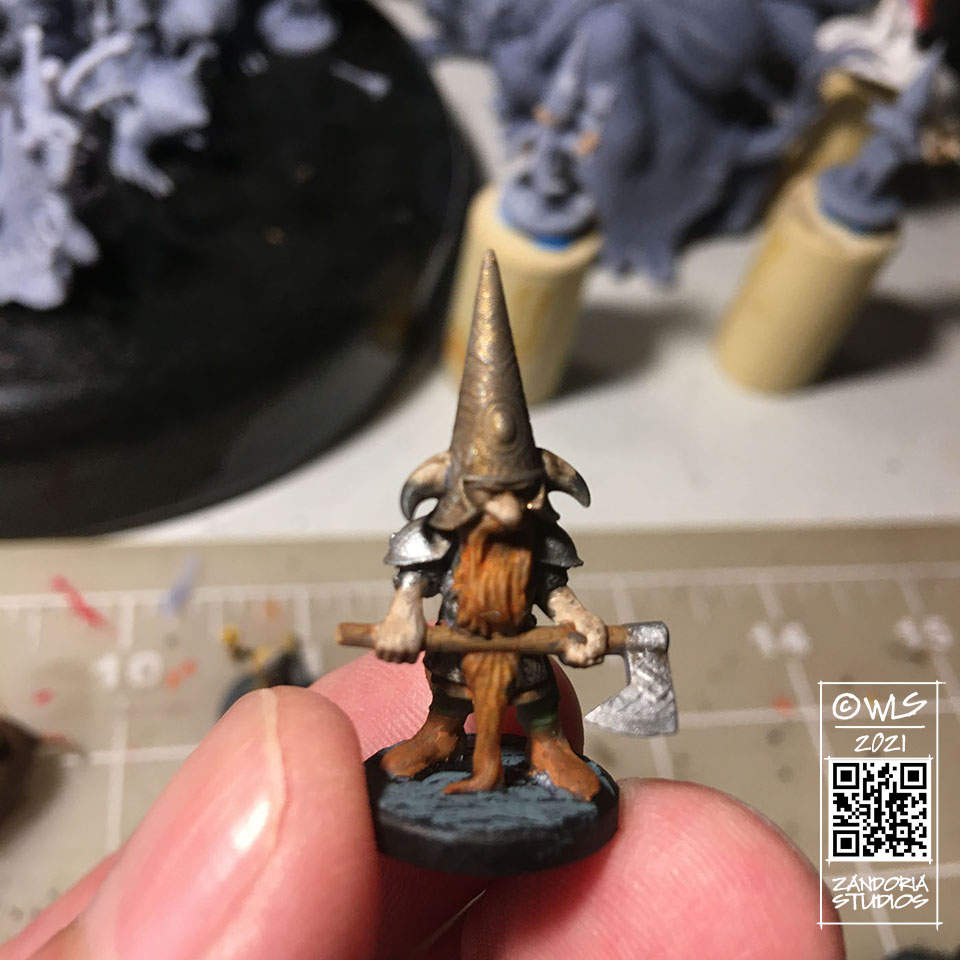
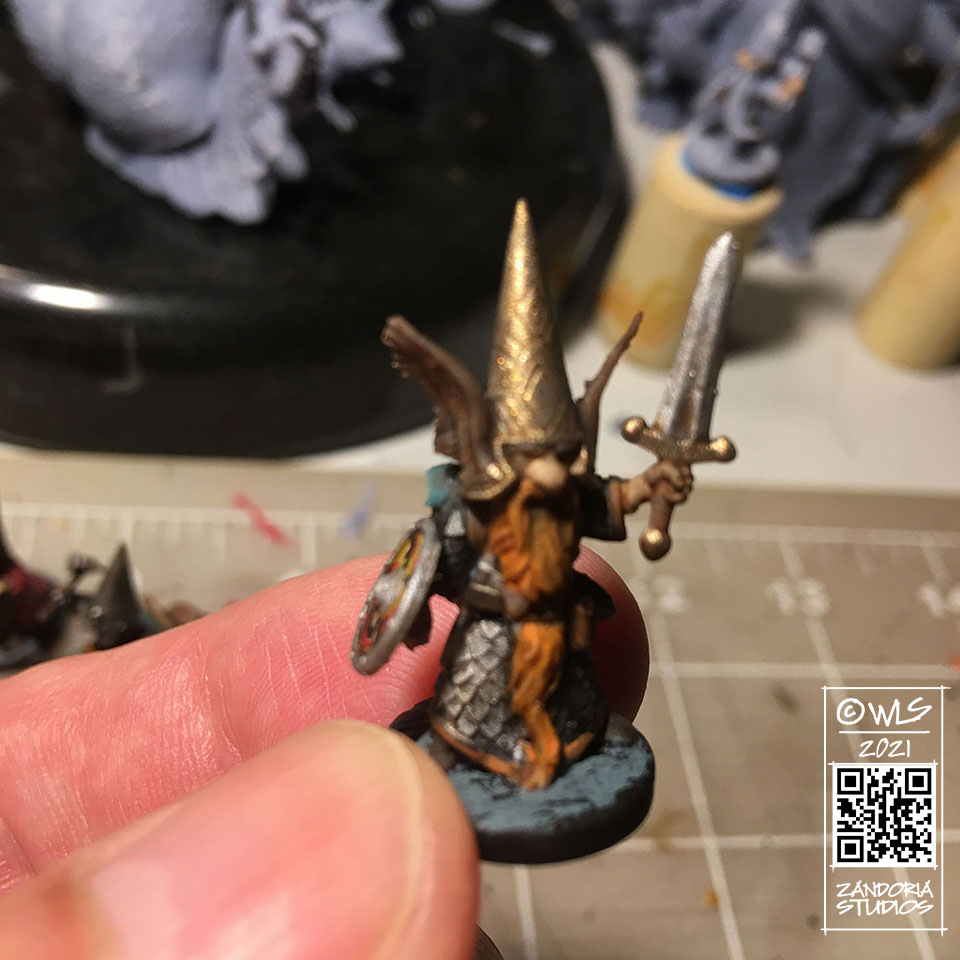
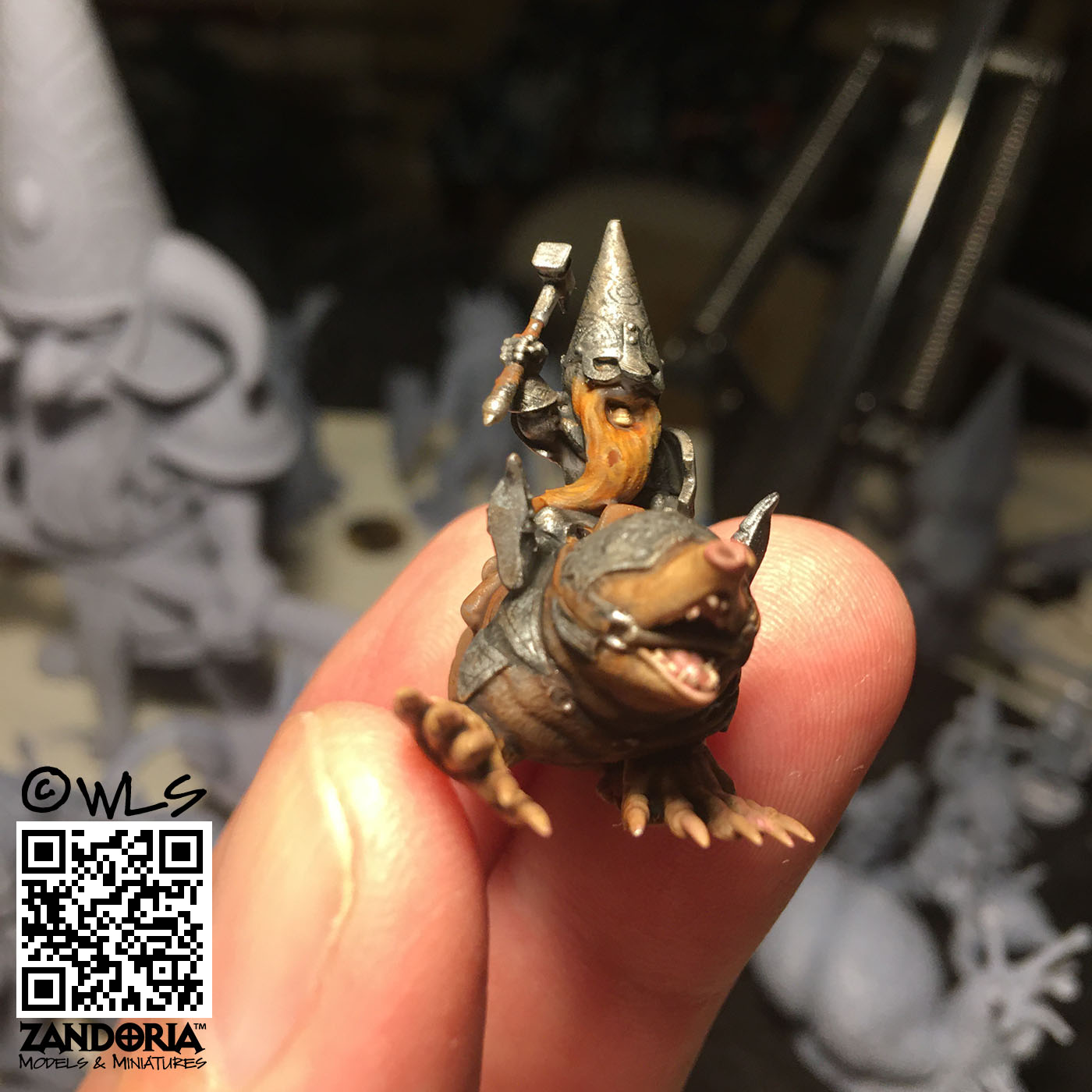
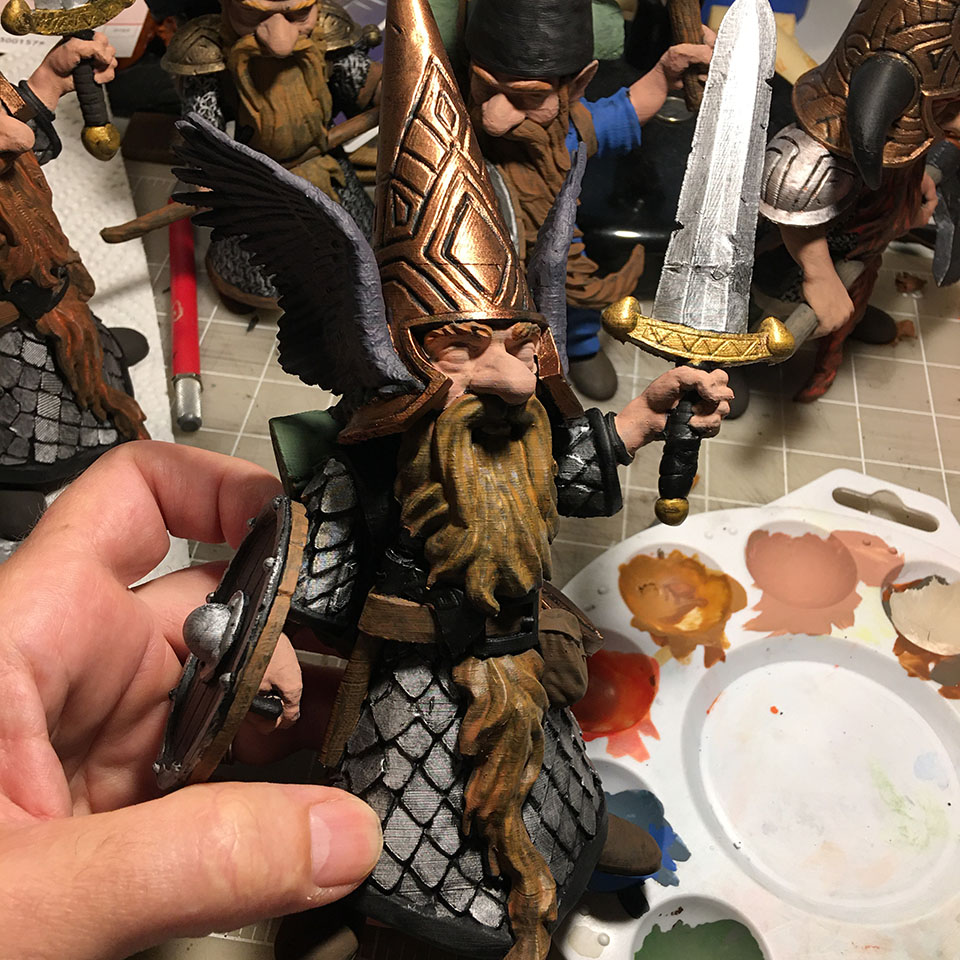
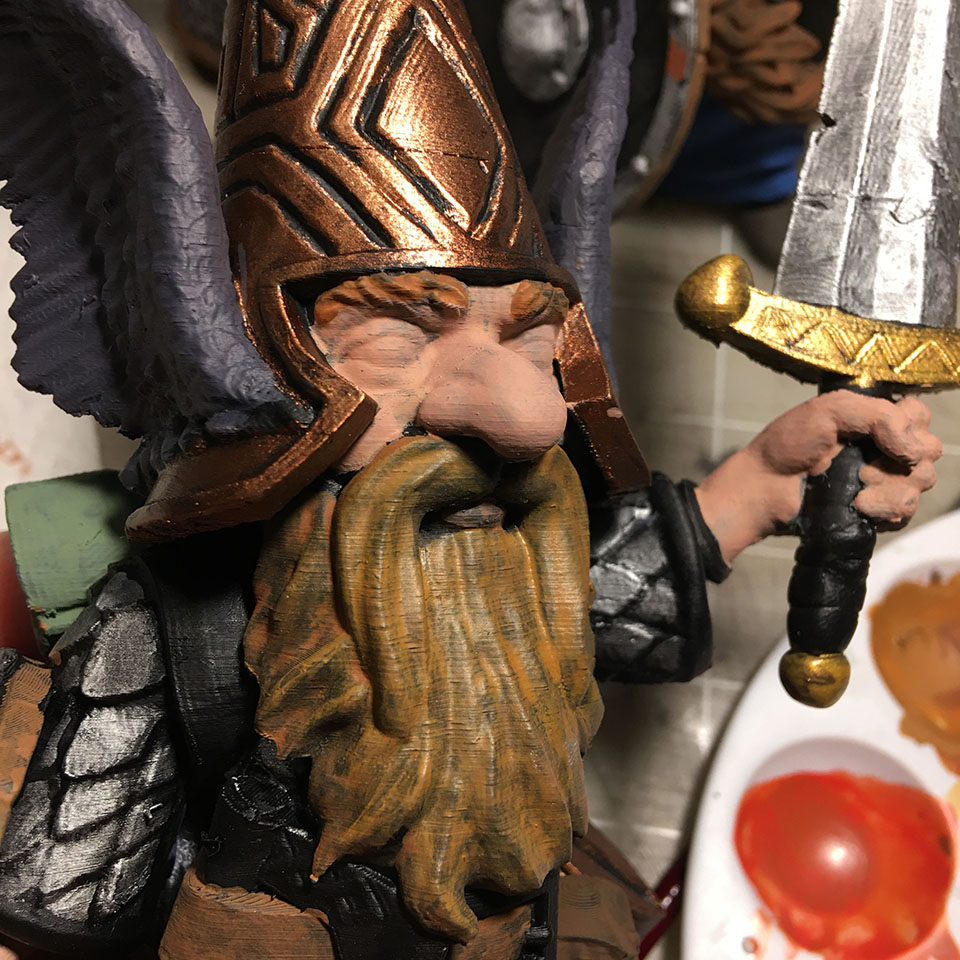
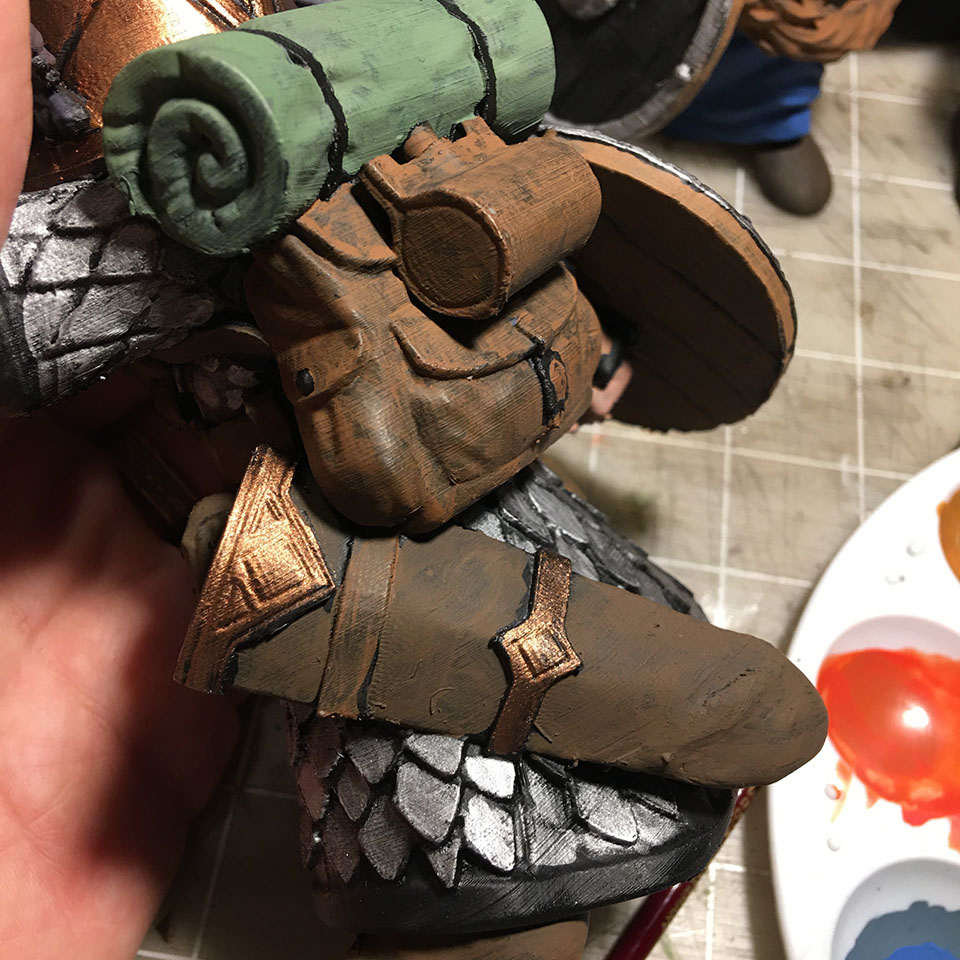
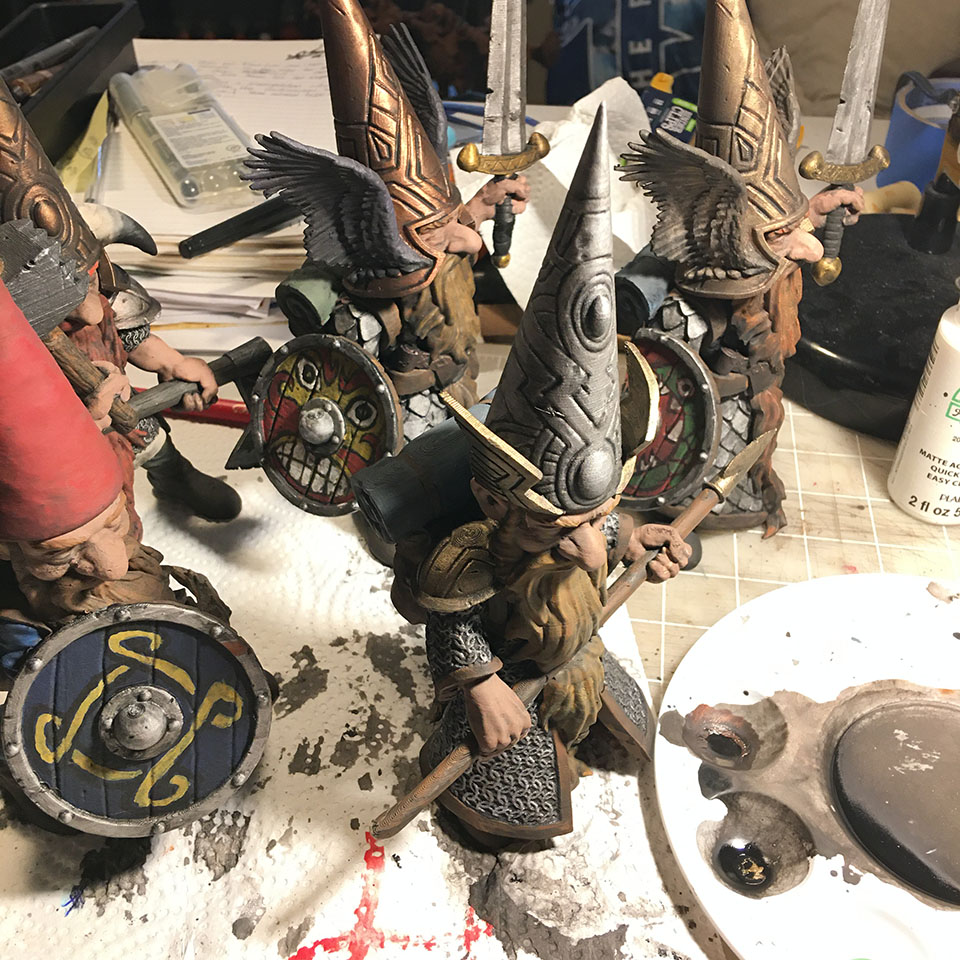
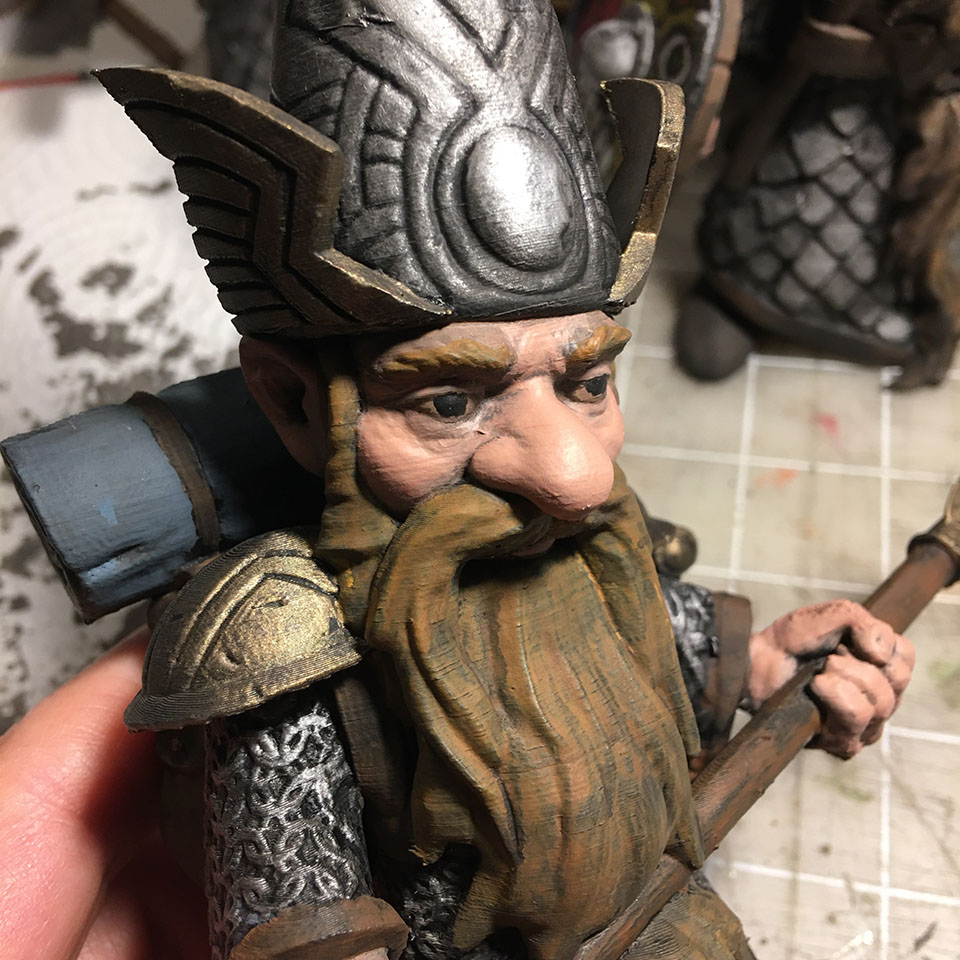
I finally sat down and painted a group of my Gnome miniatures. One of the things that I was pleasantly surprised about, was how well the micro details showed up even at 28mm scale. I put in a level of detail that enables you to print my designs at different scales and have them still look good, whether as a tabletop miniature or as a figurine.

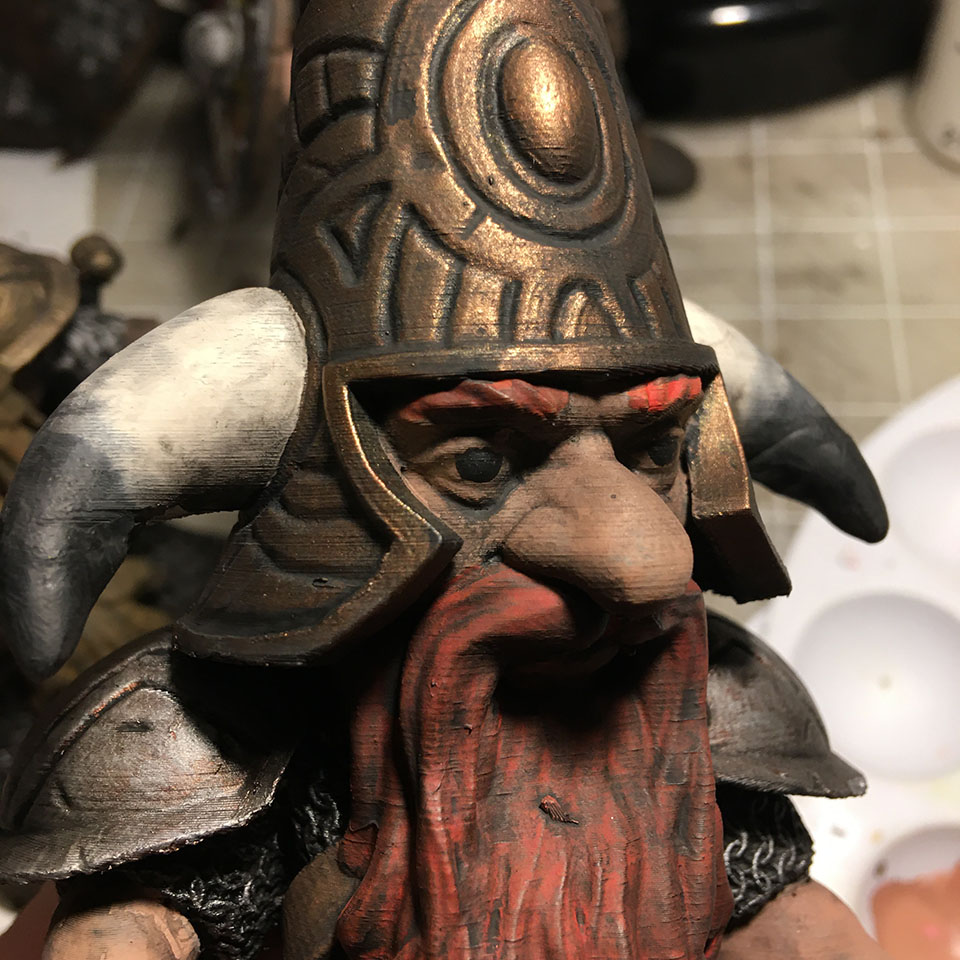
I am not a professional miniature painter, but I was very happy with how they turned out. I used craft acrylics and a wash to bring out the details (as described in a previous post about painting Guardin’ Gnomes). The wash brought out details that I couldn’t even see when holding the miniatures! Similar sized miniatures that are injection molded cannot hold the same level of detail… These are printed on a SparkmakerFHD which is pretty low resolution compared to newer printers, so I can’t wait to see what they will look like on a 4K printer!

If you would like to print your own, they are available individually on Cults3D or you can get access to ALL of my models when you join my Patreon!

Painting 3Dprinted Gnomes

I had a few comments about my paint job on these gnomes, so I thought I would post some step by step pictures of the process, in case that would be helpful to you as you paint your own…

If you have any printing errors, the first thing you will do is fix them if you can. Sometimes you might have partial print failure (if a support gets knocked over) and it could leave you with a missing portion of your model. If you have something like a layer shift while printing, you can separate with the putty knife and glue it back together. I have even used a wood-burning tool to weld PLA pieces together or smooth out a rough print!

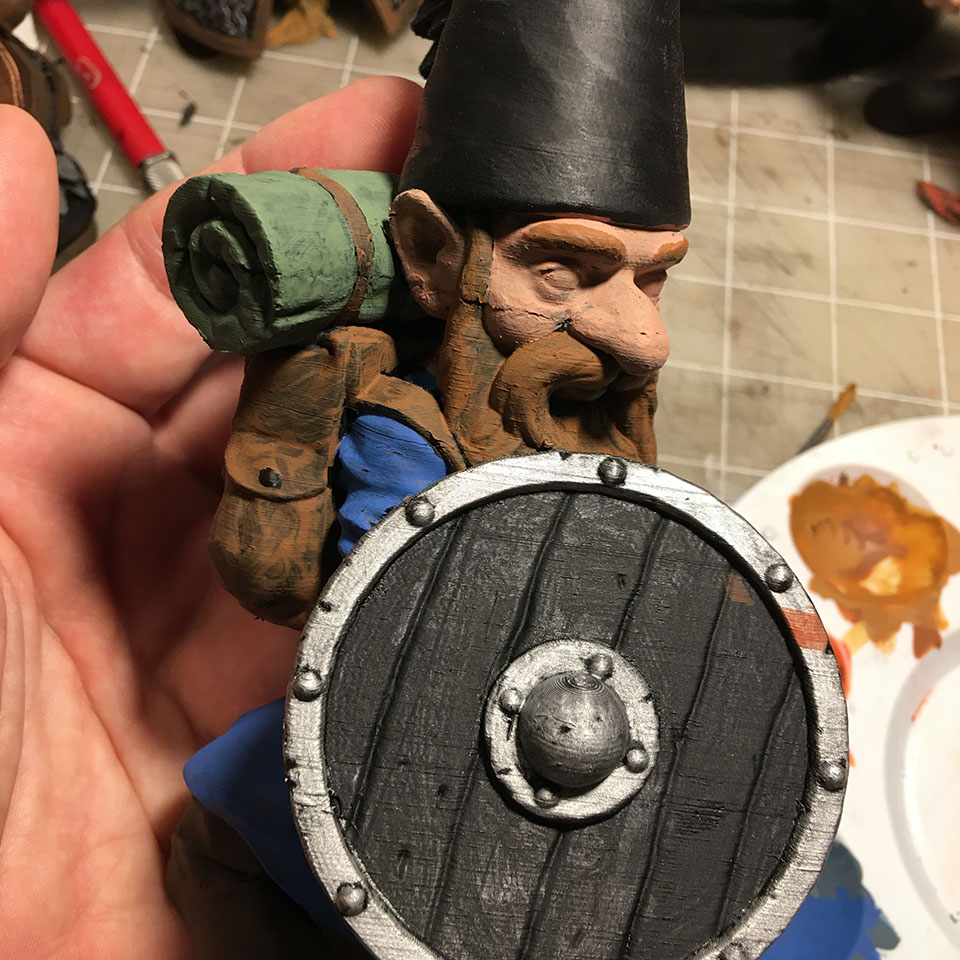
This missing portion of the shield looks like splintered wood!

Sometimes rather than fix it, it might work even with the print failure–This Gnome had a support fail, which left a portion of the shield missing. Rather than try to fix it, I thought that it looked like it could be battle damage, and decided to just go with it!

The first step that I did with these gnomes was to apply a surface primer. I don’t know if it is really necessary, but since my silver metals will be drybrushed over it, I decided to use a black primer.

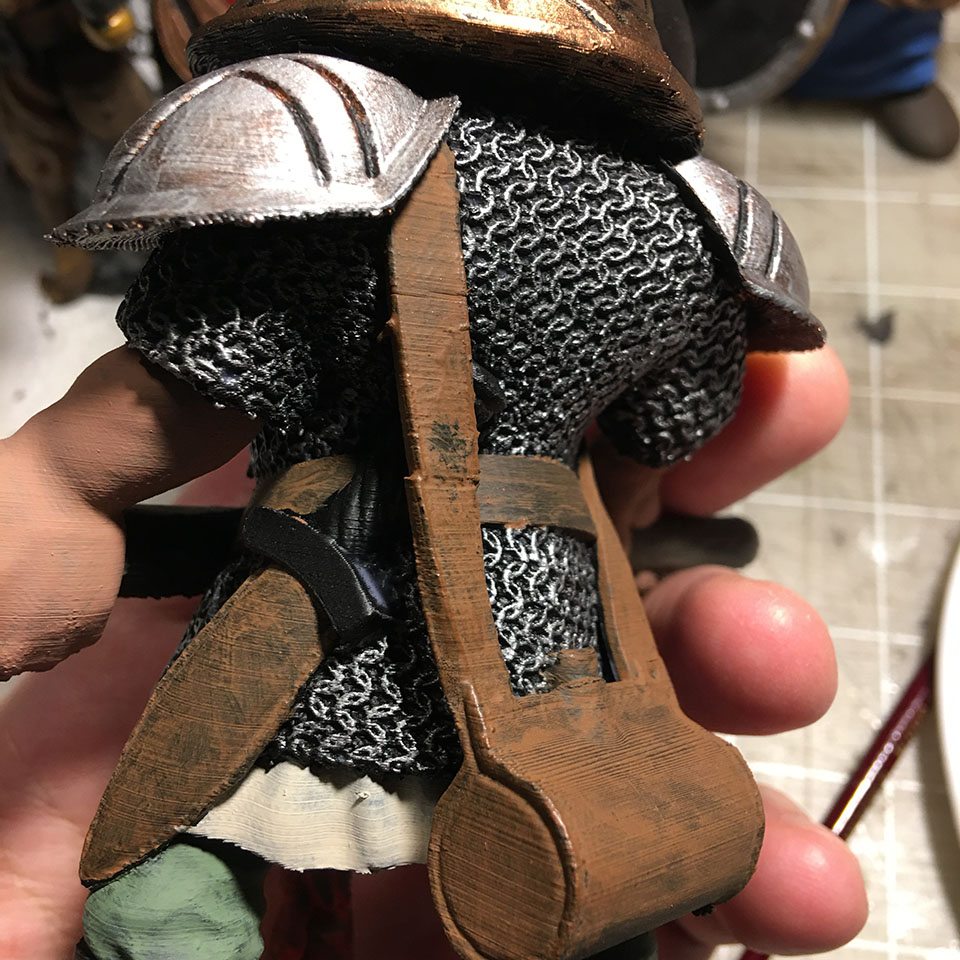
The chainmail texture printed very cleanly! All It needs is a little metalic paint drybrushed across the links. The goal here is to not have much paint on your brush so that it will only hit the raised areas, and leave the black showing in the crevices. This paint is Folk Art metallics–the other colors that I will use are Apple Barrel and Deco Art–It is about 50 cents for a 2 oz bottle at Walmart.

I will go section by section and paint a solid color for each item. Often I will go over an area with two coats to try and get an even coverage.

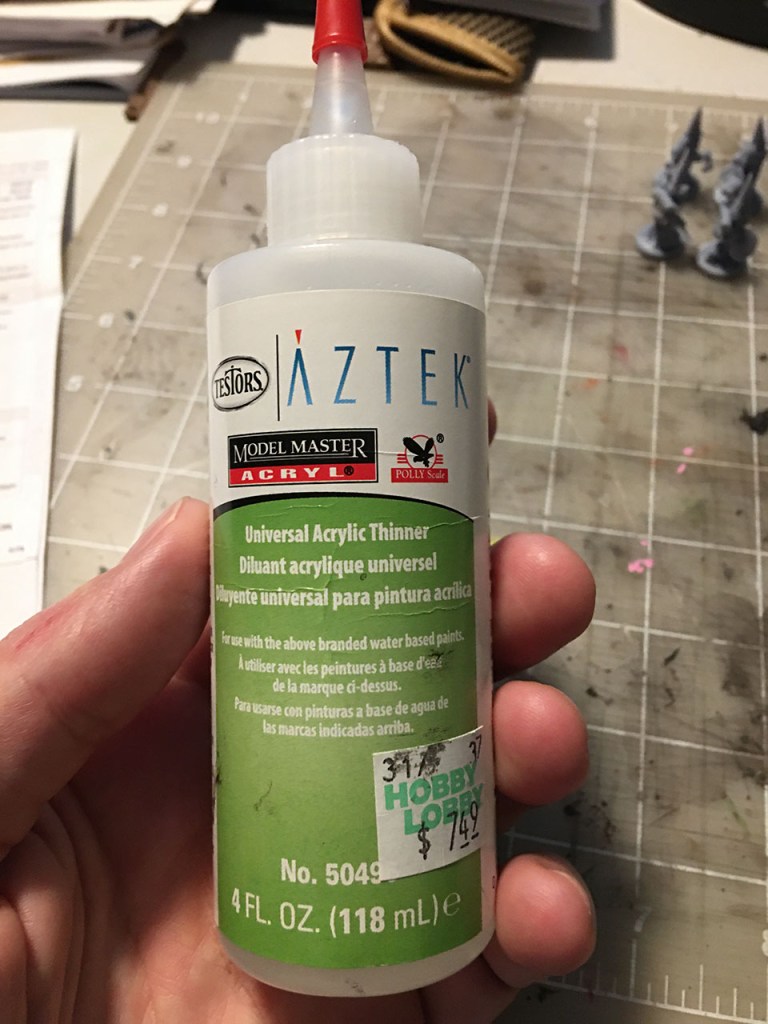
After the base colors are dry, I mix up a wash of black and brown thinned with Acrylic thinner. I think that using acrylic thinner gives a better result than just thinning with water. After the wash was dry, I painted the dark parts of the eyes with a tiny brush.

The next coat of paint is done with the same colors as the first coat. You can also add a couple of drops of glaze medium into your color to thin it, if you want to build up the color. In this step, I want to bring the color and saturation of the original color out, while leaving the recesses dark. Don’t paint over all of the wash that you’ve done, but let your bright color blend into it. You can use wet blending to soften the transition into your recesses. Even the armor and other metallic areas will get a second drybrush coat.

When I’ve finished the second pass of colors, I will go into the details like the eyes, and add the iris color and specular highlights.

details added to the eyes

The last step is to add a gloss varnish to the eyes and lips. And maybe a satin varnish to other shiny areas.

After Painting, your Gnomes are ready for the Garden!

If you would like to 3dprint and paint your own set, you can get the STL files at Cults3D