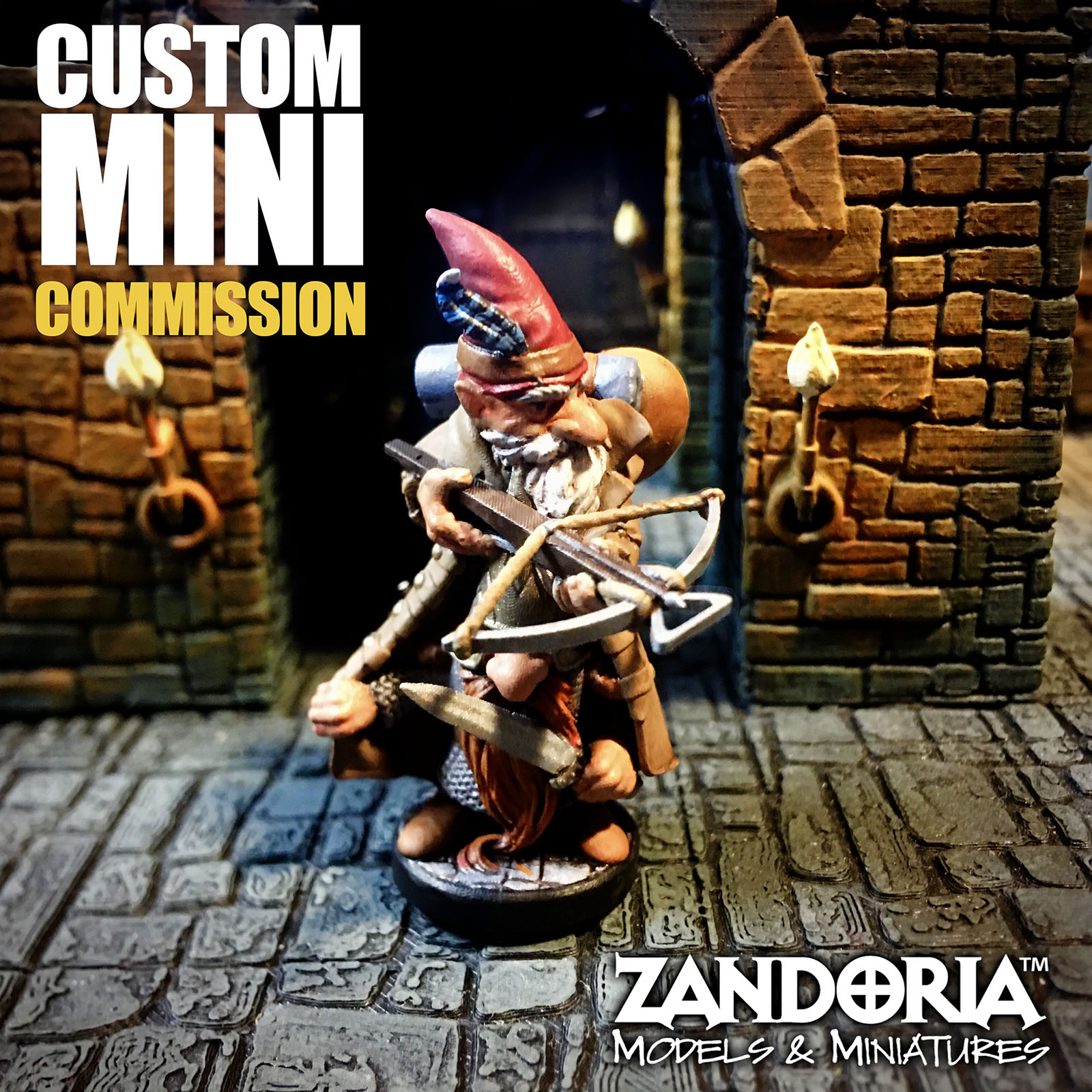
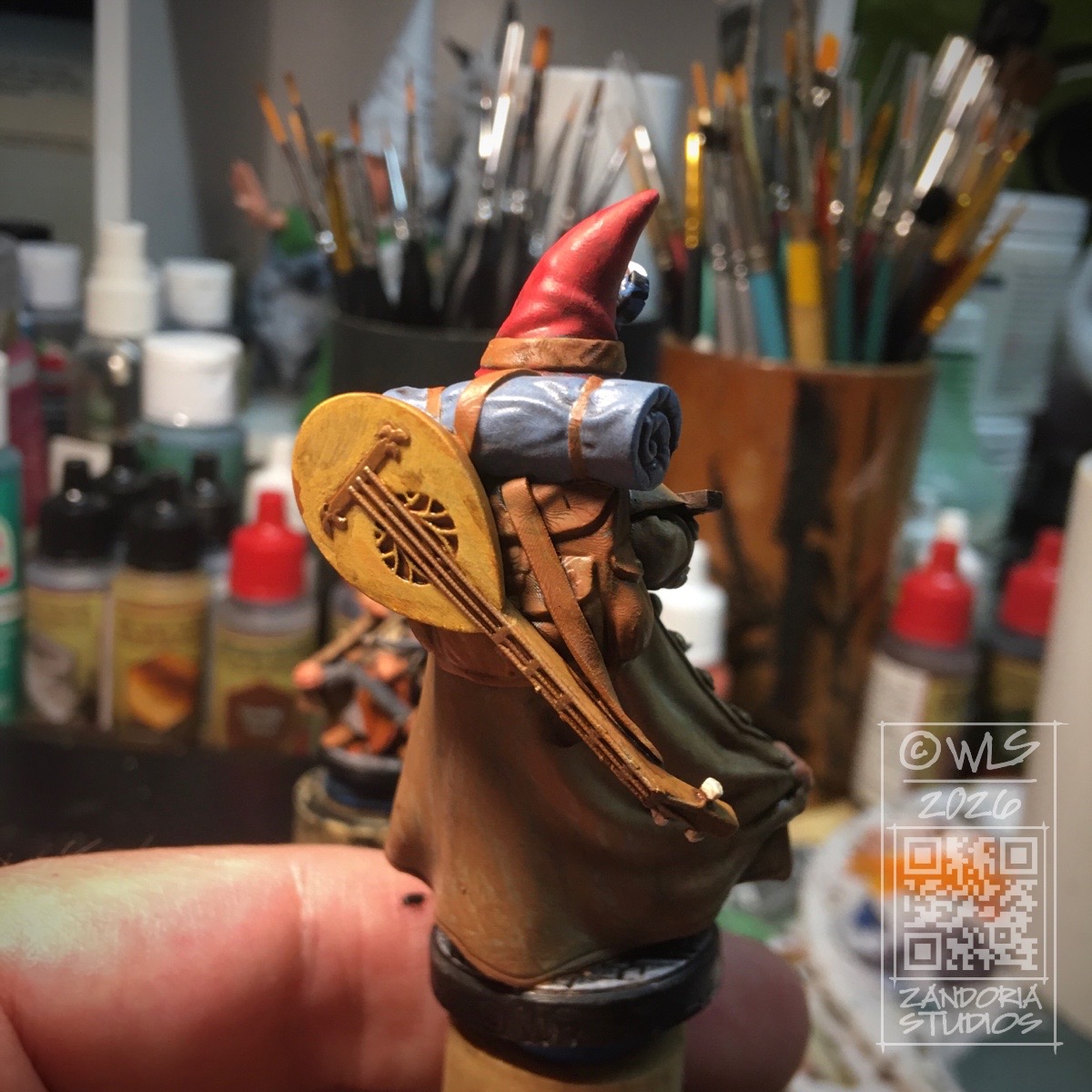
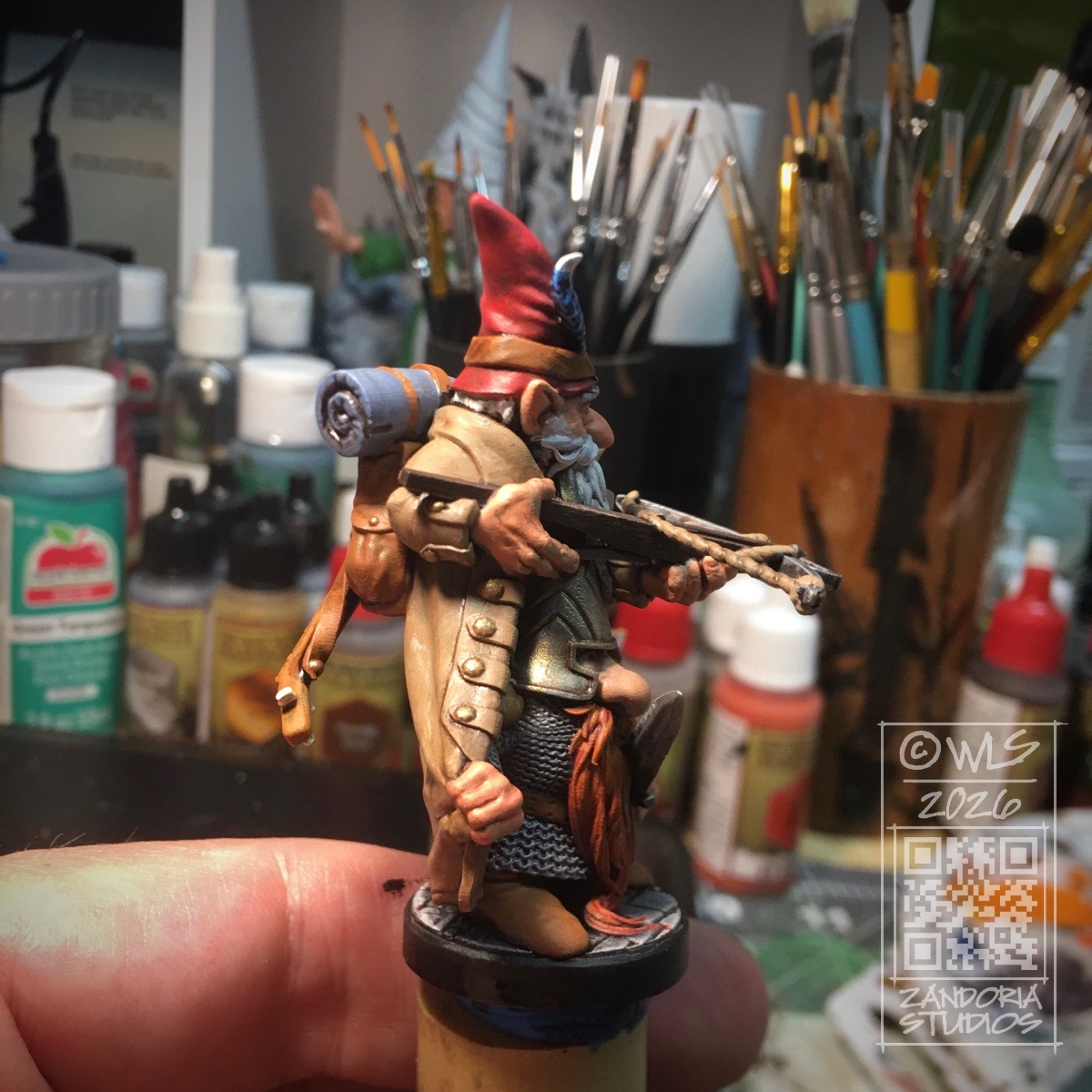
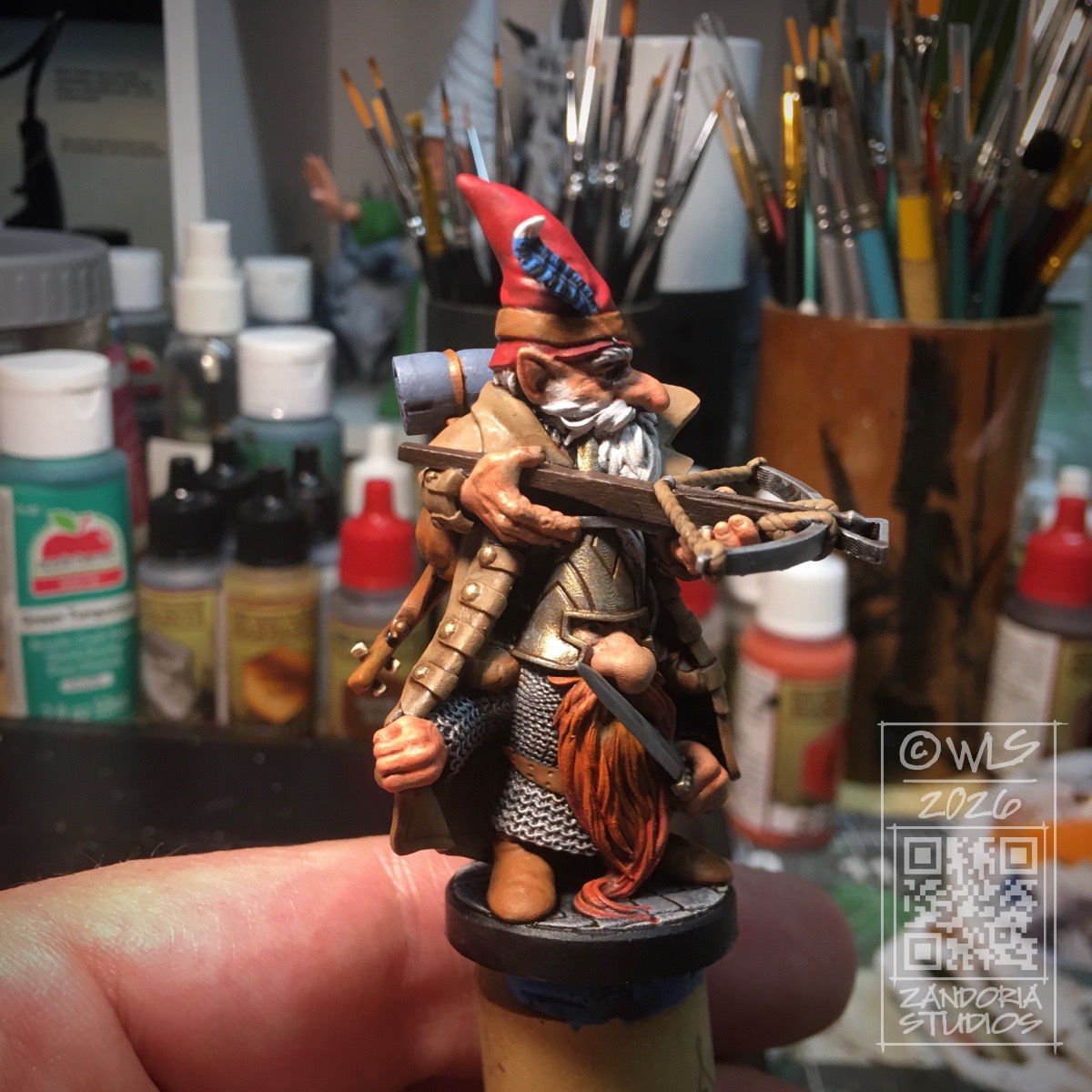
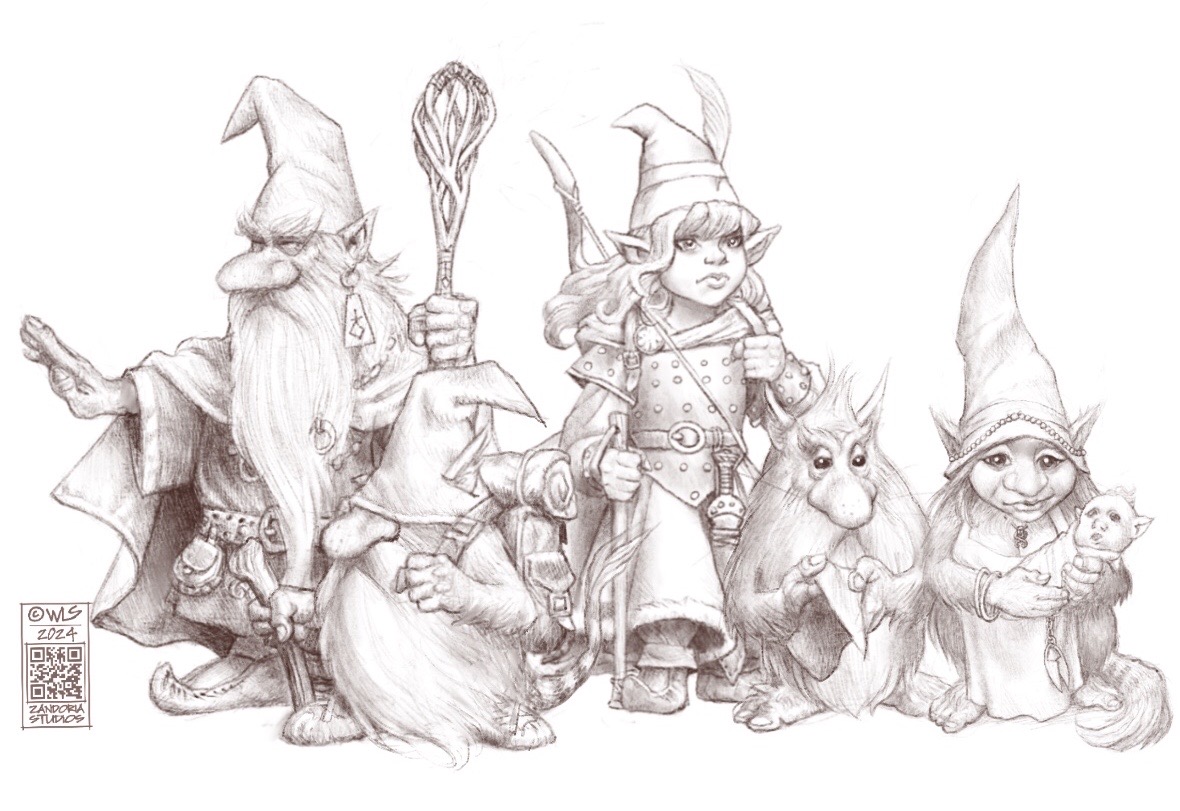
Tired of trying to find a mini to match your favorite character? I will sculpt your character from scratch, and create a one-of-a-kind miniature of your character!
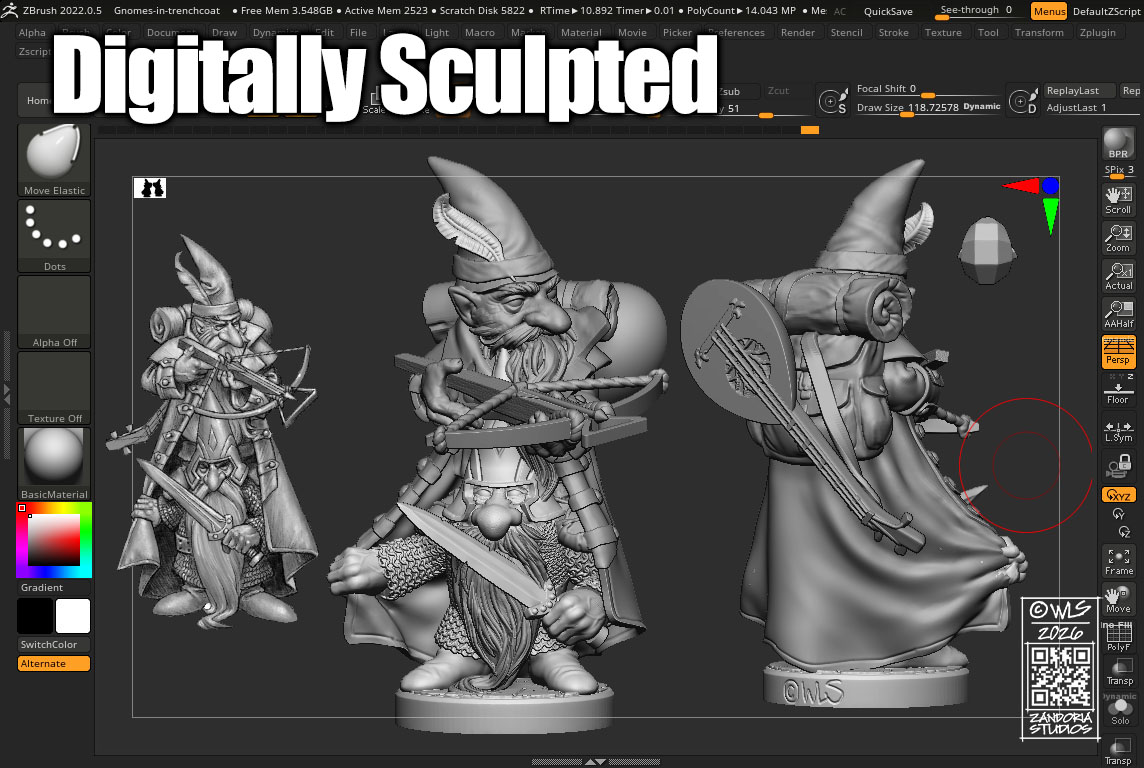
Based on your character description, I will sketch out your mini for approval, and then digitally sculpt to bring your character to life!
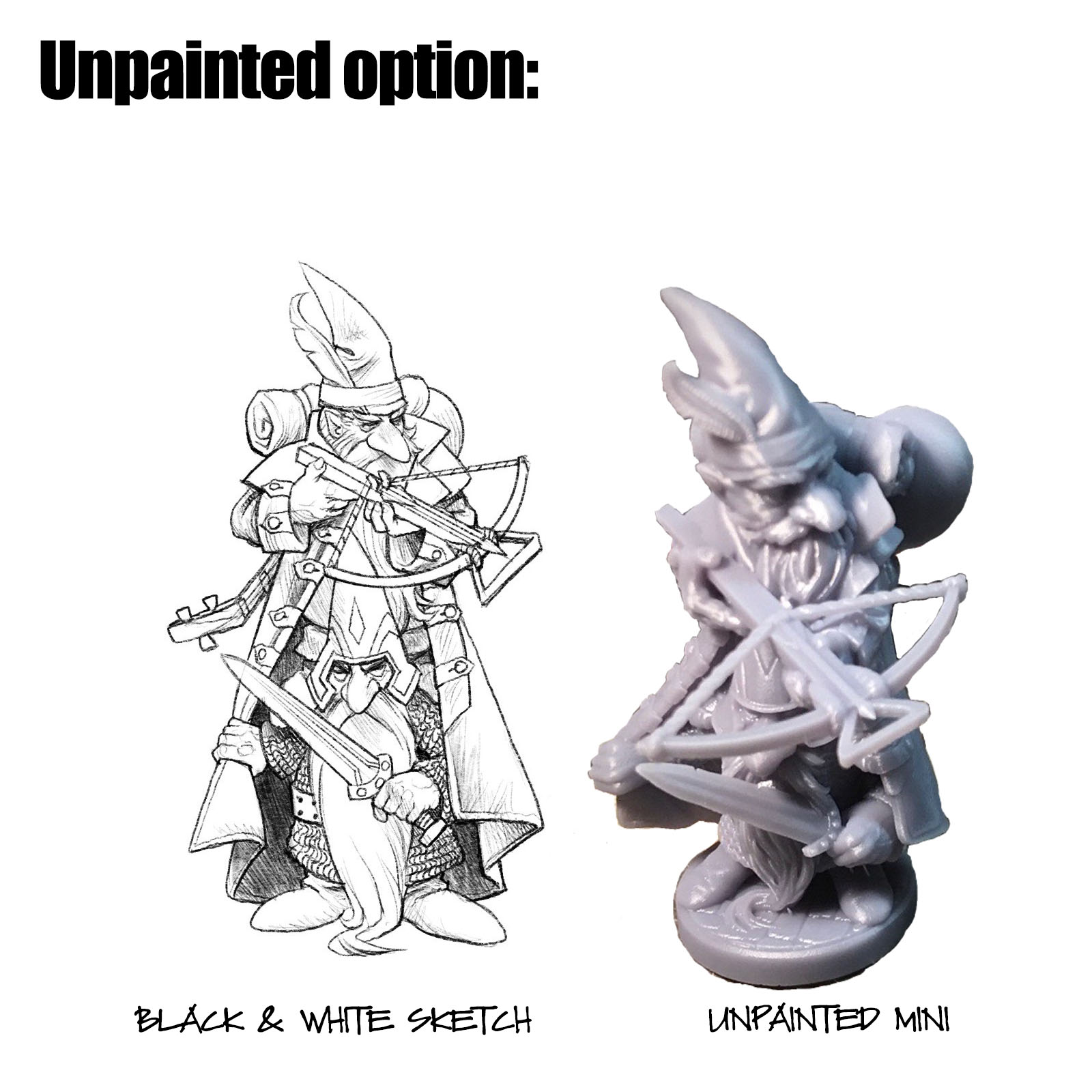
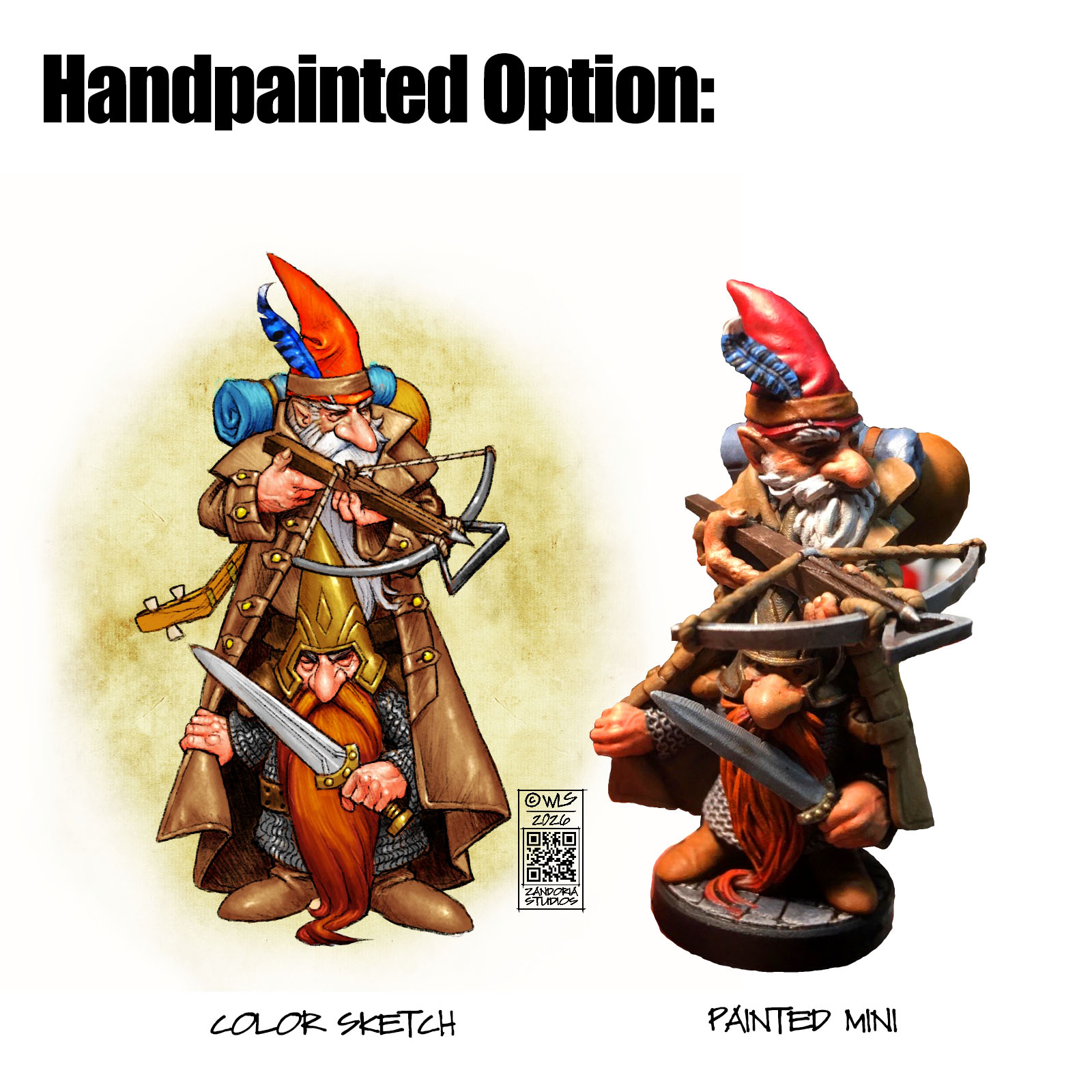
Since I have to draw your character as part of my process, you also get a character sketch as well as a mini!
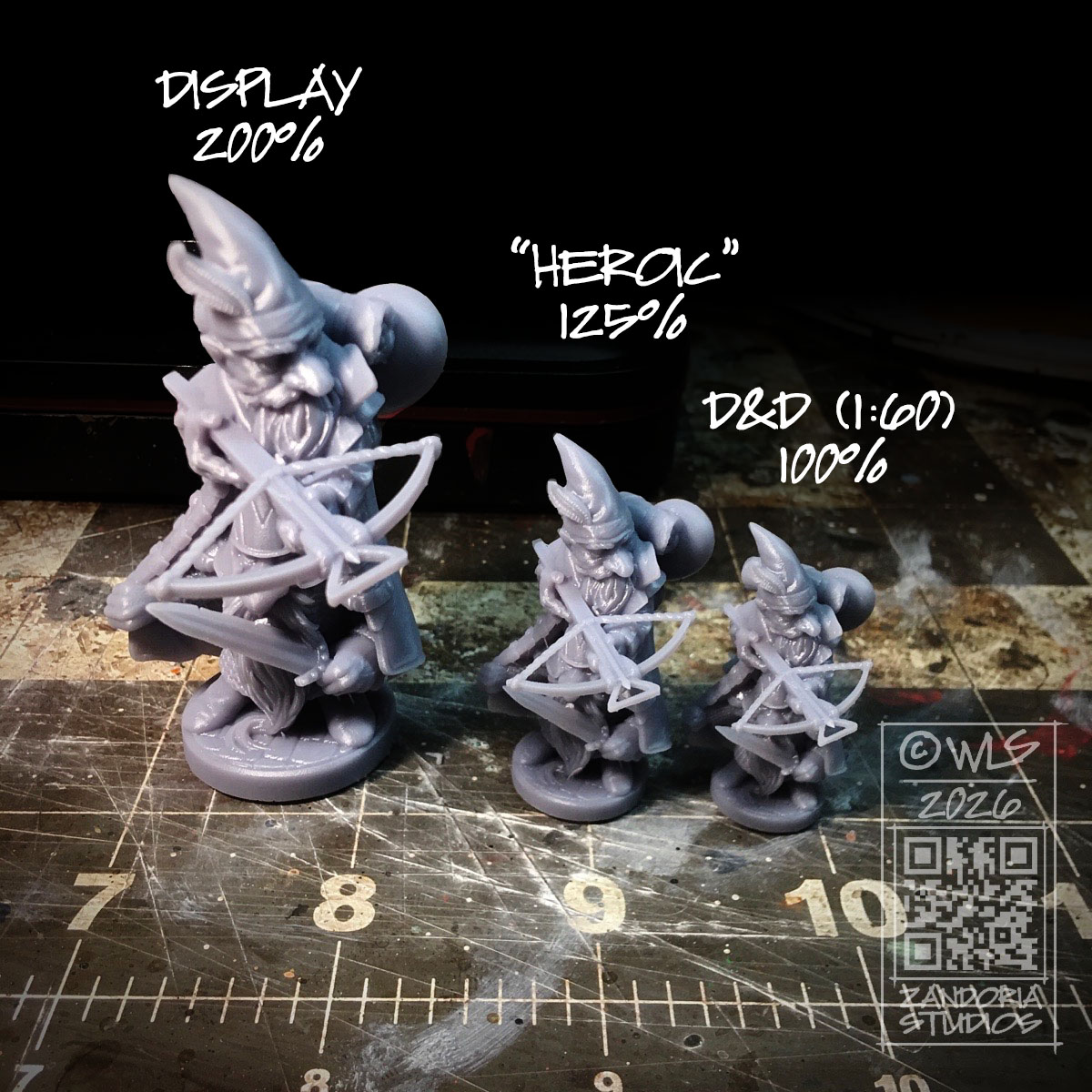
I sculpt the miniatures in 1:60 scale which is perfect for Dungeons & Dragons characters. 1:60 means that 1 inch equals 5 feet–this is often referred to as 28mm scale. Because the sculpture is digital, I can also 3Dprint it at different sizes.
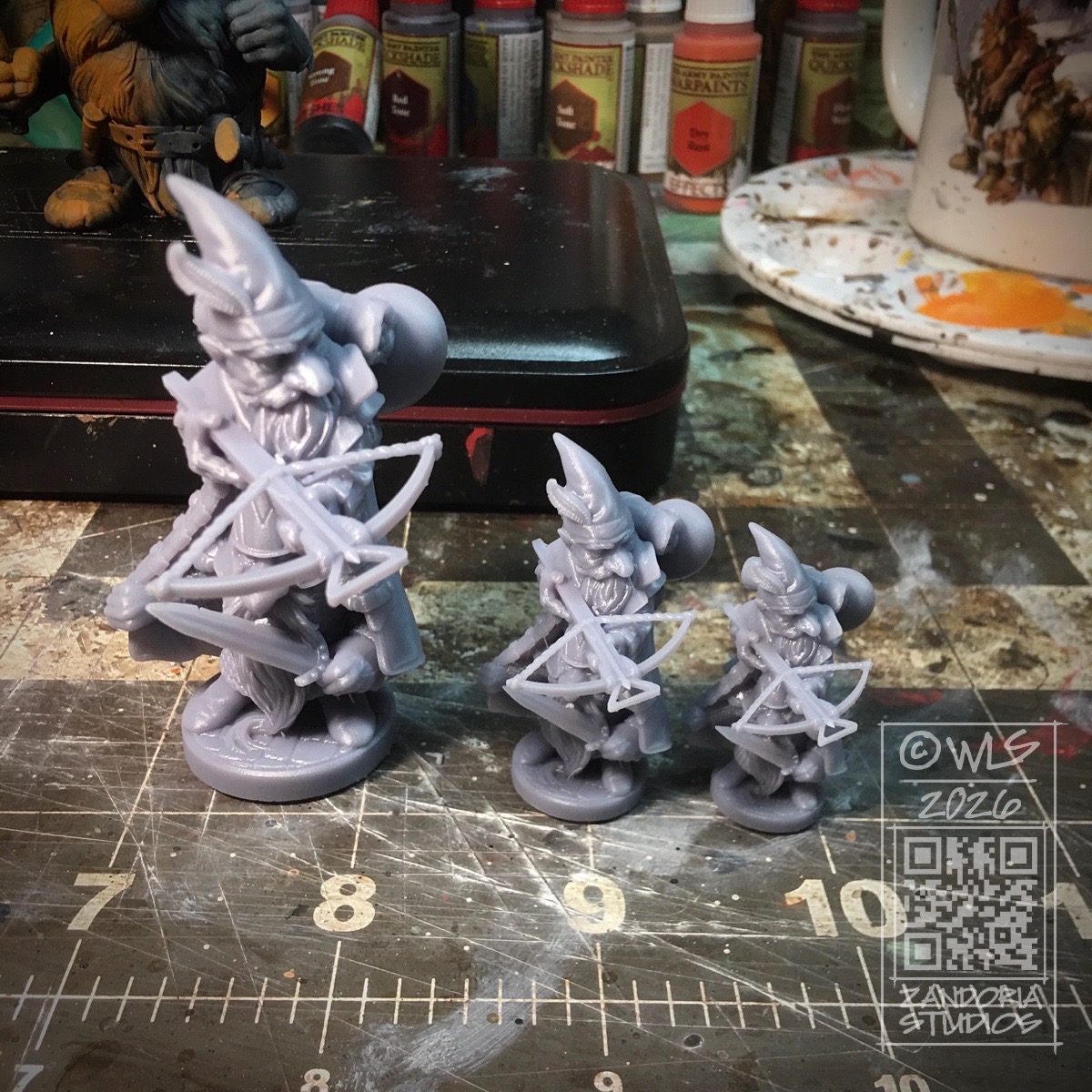
With your order I will print a tabletop, D&D sized mini (If you prefer what is know as “Heroic” sized, let me know) as well as a larger 200% sized one for display. I will also provide a copy of the STL file for your personal use.
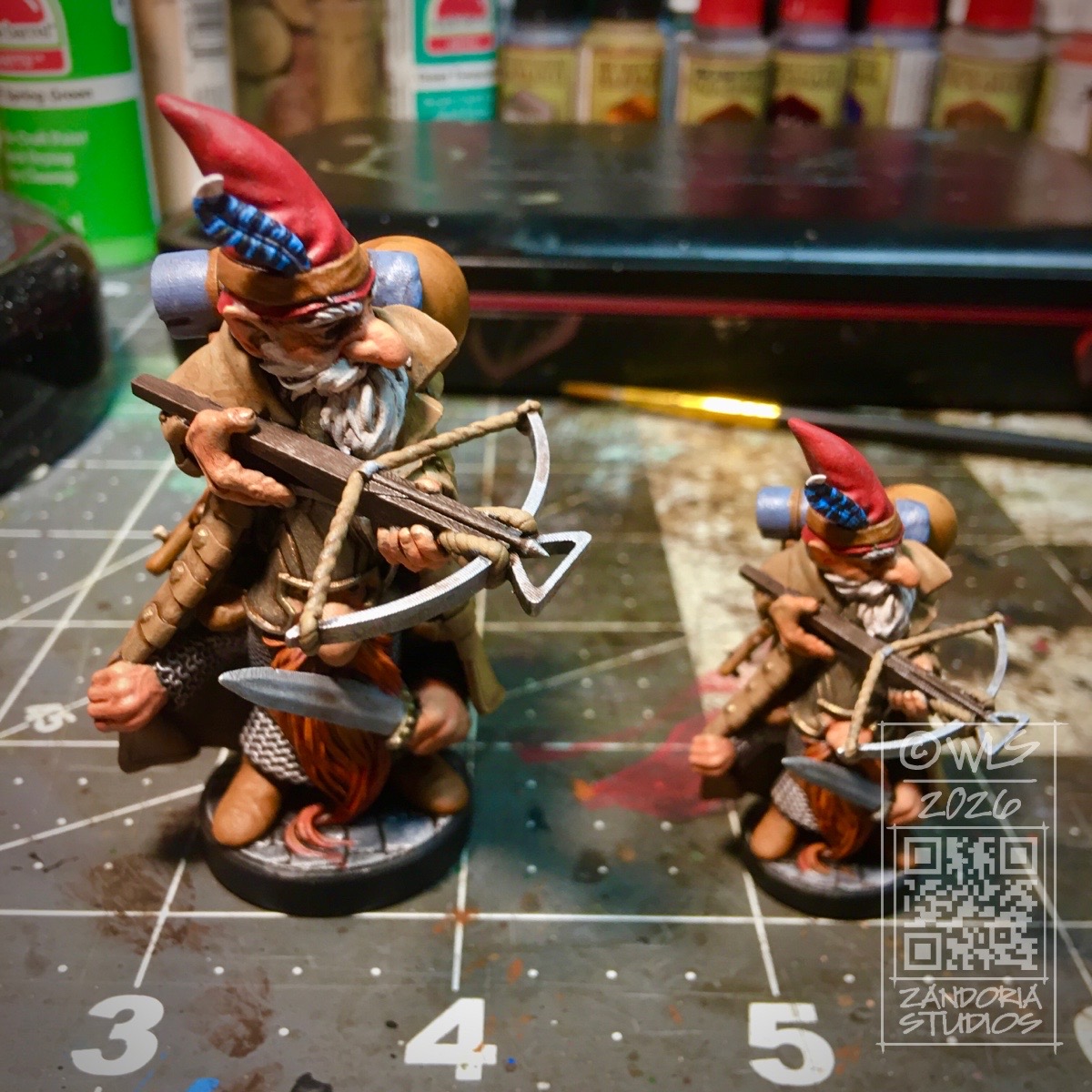
I’m offering this custom mini commission in an UNPAINTED or HAND-PAINTED option. If the listing is SOLD-OUT, just check back the next week–I am limiting the QTY so that there is only 1 spot available at a time.
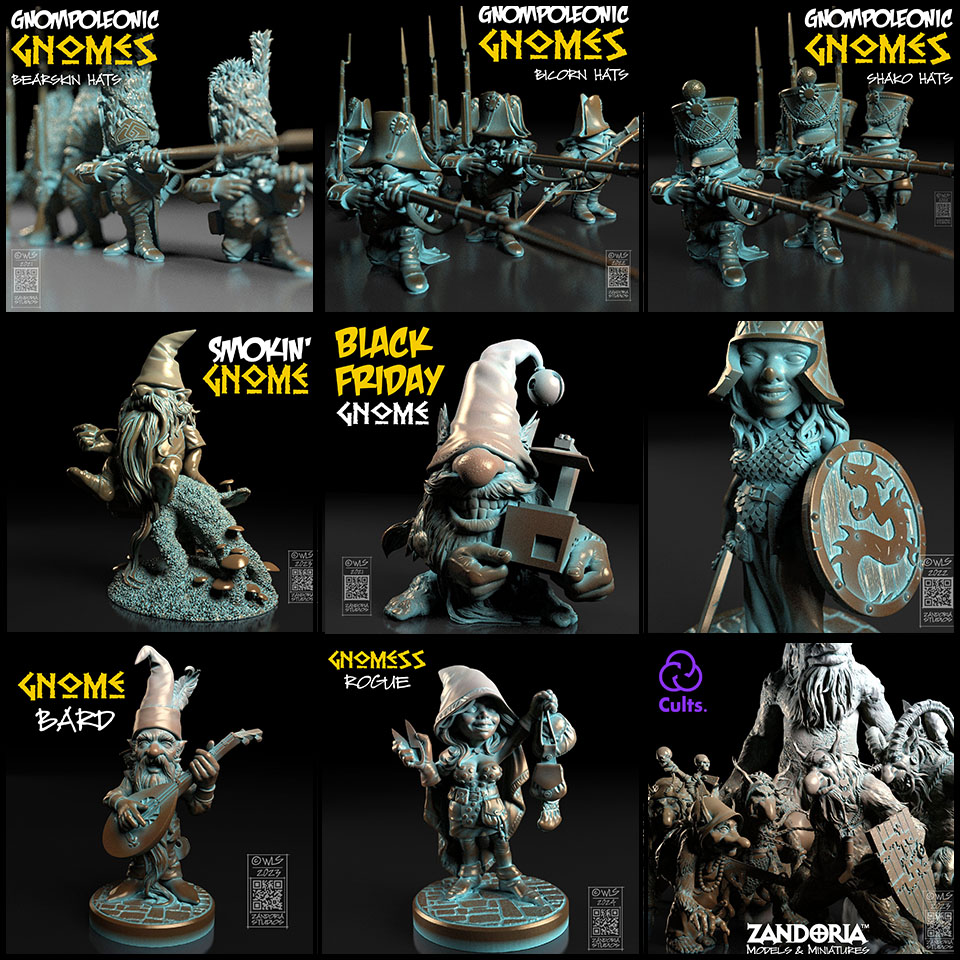
For 3Dprintable files of my work, I have decided to sell the exclusively on Cults3D. I have been on there since they first started, and I think that it is the best platform.
Here are some facts about Cults, from their website:
Created in 2014, Cults is the 1st independent platform in the 3D printable files market (we do not belong to a group).
Today, we have 11.1 million international makers members registered on our platform.
We welcome more than 5,000 new members every day.
The platform currently hosts 2.07 million printable designs and a community of 176 thousand designers specialized in 3D printing.
Our platform is visited more than 200,000 times per day and we have an audience of 7.3 millions visits per month.
We have 55.4 millions page views per month and 3.2 millions unique visitors.
We are translated into 7 languages: English, German, Spanish, French, Brazilian Portuguese, Russian, and Simplified Chinese.
The geographic breakdown is as follows: 50% Europe – 40% America – 10% Asia & Oceania.
I have tried other platforms, like DriveThruRPG and MyMiniFactory, but they do not have the same reach and visibility as Cults, and it just made sense to me to have all of my STL files in one location.
STL files are used to 3Dprint miniatures and terrain at home on a personal 3Dprinter. For physical minis and figurines, those are available from my Etsy Shop.
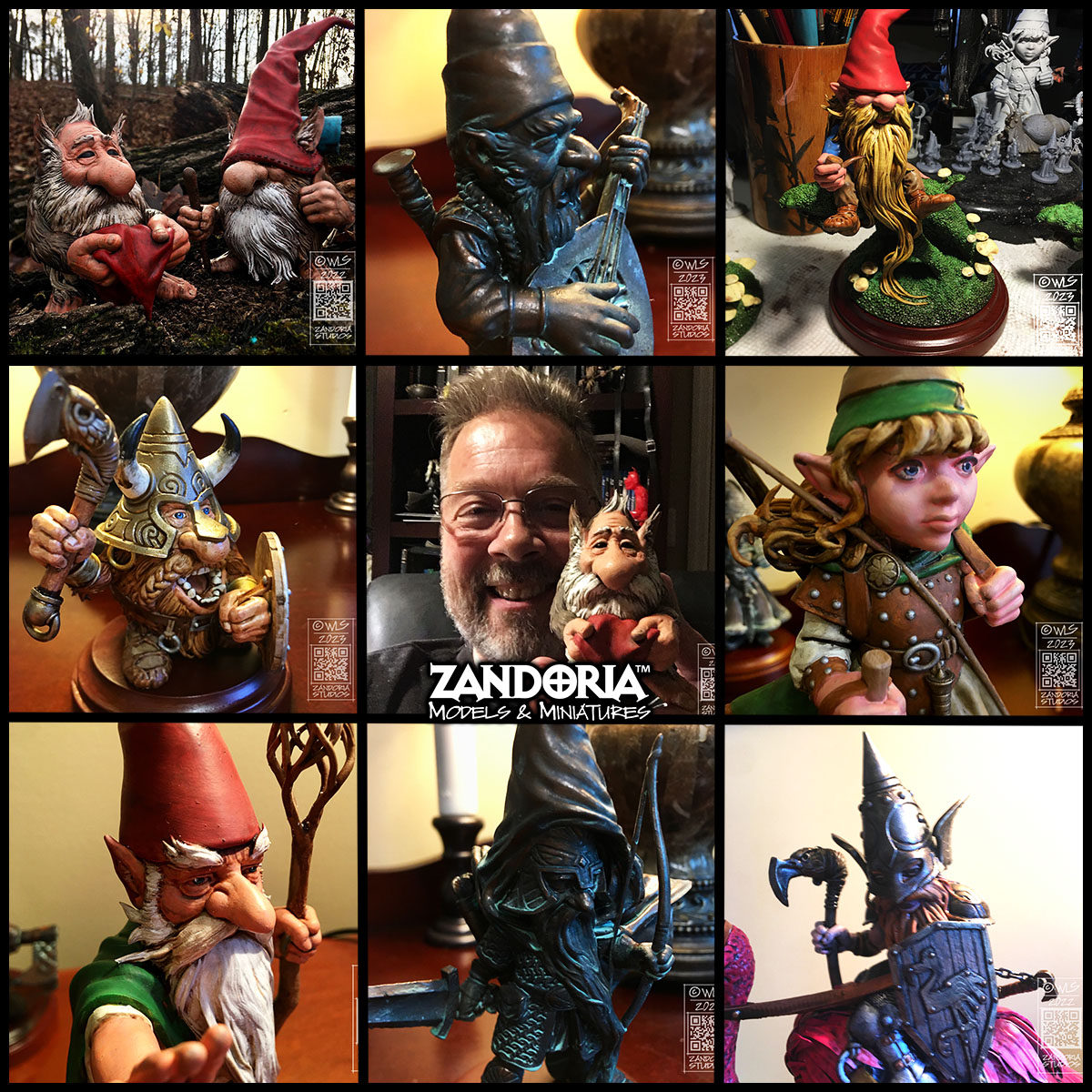
A Gnome is a mythological creature: A small, ageless dwarf in European folklore who lives underground and guards treasure. The 16th-century Swiss alchemist Paracelsus popularized the term, describing gnomes as able to move through solid earth like fish in water. They are known as Nisse or Tomte in Scandinavian folklore, where their long beards and pointed caps originates. They were also guardians of the home and farm, and popularized as Garden Gnomes in the 18th century. The modern style of “Gonk” Gnome, used as a home decoration, is essentially all beard with only a nose and large cap–They may get their name from a novelty toy from the 1960’s called a Gonk.
As Fantasy characters in Dungeons & Dragons and other TTRPGs, Gnomes are very popular. They are of small size, generally around 2′ tall. They are surprisingly strong for their size, at least as strong as a full-grown man! Because of their connection to nature, gnomes are often Druids or Rangers, but may be any Class.
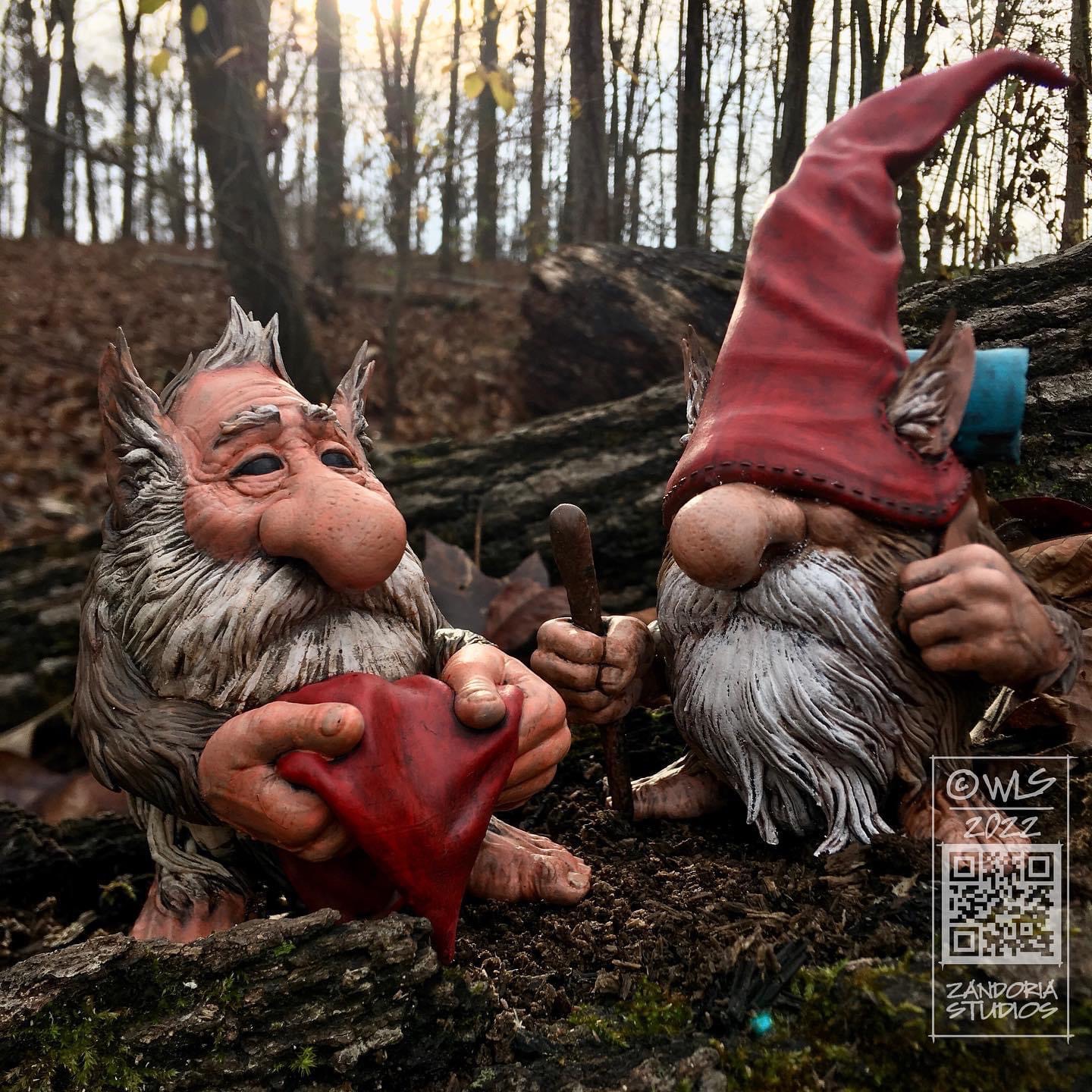
A Gonk is a subspecies of Gnome. They are a little shorter in proportion, and covered in fur. Gonks are are a more feral wild version of their taller kin, and live underground in burrows. They have a natural ability to shape-shift, which leads to some remnant animal traits in their appearance. Some Gonks even have tails!
Gnomes wear tall cone-shaped felt caps, and take great pride in them. You can tell a lot about a gnome and his social status by the height of his cap. Caps are often embroidered and ornamented as well. Gnome warriors wear tall pointed helmets, which can also act as dangerous spikes to deter the big stompy feet of Trolls. Gonks also wear caps, and usually wear them pulled down to their nose to protect their sensitive eyes.
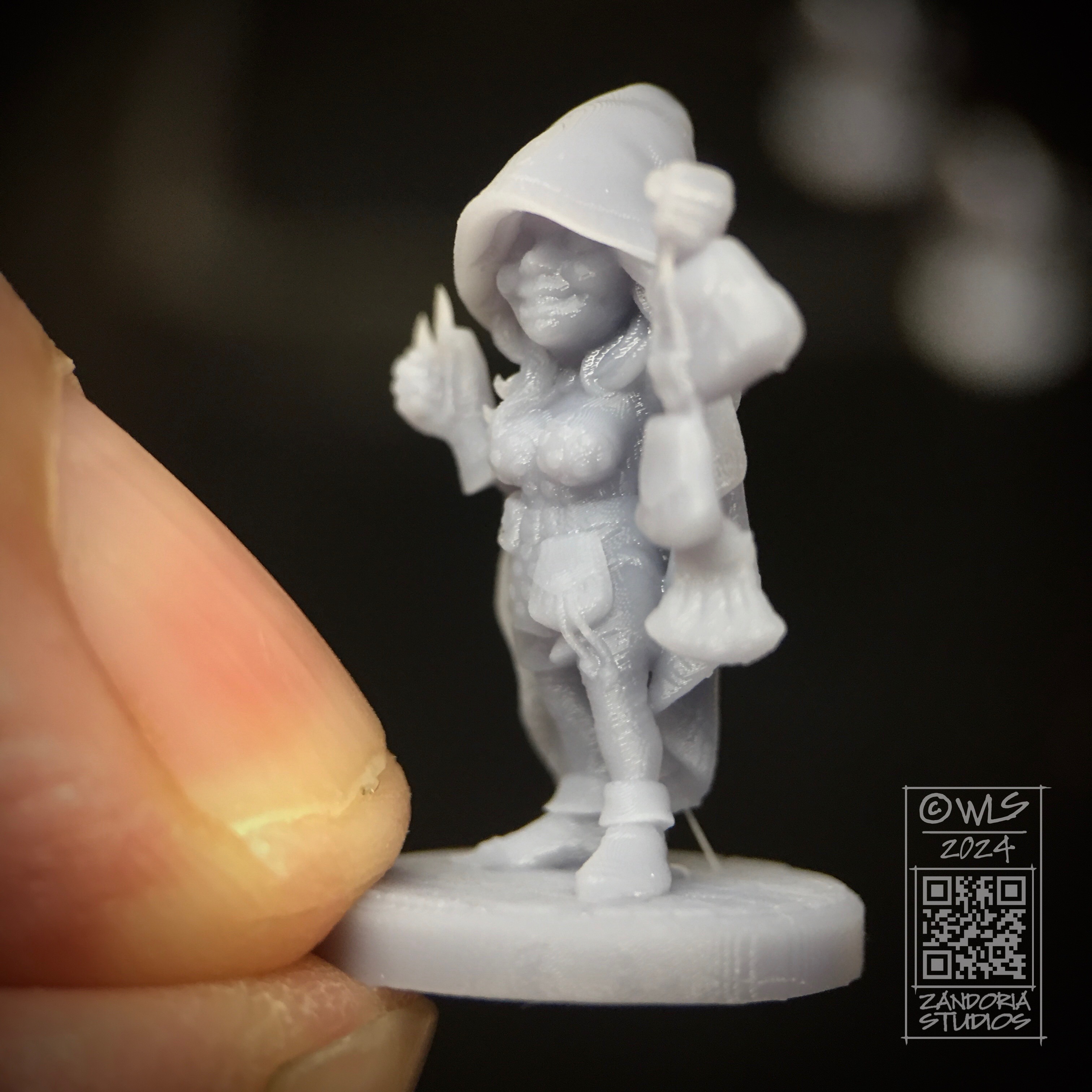
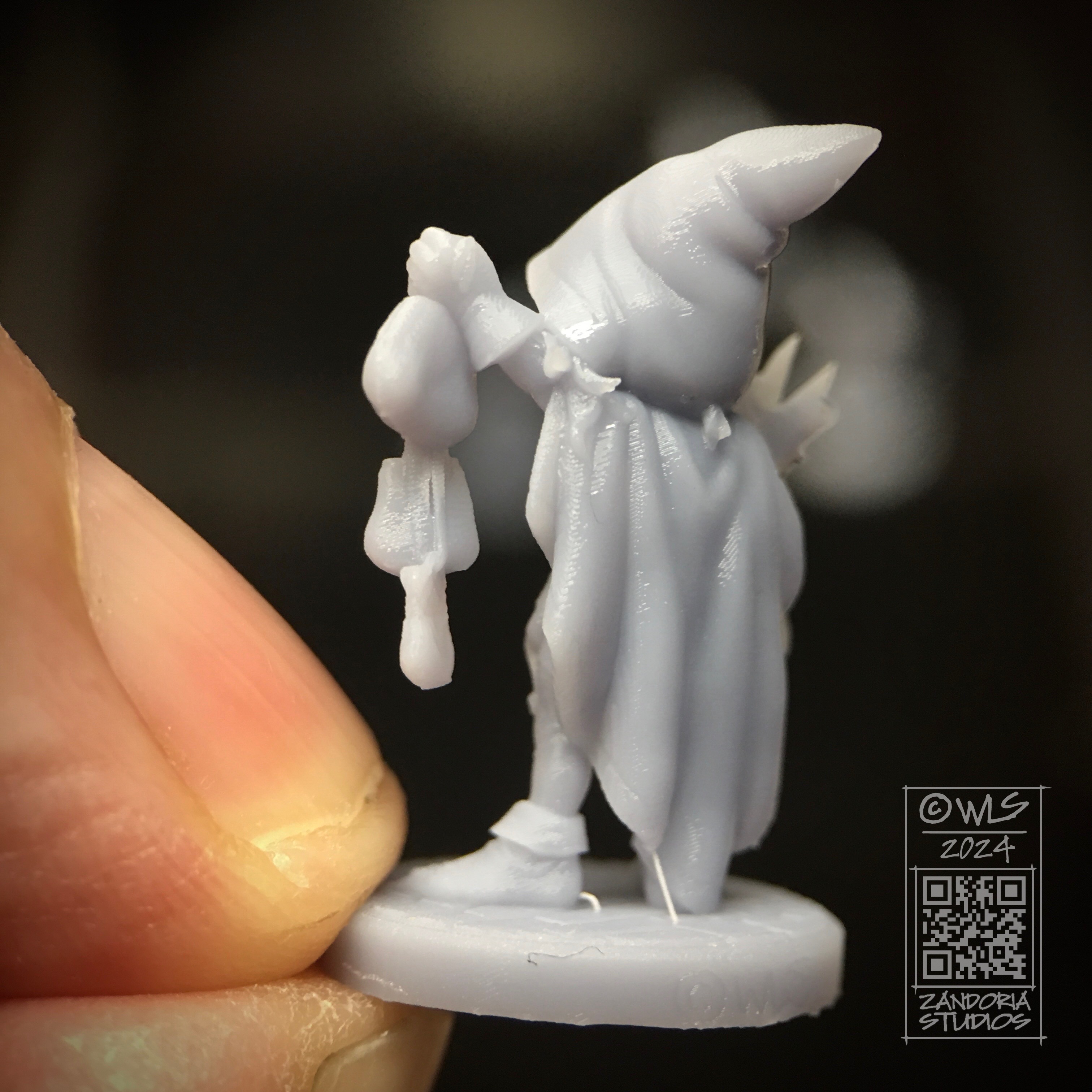
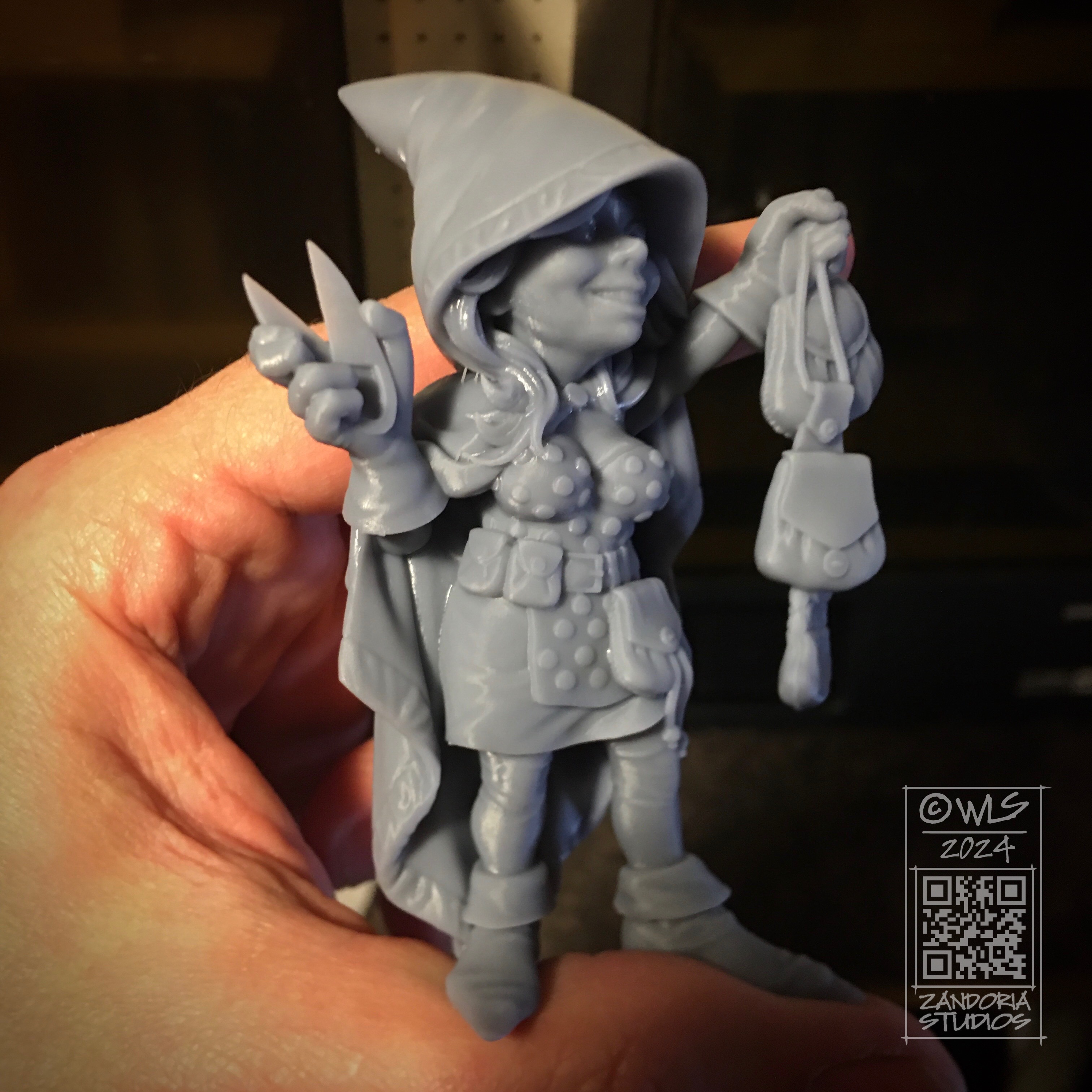
She is a little cutpurse female gnome that I sculpted for my Etsy shop. I offer her painted or unpainted, as a D&D sized miniature, or display sized–even Garden sized!
Are you a discerning gamer who demands the best? Do you want to take your tabletop experience to the next level? Look no further! My handcrafted gnomes are designed to bring a touch of magic to your game, with intricate details and textures that will amaze your players.
By choosing my gnomes, you’re not just buying a miniature – you’re making a statement. You’re showing that you have an eye for quality, a passion for the game, and a desire to create an unforgettable experience for your fellow players. My gnomes are not mass-produced or generic; each one is carefully crafted with love and attention to detail, ensuring that every aspect is a delight to behold.
Whether you’re a seasoned collector or a gamer looking to upgrade your game, my gnomes are the perfect choice. They’ll add a personal touch to your game, spark conversations, and inspire new adventures. So why settle for ordinary when you can have extraordinary? Choose my gnomes and elevate your game to new heights! #GnomeMiniatures #TabletopGaming #MiniatureCollectors #GamingWithStyle
Now when you buy one of my Gnome miniatures on Etsy, you can choose between 3 size options, and whether you would like it unpainted, or hand-painted!
28mm (D&D)
10cm (4″), Display
20cm (8″), Garden
There are a lot of different designs available, and I’m always adding more. So whether you are looking for a mini for your Dungeons & Dragons character, or you want to make a badass fairy garden, there is a gnome for you!
When it comes to 3Dprinting there is a lot of confusion about resolution. It is important in different contexts, so I hope this post can help to demystify it.
Scanning is a method to capture geometry from real world objects to create a digital model. Here is a scan of my head, using a structured light scanner attached to an iPhone. On the right hand side, you can see a triangulated mesh of polygons. This mesh is the 3D model. Notice the lack of details in the face, especially the eyes. the Mesh is composed of 53,000 polygons.
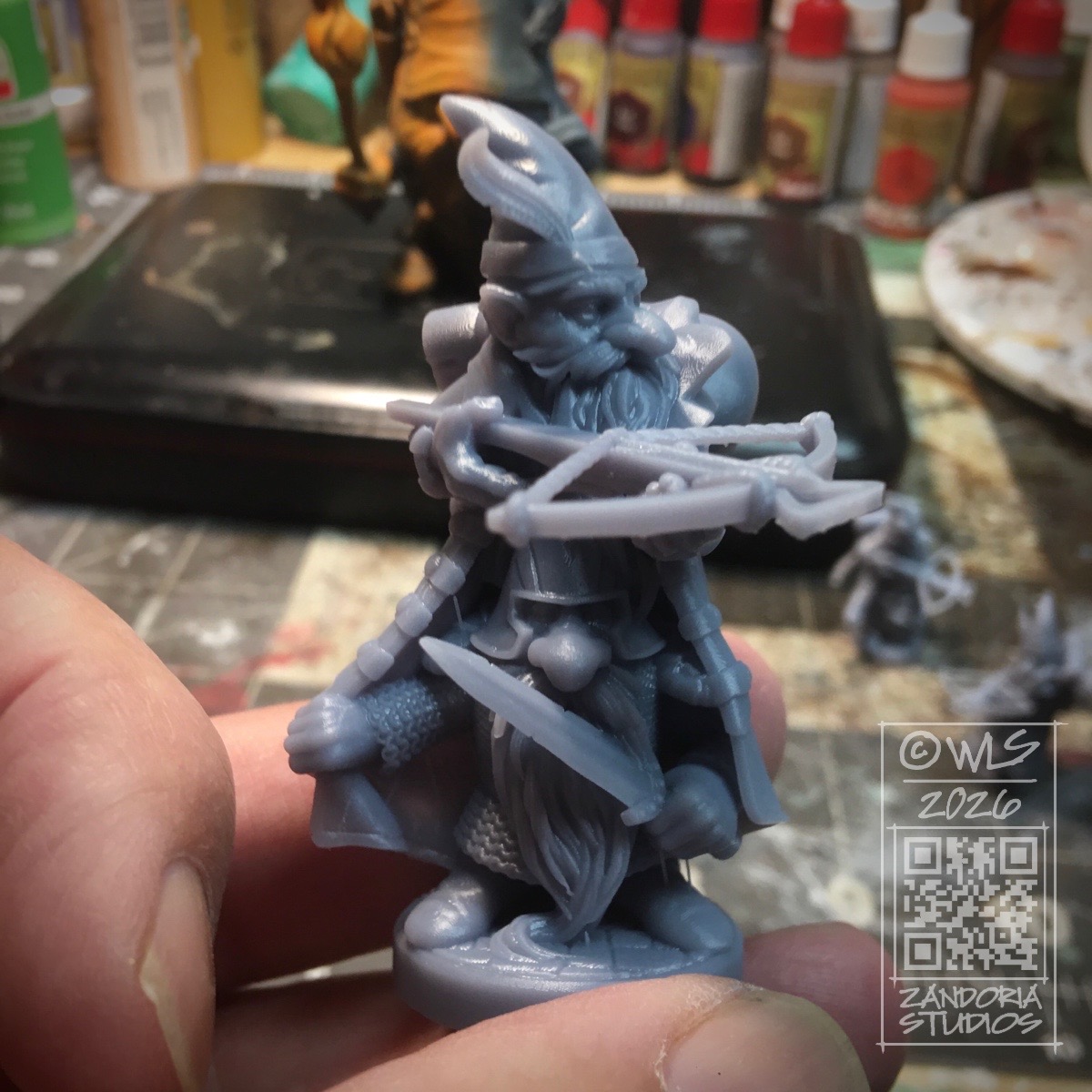
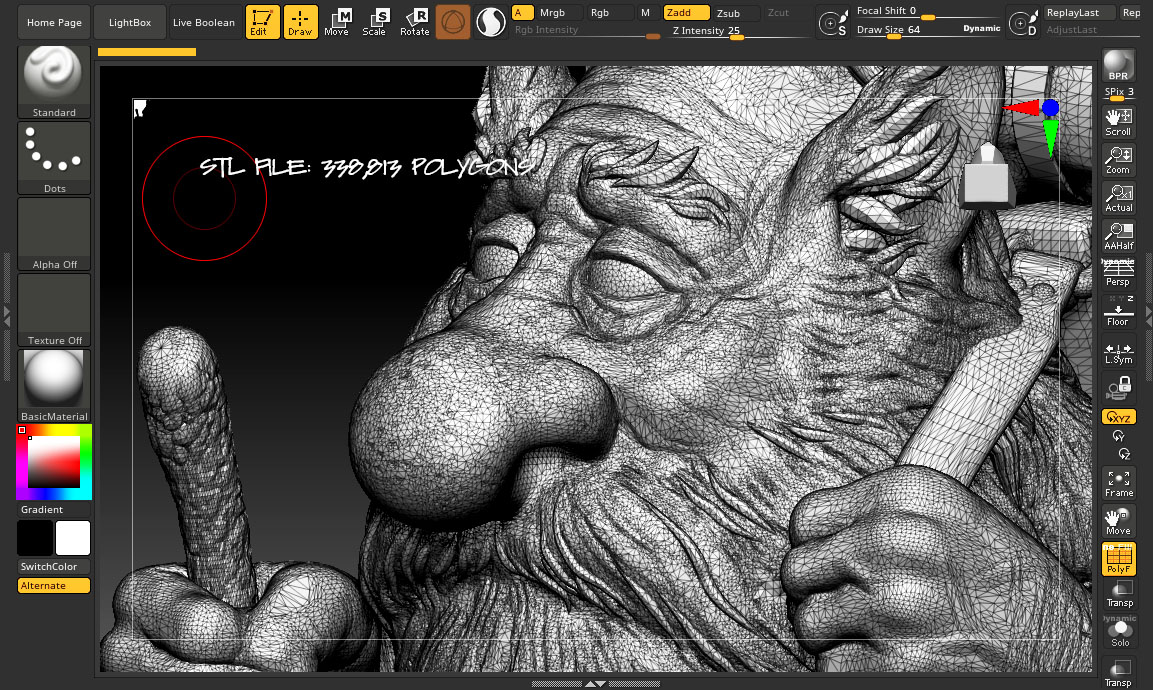
This Gonk Gnome is a digitally sculpted model for 3Dprinting. The STL file is what is used by the slicer to output the instructions to the printer. This polygon mesh is 338,813 polygons. The resolution is higher than the scan–meaning that the triangles are smaller, and denser.
In ZBrush, the original mesh that is the actual digital sculpture, is over 4 MILLION polygons! If you notice those darker gray areas around the eyes, those are even denser polygons than the rest of the mesh. Sculpting digitally, you can zoom in and add more detail, and resolution (to the limits of the computers memory).
The reason that the STL file is less polygons is that it is decimated from the higher resolution mesh. A 3Dprinter slicer will have a hard time with a mesh over 1 million polygons, so you have to balance the amount of detail you can reproduce with those constraints and the intended size that you will print.
Here is a picture of that model 3Dprinted in resin. the layer thickness for a resin printer is .05mm (about the thickness of a human hair), so you need a magnifying glass to be able to see the layer lines…
3Dprinters are advertised with 2K, 4K, 8K, 12K (even higher has been announced), which is referring to how dense the pixels in the LCD screen are. This can get confusing, because a small screen size that is 2K might have the same density of pixels as a larger screen that is 4K. So, in choosing between the different resolutions offered in 3Dprinters, it is important to choose a size that fits your needs, then worry about how much resolution in in that LCD screen. Ideally, the XY resolution (the LCD screen) and the Z (the layer height) should be the same.
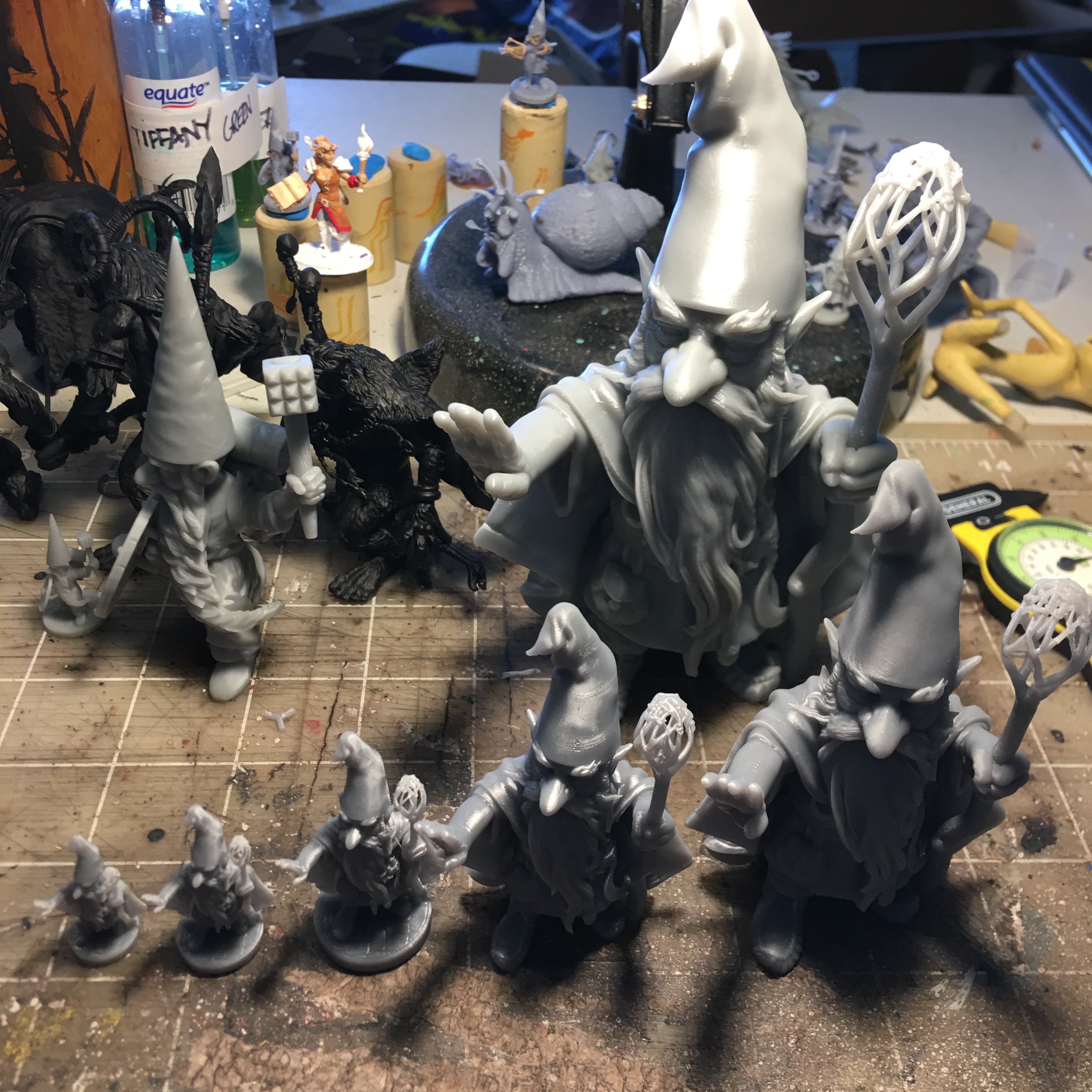
This Gonk adventurer is the same model, but at different scales. the density of the polygons is high enough that even when printed larger the detail is there. If the gonk was printed even smaller than a D&D miniature, you will start to lose the finer details as the size of the triangles of the polygon mesh become smaller than the XYZ resolution of the printer. If you printed larger than a figurine, like a 4′ or taller statue, the size of the triangles of the polygon mesh would become visible.
Because there can be so much variation in size for the 3Dprints, I usually will decimate the mesh to between 300,000 and 600,000 polygons. That provides enough resolution to the polygon mesh, so that the detail is there even if you need some 2′ Guardin’ Gnomes.
This is an illustration by John Bauer from a fairytale about Leap the Elk and Little Princess Cottongrass, written by Helge Kjellin and illustrated by John Bauer (1913). I thought it would be a fun project to try to make a sculpture based on this story.
concept sketch
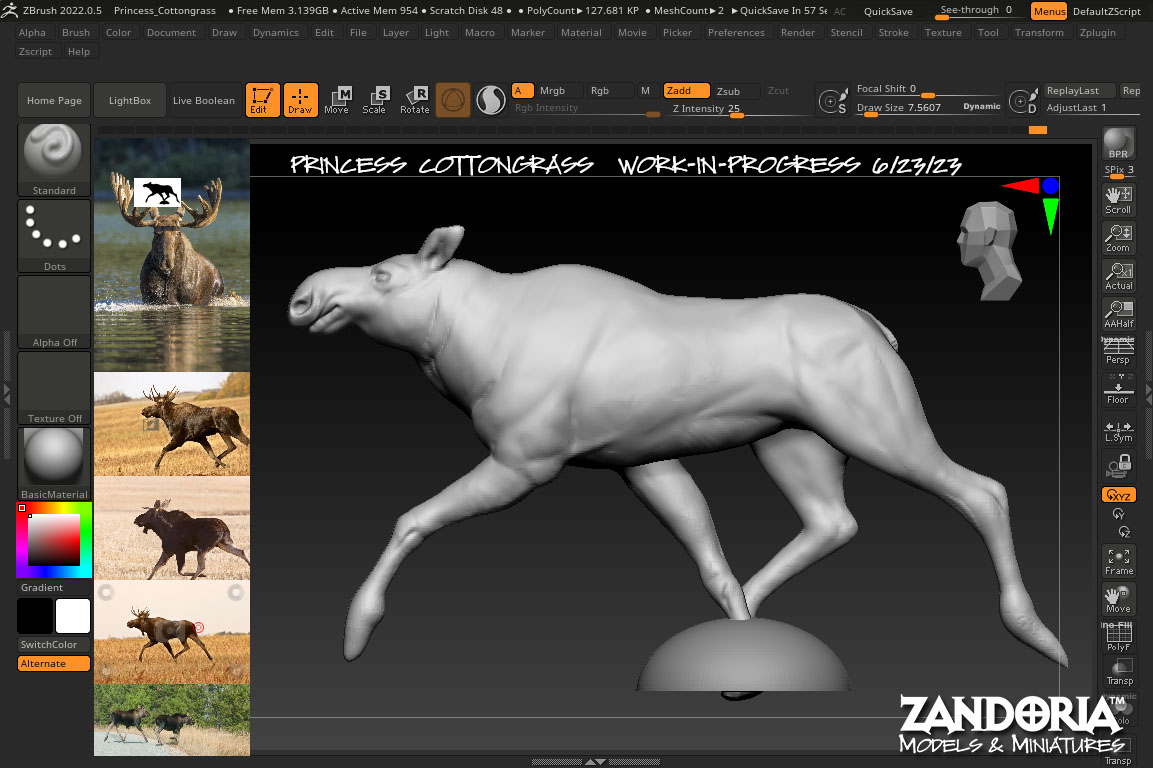
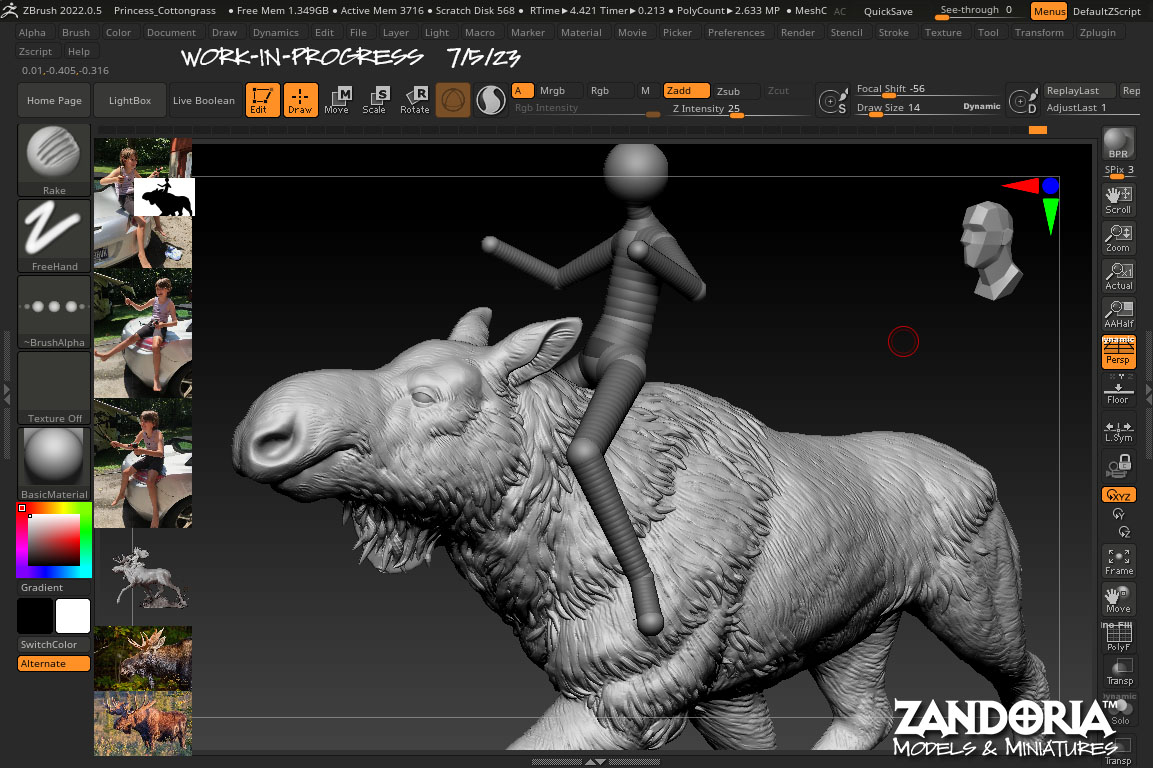
I started with some mesh balloons in ZBrush to block out the basic moose shape. Next I used Dynamesh to merge it together and sculpted the details. I made a ZSphere armature for the princess to give myself a basemesh to sculpt.
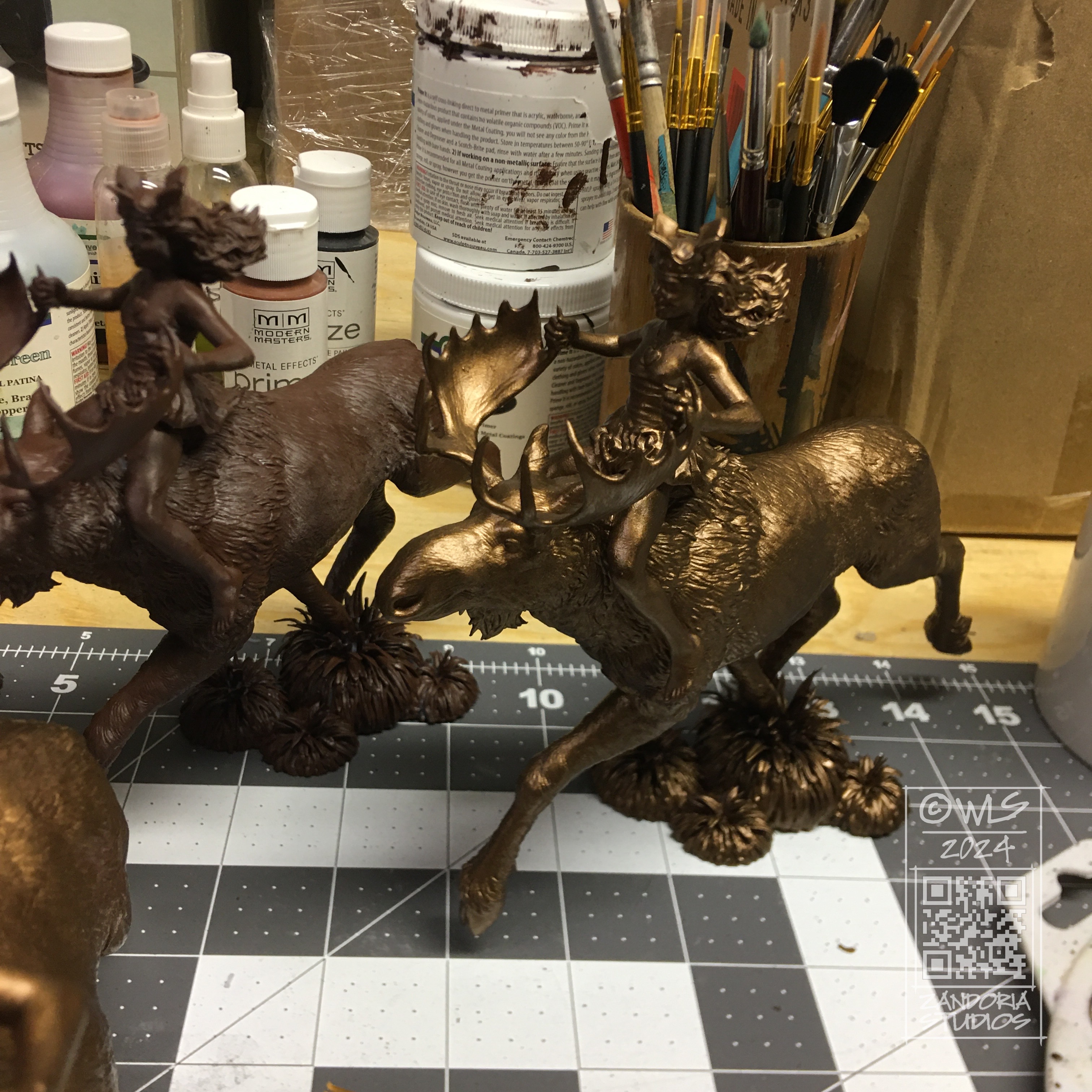
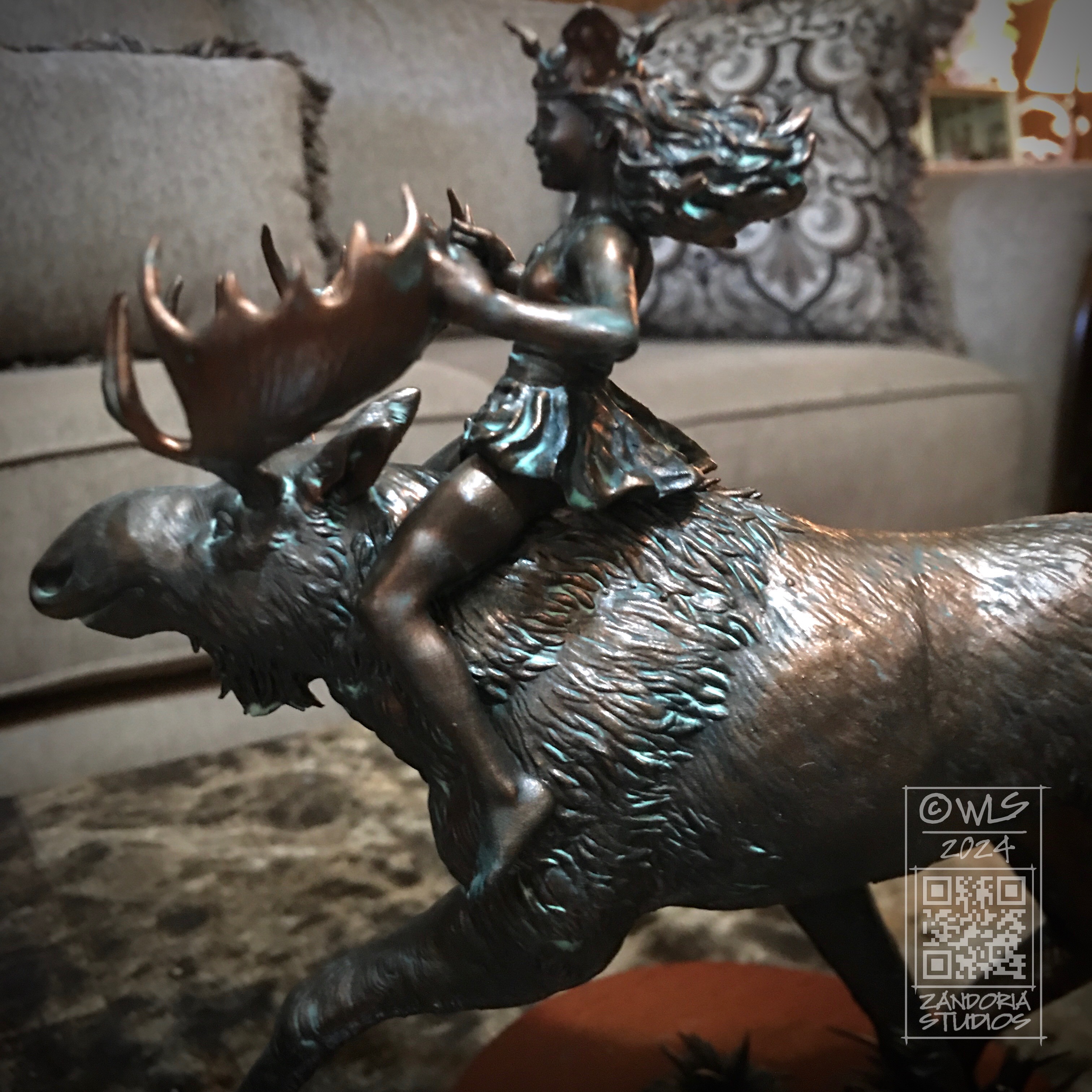
After the digital sculpture is finished, I use a resin 3Dprinter to reproduce. Next is a 3 step process of applying a bronze metal coating and acid patina.
This edition is limited to only 20 pieces, and comes with a certificate of authenticity. It is 6″ tall and about 8″ from end to end.
As the year wraps up, I have been thinking about projects that have been on the back burner that I would like to finish. I have been working on freelance projects the past few months, so haven’t had as much time to devote to them…
I also want to start using this blog, instead of social media. I am going to post new work here first, and then share it to social media instead of directly posting it there. I have been following the rise of AI over the past year, and companies like Meta are scraping up every piece of content to train them. It is very disheartening to me.
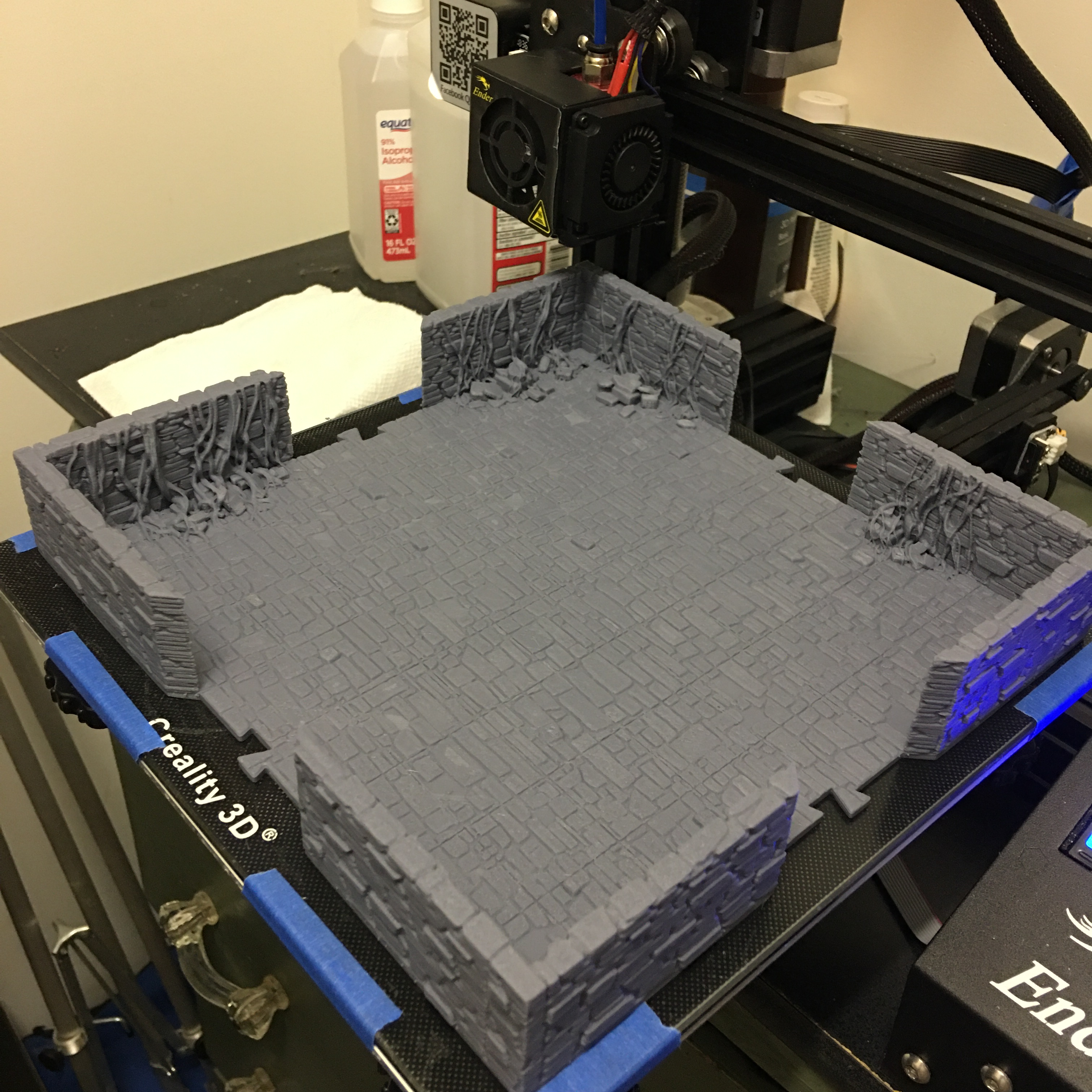
At long last, I am ready to launch the new version of my Puzzlelock Dungeon 3Dprintable terrain. I have test printed it and am painting it up for photos, and will put it up on Cults3D soon.
Another project that I want to finish is my interpretation of a fairytale about Princess Cottengrass. In it, the young princess goes on an adventure riding on the back of a moose elk named Leap.
This is my concept sketch. Below is a screenshot from ZBrush of a work-in-progress of the moose. This will be a resin sculpture with a bronze finish, for my Etsy shop.
When I’m sculpting or painting, I’m just trying to do my best to put the vision into a physical form. Where it comes from is a mystery, some liminal place like a dream…
I have to trust that whatever Muse inspired me to create a piece of art also plays a role for the viewer, because I don’t know who it is for when I’m creating the work…
If my art resonates with you, if it calls to you, then it was made for you.
It is really that simple. Artists like myself are struggling. Things like AI are taking over illustration work, and may soon even start generating digital sculpture. With all of the competition and uncertainty, it is hard to know what the future hold for the artist in our culture.
Patronage of the arts is no longer something reserved for the wealthy or philanthropists. Patreon is like crowdfunding for individual artists–small donations, only $1 a month, from the fans who love their work, can help them keep creating.
If you are a fan of my art, and would like to go behind-the-scenes and follow along as I create new concept art and sculptures, I would really appreciate it if you would join me on Patreon!