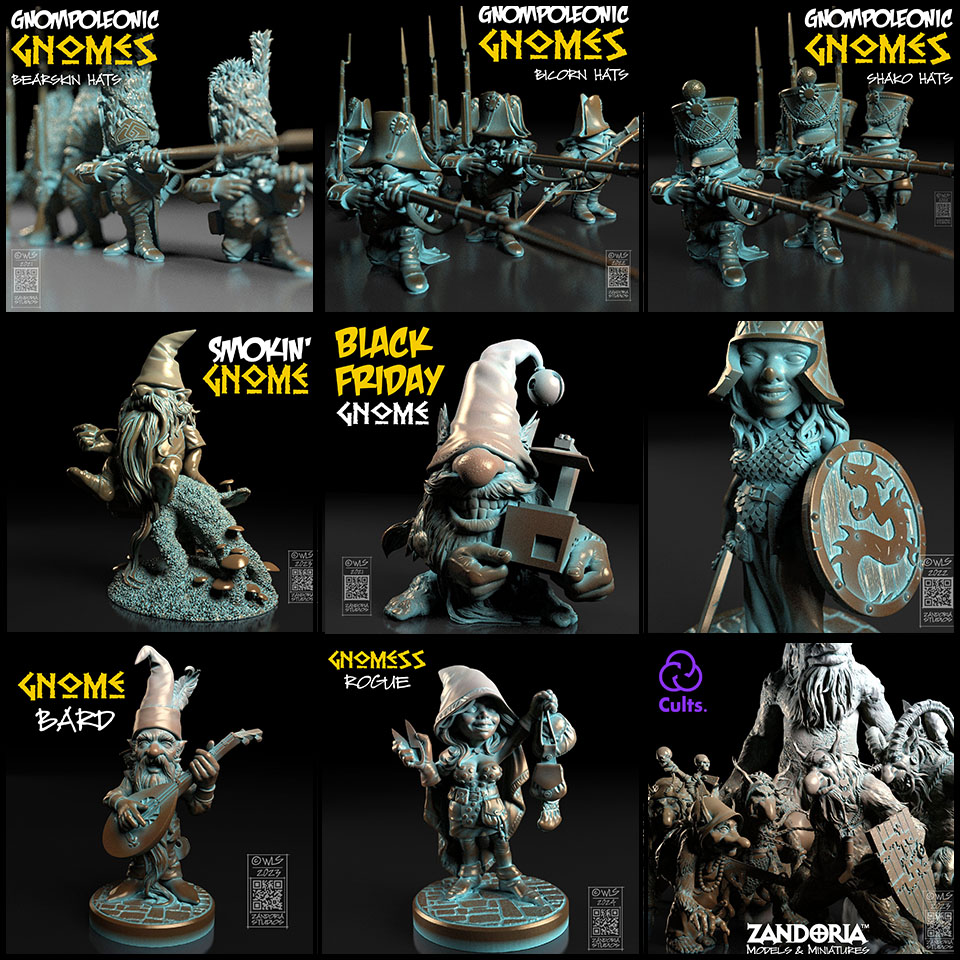
Now when you buy one of my Gnome miniatures on Etsy, you can choose between 3 size options, and whether you would like it unpainted, or hand-painted!
28mm (D&D)
10cm (4″), Display
20cm (8″), Garden
There are a lot of different designs available, and I’m always adding more. So whether you are looking for a mini for your Dungeons & Dragons character, or you want to make a badass fairy garden, there is a gnome for you!
It is really that simple. Artists like myself are struggling. Things like AI are taking over illustration work, and may soon even start generating digital sculpture. With all of the competition and uncertainty, it is hard to know what the future hold for the artist in our culture.
Patronage of the arts is no longer something reserved for the wealthy or philanthropists. Patreon is like crowdfunding for individual artists–small donations, only $1 a month, from the fans who love their work, can help them keep creating.
If you are a fan of my art, and would like to go behind-the-scenes and follow along as I create new concept art and sculptures, I would really appreciate it if you would join me on Patreon!
In 1566 Paracelsus, a German physician, alchemist and philosopher published a tract On Nymphs, Sylphs, Pygmies, and Salamanders. He categorized the denizens of Faerie, known by many different names in folklore, as different types of elemental beings.
The name of the water people [nymphs] is also undina, and of the air people [sylphs] sylvestries, and of the mountain people [pygmies] gnomi, and of the fire people vulcani rather than salamandri.
On Nymphs, Sylphs, Pygmies, and Salamanders
You know that there are four elements, air, water, earth and fire; and you also know that we, men from Adam, stand and walk in air and are surrounded by it as a fish by water, and can just as little be without it as a fish without water. As the fish has it’s abode in water, where water takes for it the place of the air in which it lives, so air takes for man the place of water,in relation to the fish.
Thus everything has been created in its element, to walk therein. From this example you understand that the undinae have their abode in water, and the water is given to them as to us the air, and just as we are astonished that they should live in water, they are astonished about our being in the air.
The same applies to the gnomi in the mountains: the earth is their air and is their chaos. For everything lives in chaos. That is: everything has its abode in chaos, walks and stands therein. Now the earth is not more than mere chaos to the mountain manikins, for they walk through solid walls, through rocks and stones, like a spirit; this is why these things are all mere chaos to them, that is, nothing…
That amounts to: as little as we are hampered by the air, as little as they are hampered by the mountain, by earth and rocks. And as it is easy for us to walk through air and air cannot stop us, so rocks and cliffs are easy to them. And so, things are all chaos to them which are not chaos to us, for a wall, a partition, stops us so that we cannot go through, but to them it is a chaos. That is why they walk through it; to them it is their air in which they live and walk, as man does in the air that is between heaven and earth. And the coarser the chaos, the more subtle is the creature; and the more subtle the chaos the coarser the creature. The mountain people have a coarse chaos; therefore they must be more subtle; and man has a subtle chaos; therefore, he is all the coarser…
…Know also that two of them, namely the earth manikins and vulcans, are considered spirits and not creatures, being looked on as a mirage only, or as ghosts, You must know, however, that just as they appear, thus they are, flesh and blood like another man, and with that, quick and fast like a spirit, as was told in the beginning.
On Nymphs, Sylphs, Pygmies, and Salamanders
This was and interesting book to read, as the existence of these types of creatures was not in question, just something to be studied. The only existential question seemed to be whether nymphs, sylphs, gnomes,etc. had a soul, like man (He did not think so).
He was writing centuries before the discovery of the electromagnetic spectrum, frequencies or even ideas of different dimensions and vibrations, but had an insightful way of it relating to the properties of the four elements.
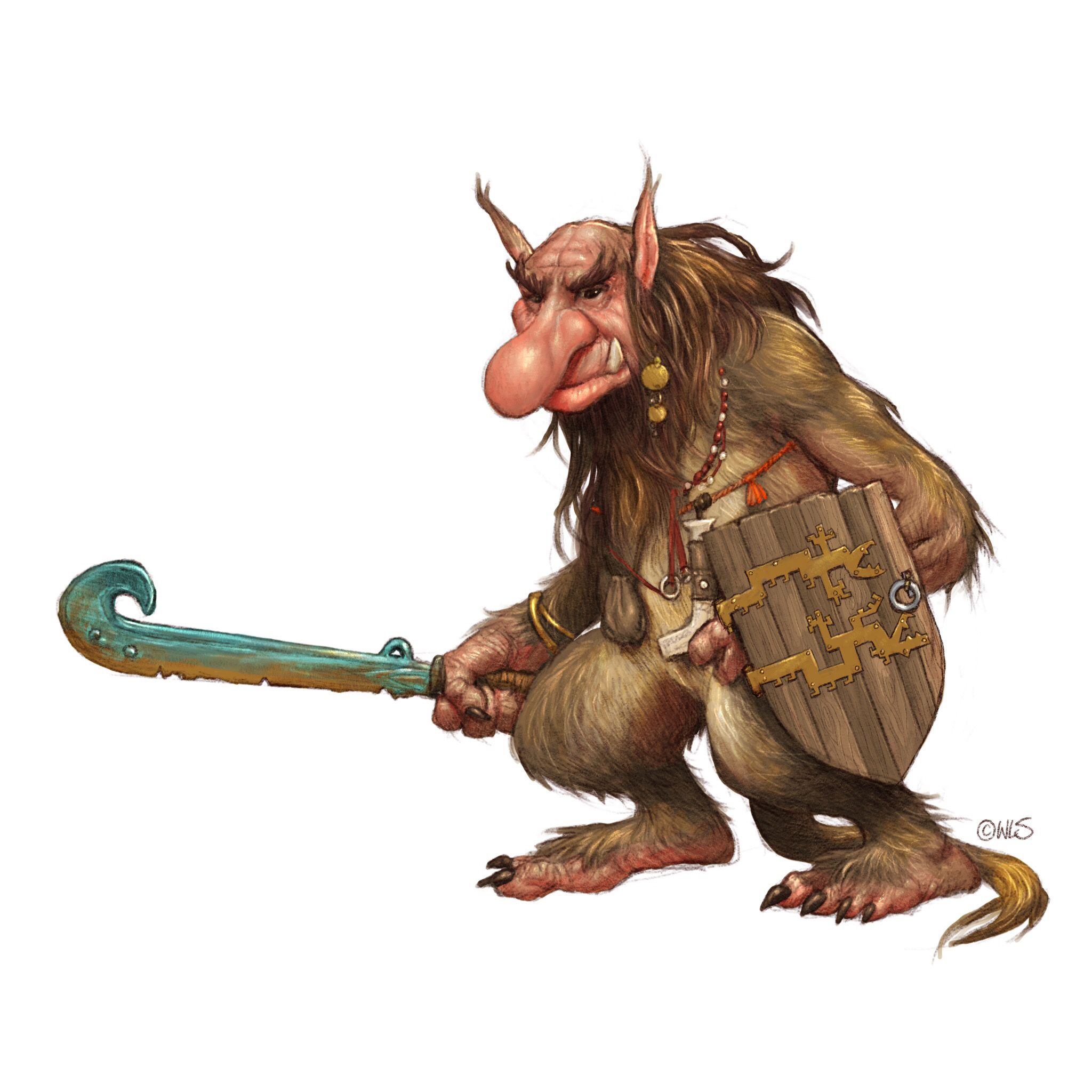
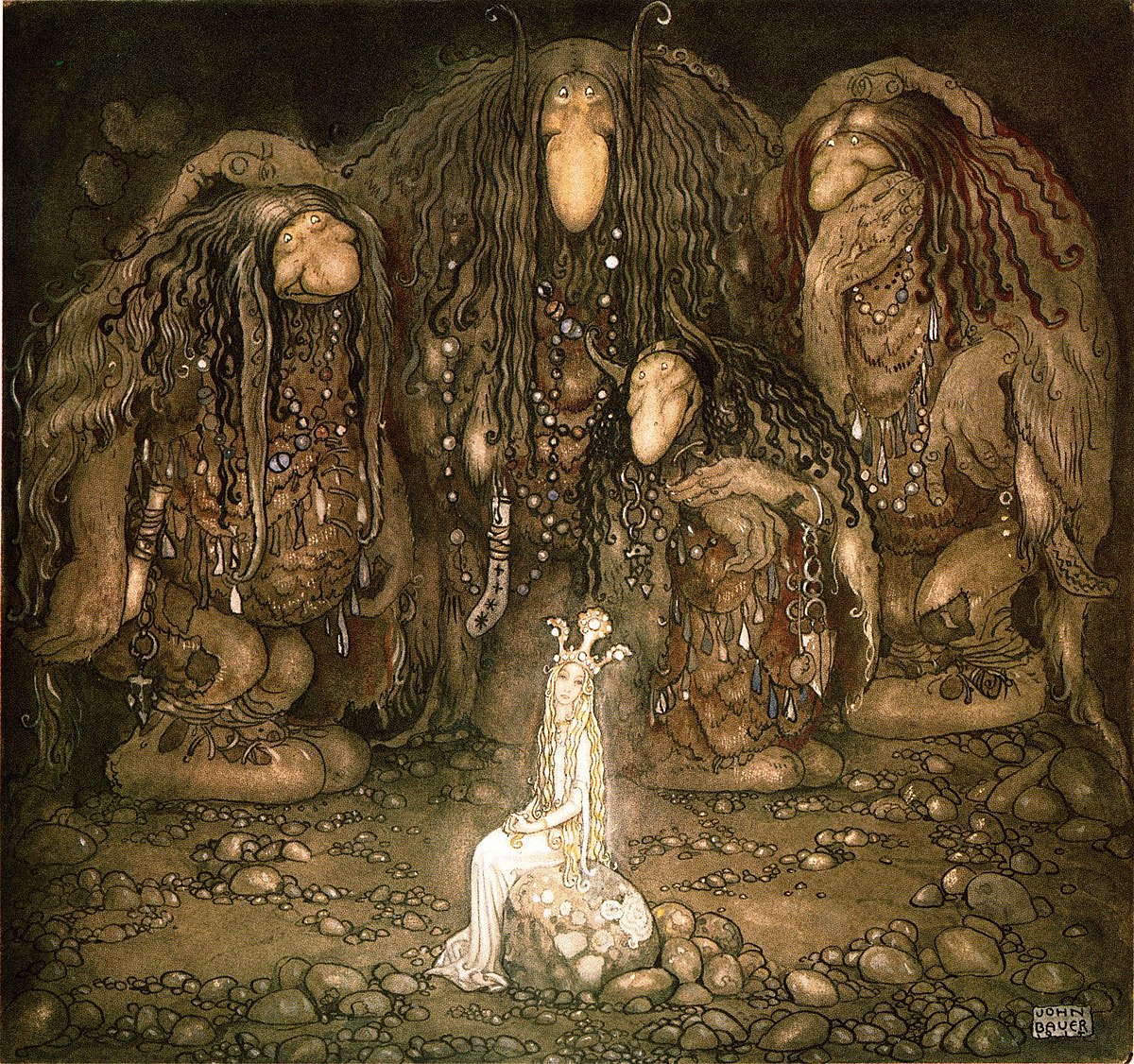
My newest theme for my 3Dprintable miniatures is Trolls. I’ve been researching a lot of artists and Scandinavian folk and fairy tales for inspiration. I think the biggest influence that I have is the fairy tale artwork of John Bauer.
I see them as big and shaggy, somewhat beastly in form… As I read some of the stories, I thought about our cousins the Neanderthals, and how they were displaced by our ancestors. The trolls seem to have retreated from the noisy humans and younger races in the same way, and I wondered if that might be a possible origin of their stories, (as well as yetis and jotun and even bigfoot!)
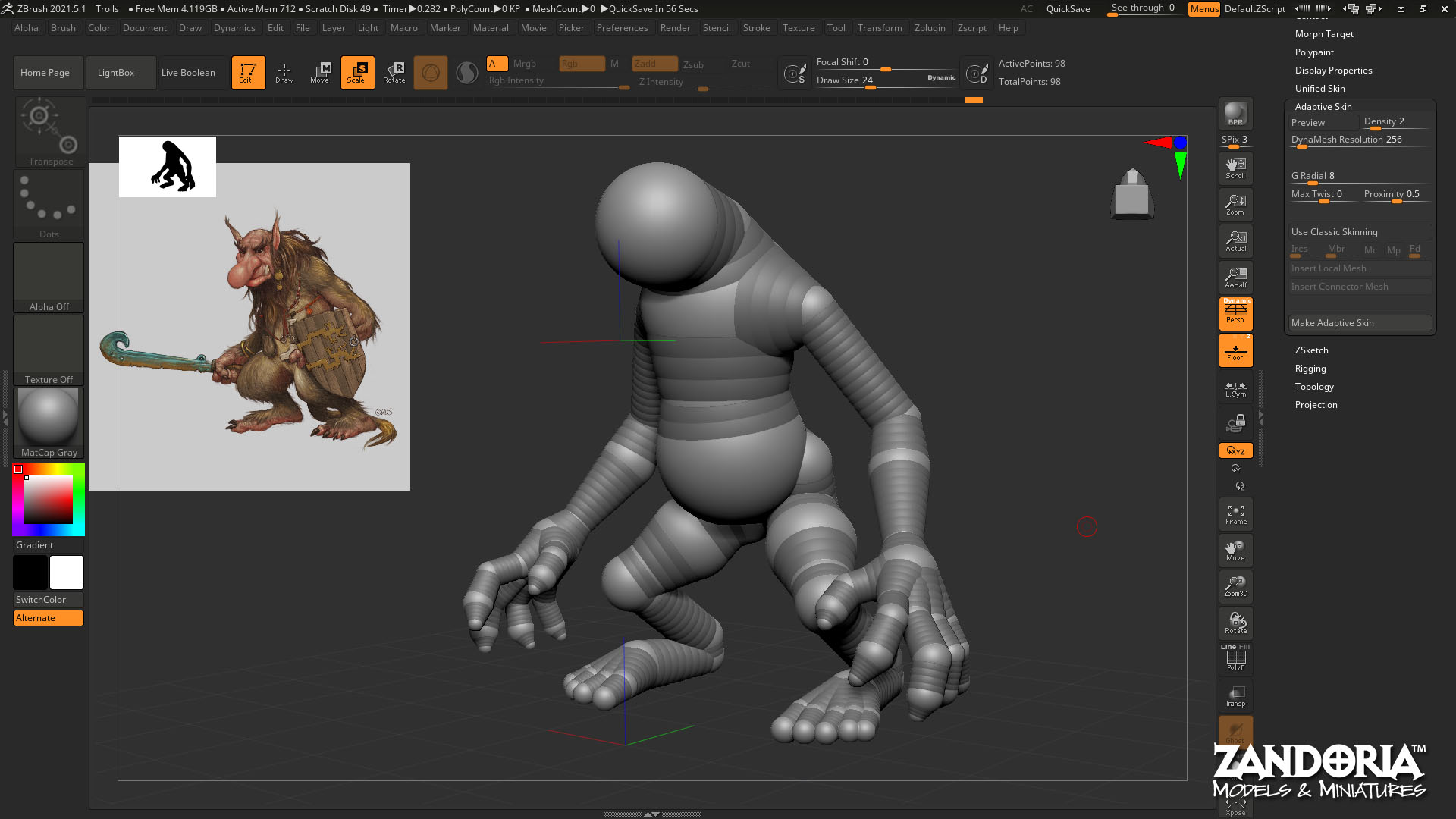
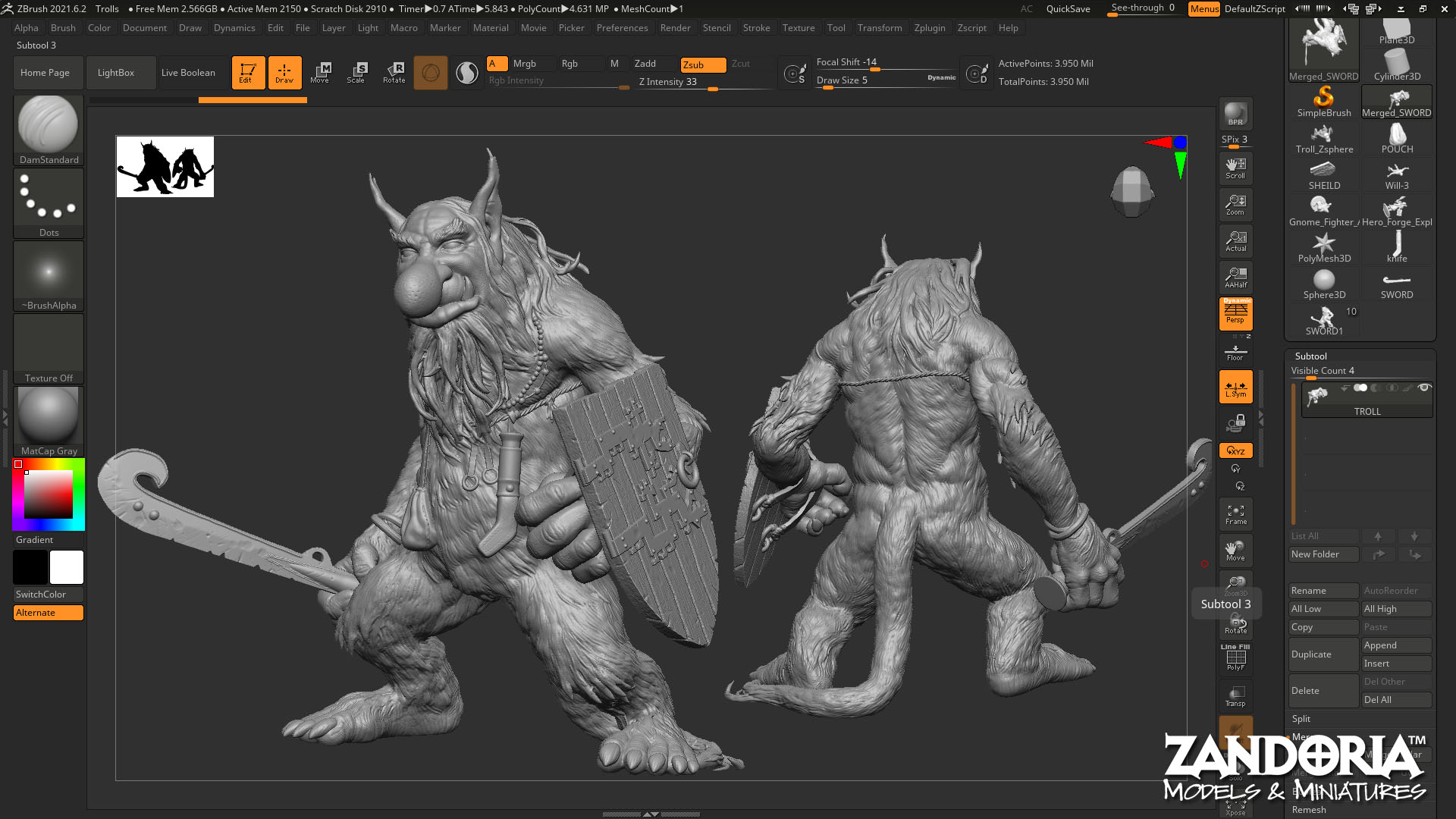
I started with a drawing in Procreate, and then a ZSphere armature in ZBrush for the basic form.
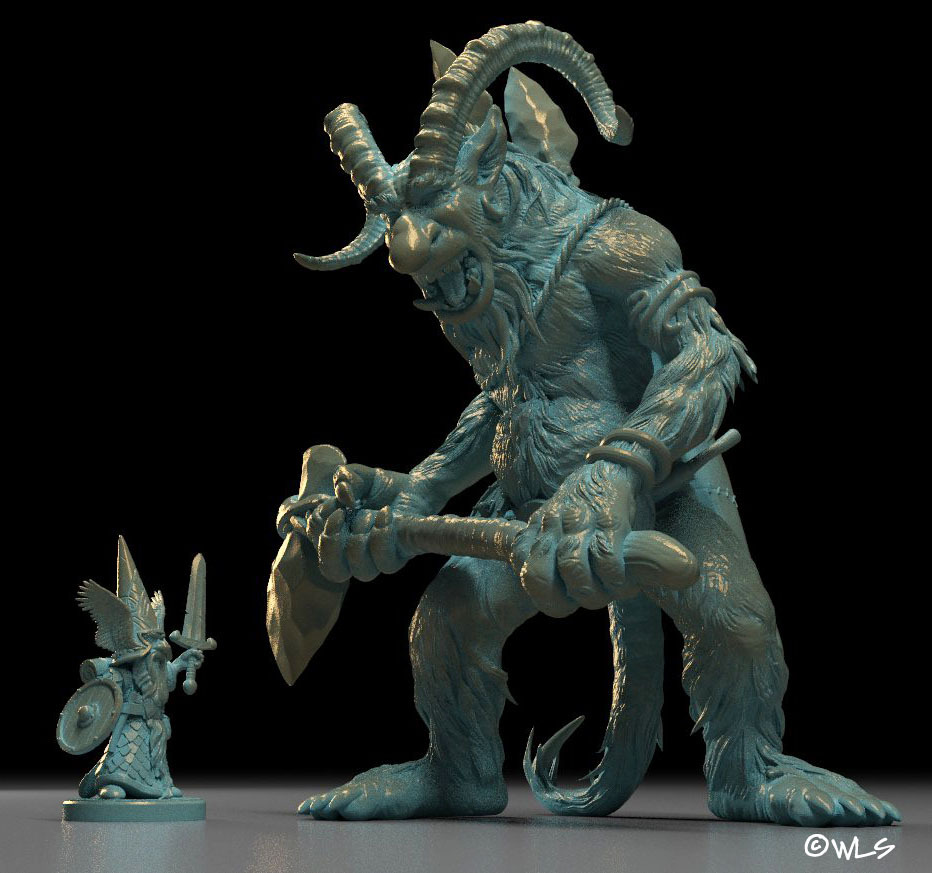
After sculpting the basic Troll body, I brought in some other 28mm scale objects as a reference, so that I could be sure my finished miniature would look good on the table after printing.
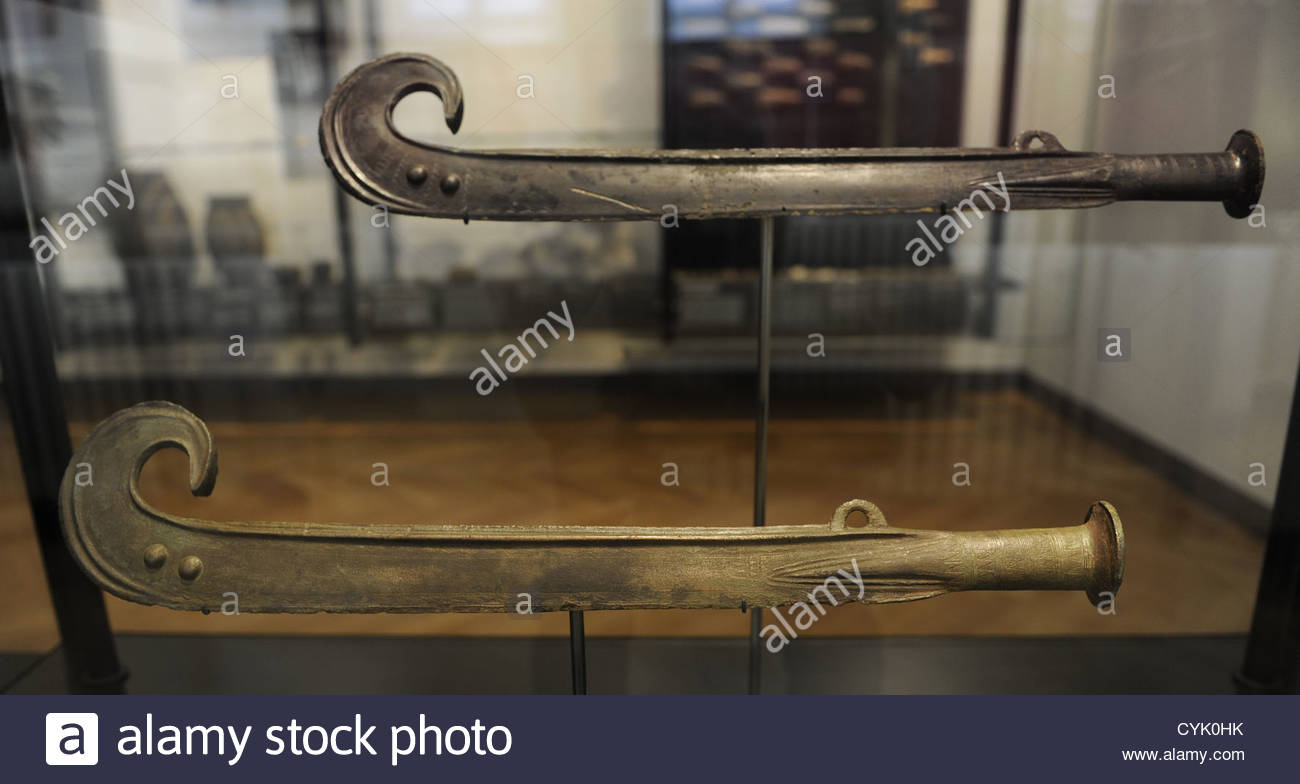
Using my drawing as a reference, I detailed the fur and the Trolls accessories. The John Bauer troll illustrations were influenced by the dress of the Sami people of Norway. So I decided that I would also draw from that, as well as relics from bronze age Scandinavia, such as the Troll’s sword:
Illustration from “The Troll Mother seeks a Wife” by John Bauer
I really liked Bauer’s big noses, so I decided to use that in my interpretation. Another artist that I love, Paul Bonner, also gives his trolls big noses and cites John Bauer as an influence!
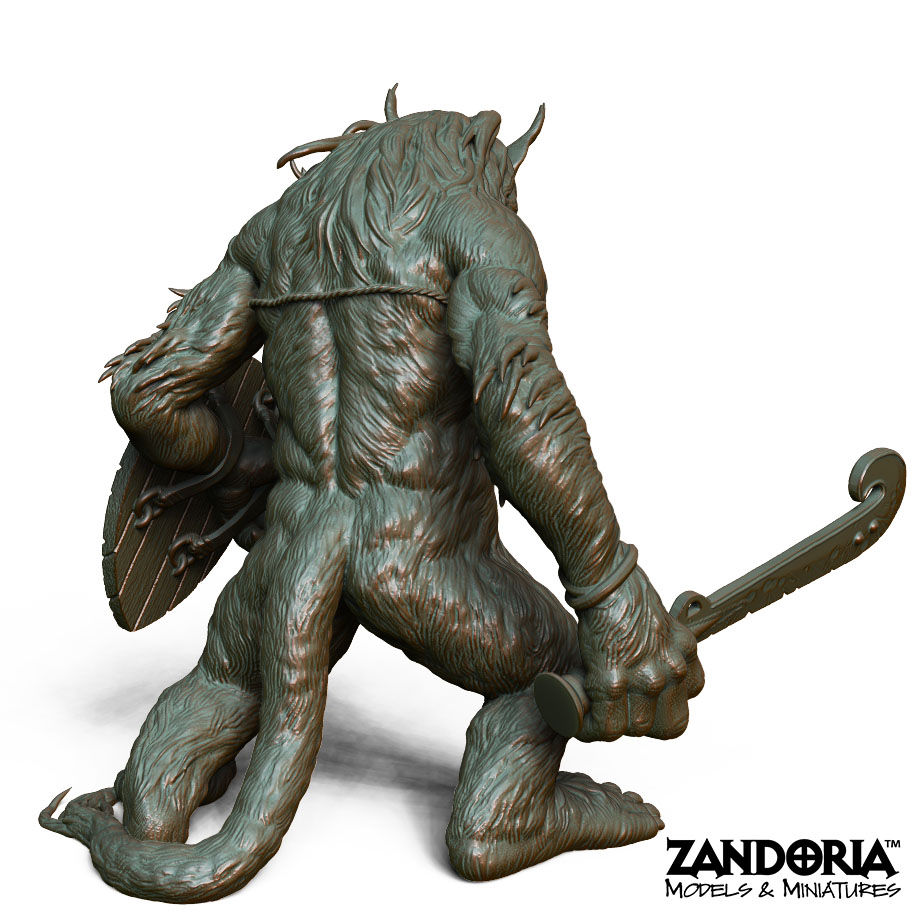
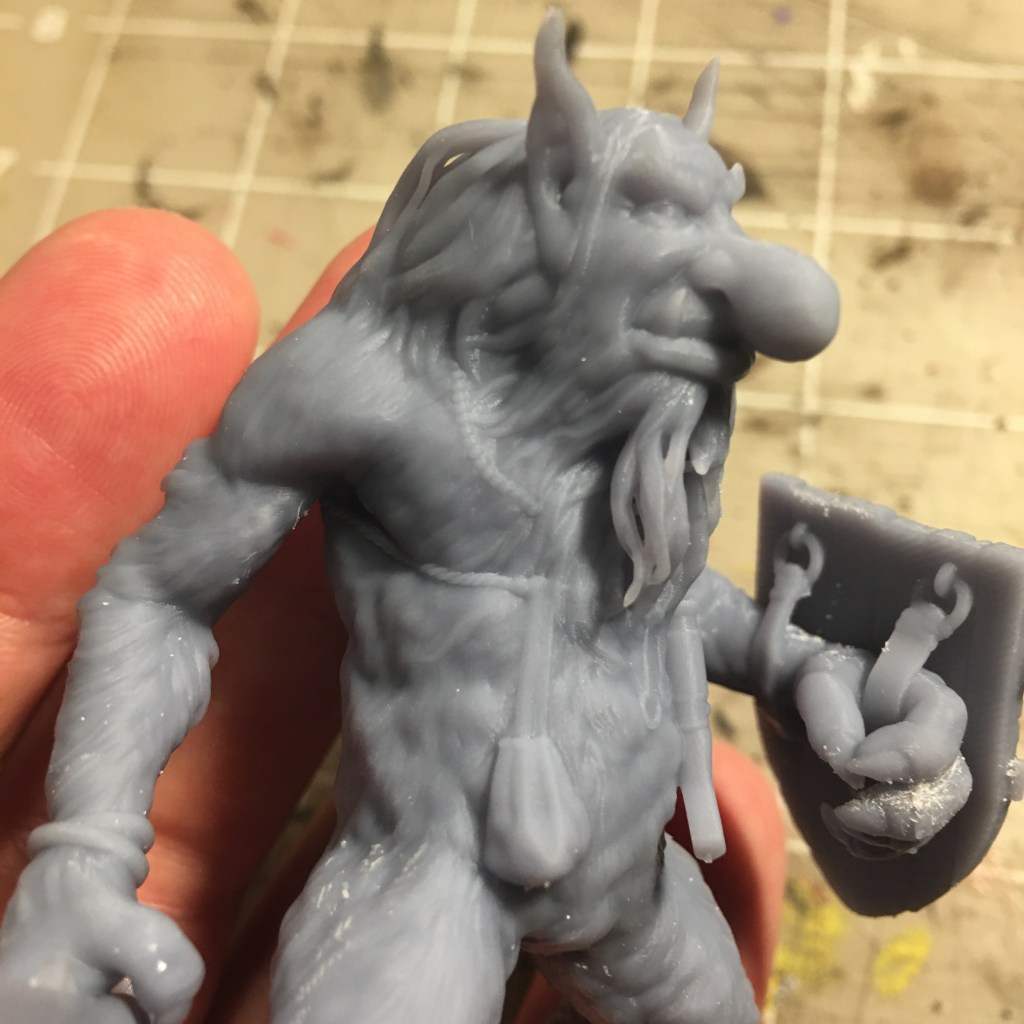
This is the finished model, rendered in ZBrush. I exported this as an .STL file for 3Dprinting for my Patreon.
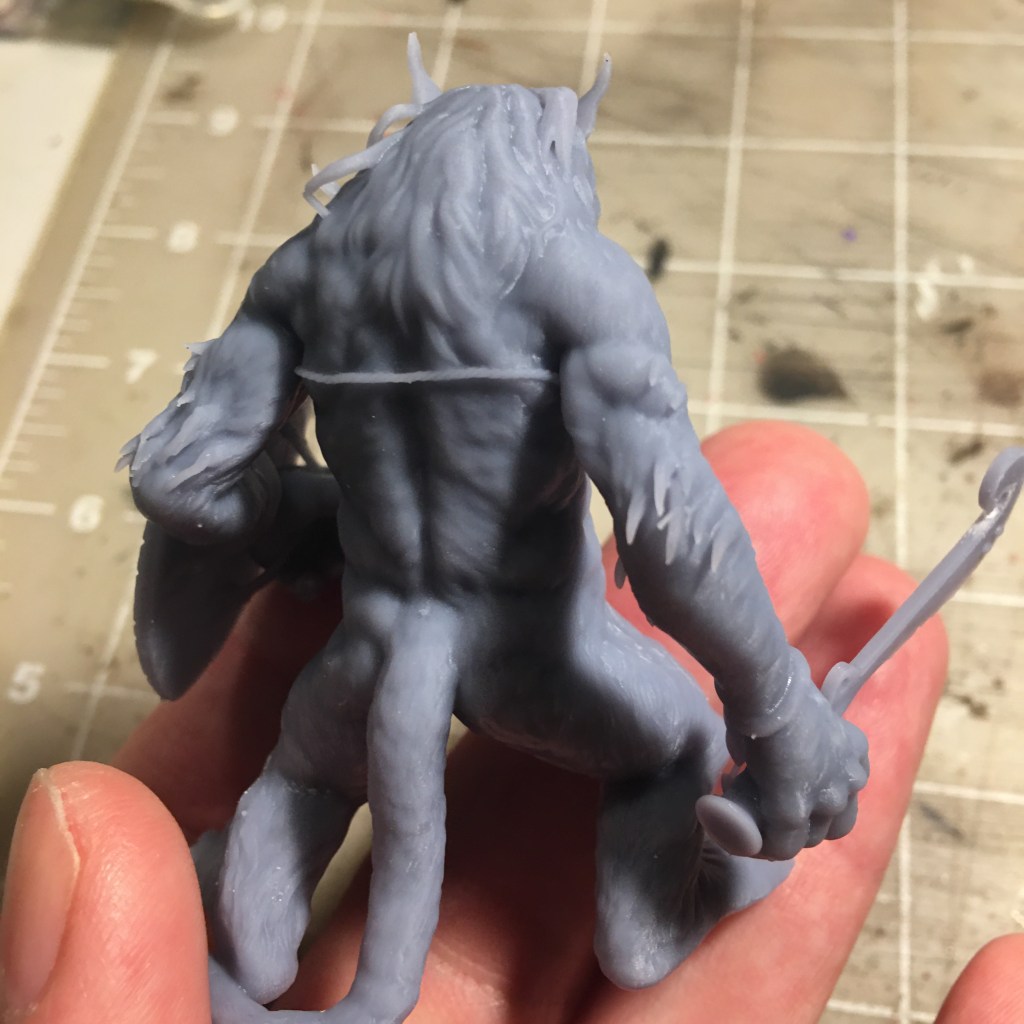
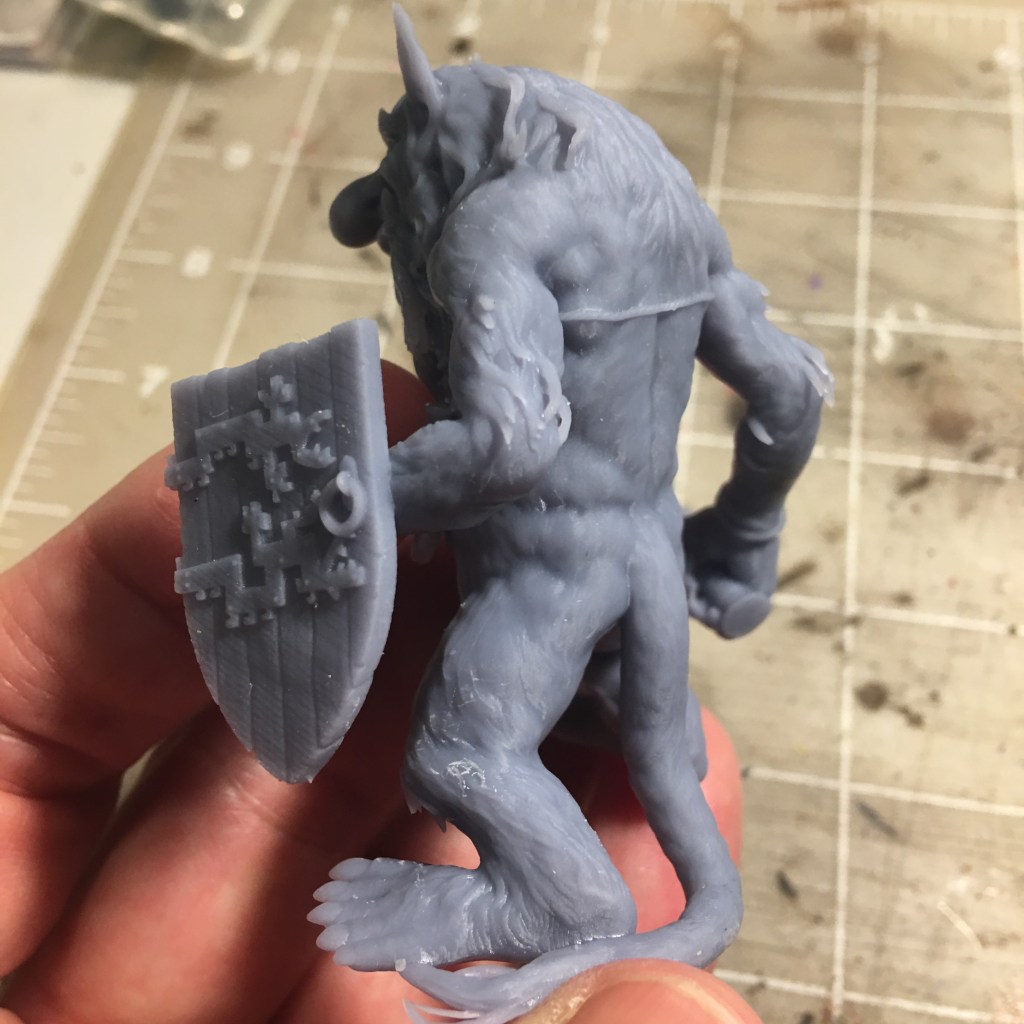
3dprinted on a SparkmakerFHD
The finished miniature printed in resin
I was very happy with how these Troll turned out, so I am planning to sculpt a few more trolls for my Patreon. If you like it, and would like to print your own, they are available exclusively at www.patreon.com/Zandoria
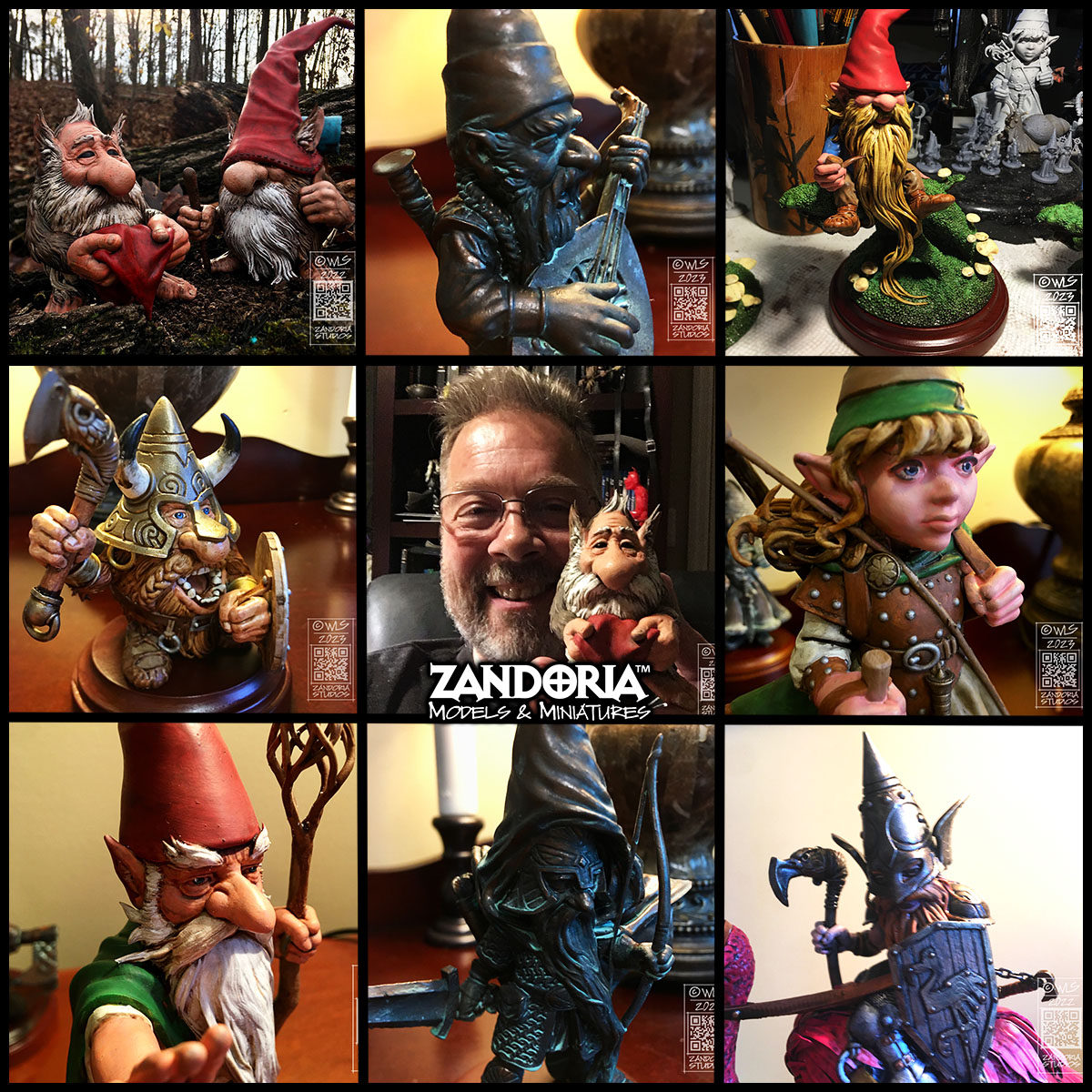
I had a few comments about my paint job on these gnomes, so I thought I would post some step by step pictures of the process, in case that would be helpful to you as you paint your own…
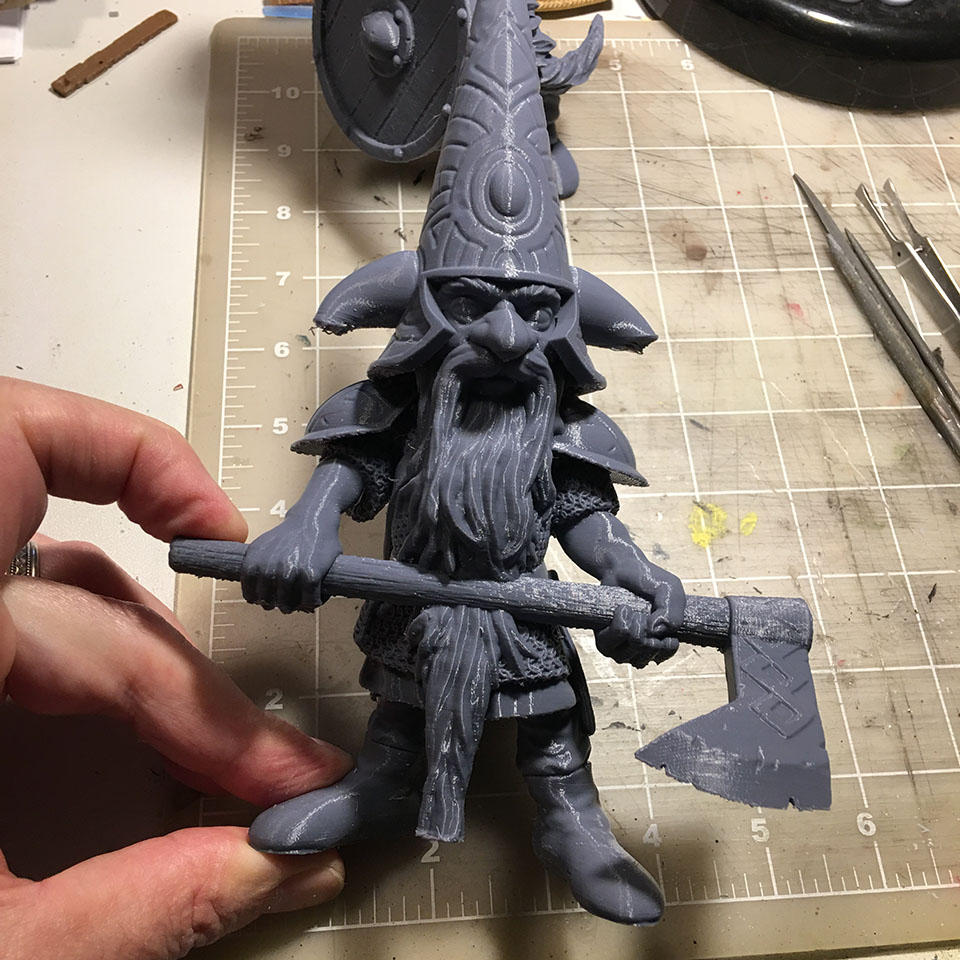
fix any printing errors with green stuff!
If you have any printing errors, the first thing you will do is fix them if you can. Sometimes you might have partial print failure (if a support gets knocked over) and it could leave you with a missing portion of your model. If you have something like a layer shift while printing, you can separate with the putty knife and glue it back together. I have even used a wood-burning tool to weld PLA pieces together or smooth out a rough print!
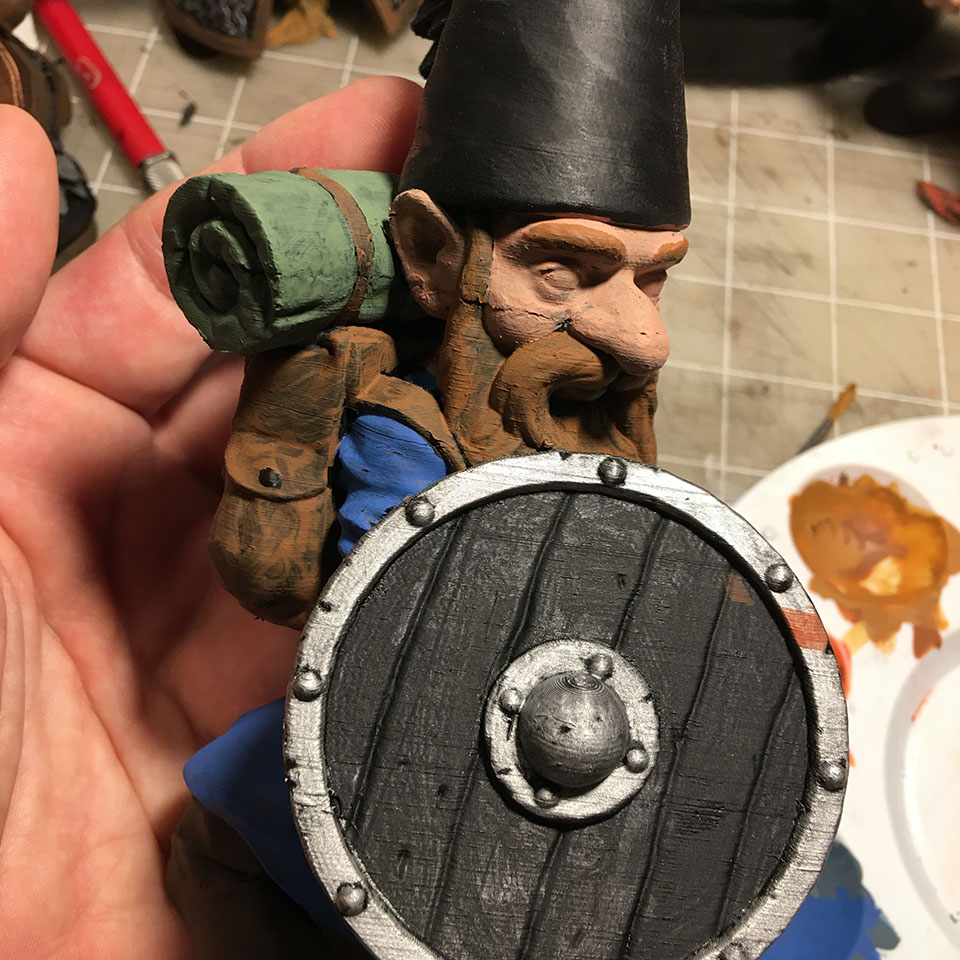
This missing portion of the shield looks like splintered wood!
Sometimes rather than fix it, it might work even with the print failure–This Gnome had a support fail, which left a portion of the shield missing. Rather than try to fix it, I thought that it looked like it could be battle damage, and decided to just go with it!
primer
The first step that I did with these gnomes was to apply a surface primer. I don’t know if it is really necessary, but since my silver metals will be drybrushed over it, I decided to use a black primer.
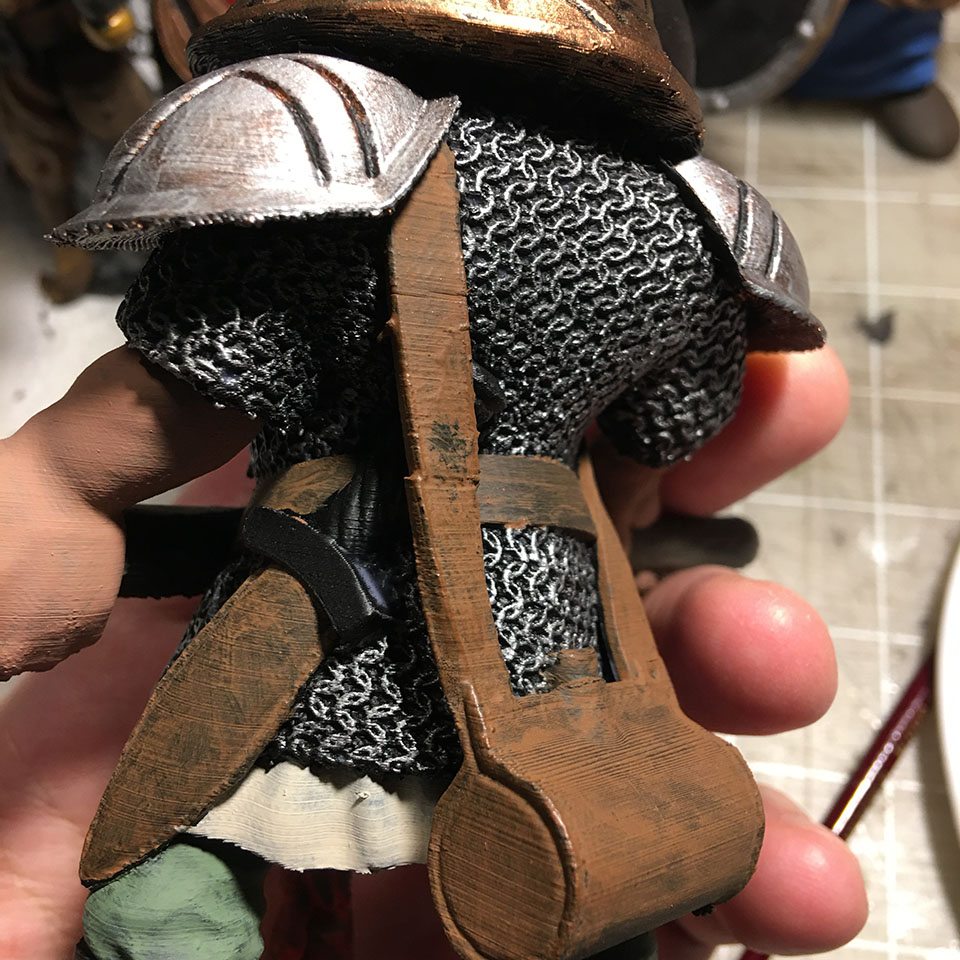
The chainmail texture printed very cleanly! All It needs is a little metalic paint drybrushed across the links. The goal here is to not have much paint on your brush so that it will only hit the raised areas, and leave the black showing in the crevices. This paint is Folk Art metallics–the other colors that I will use are Apple Barrel and Deco Art–It is about 50 cents for a 2 oz bottle at Walmart.
first pass with colors
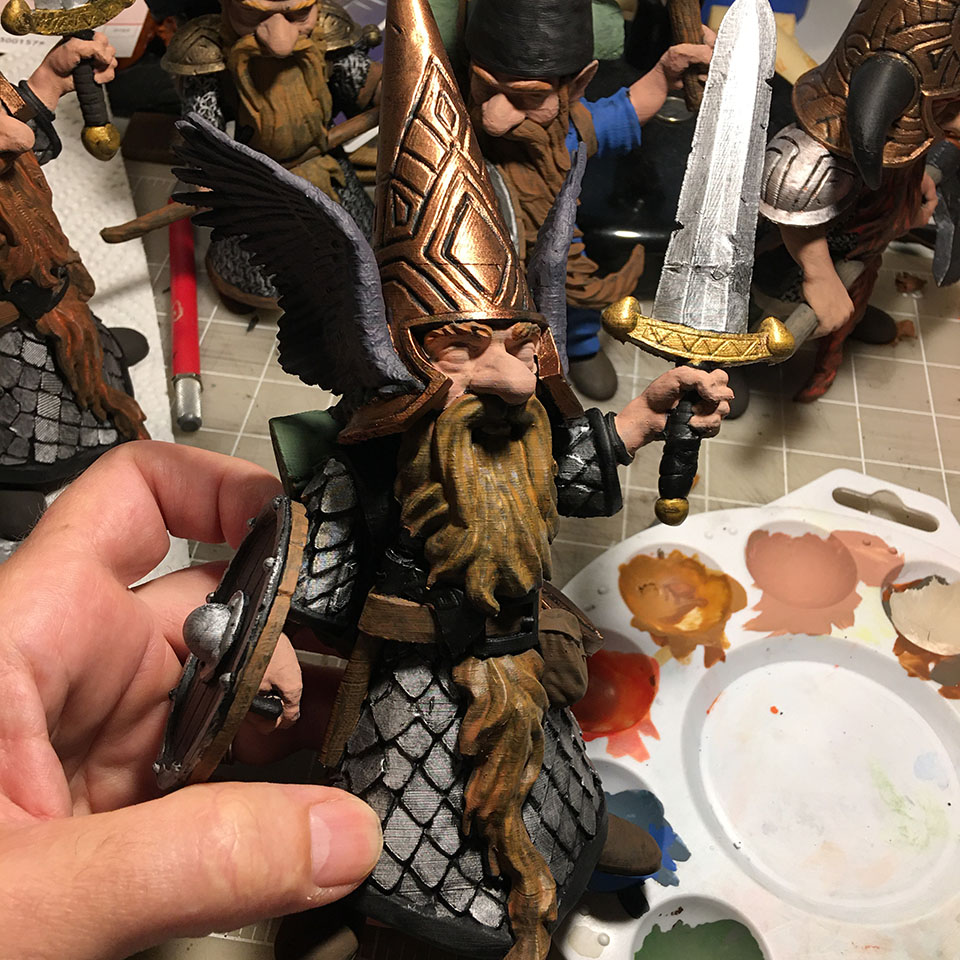
I will go section by section and paint a solid color for each item. Often I will go over an area with two coats to try and get an even coverage.
a dark wash of brown and black
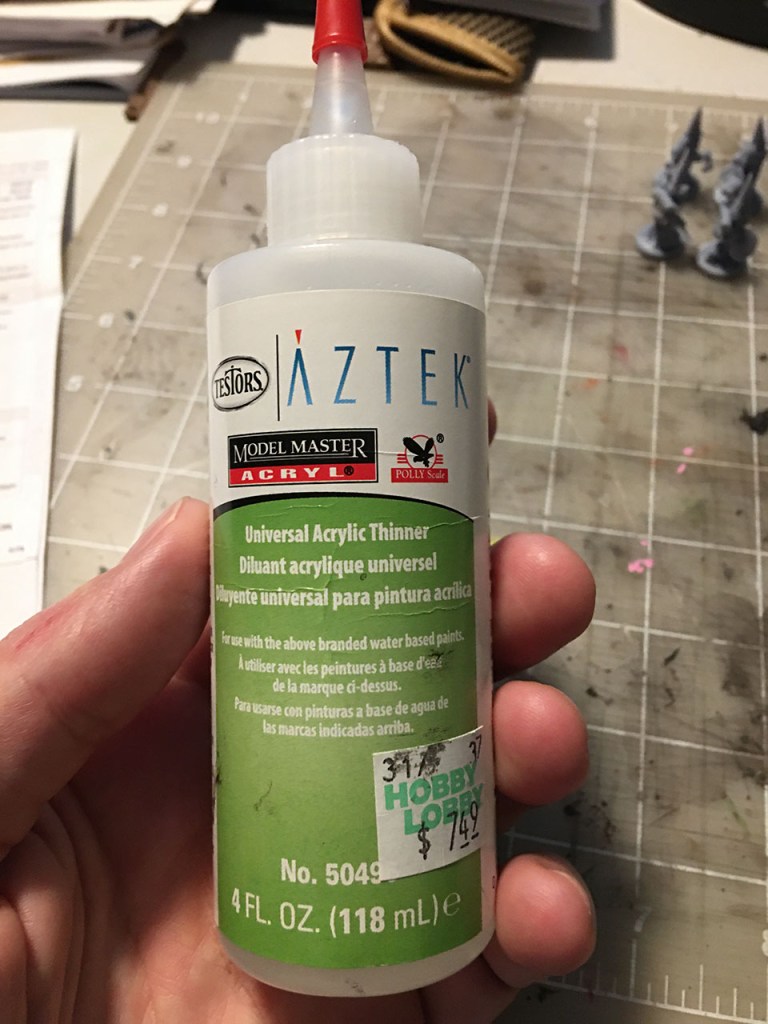
After the base colors are dry, I mix up a wash of black and brown thinned with Acrylic thinner. I think that using acrylic thinner gives a better result than just thinning with water. After the wash was dry, I painted the dark parts of the eyes with a tiny brush.
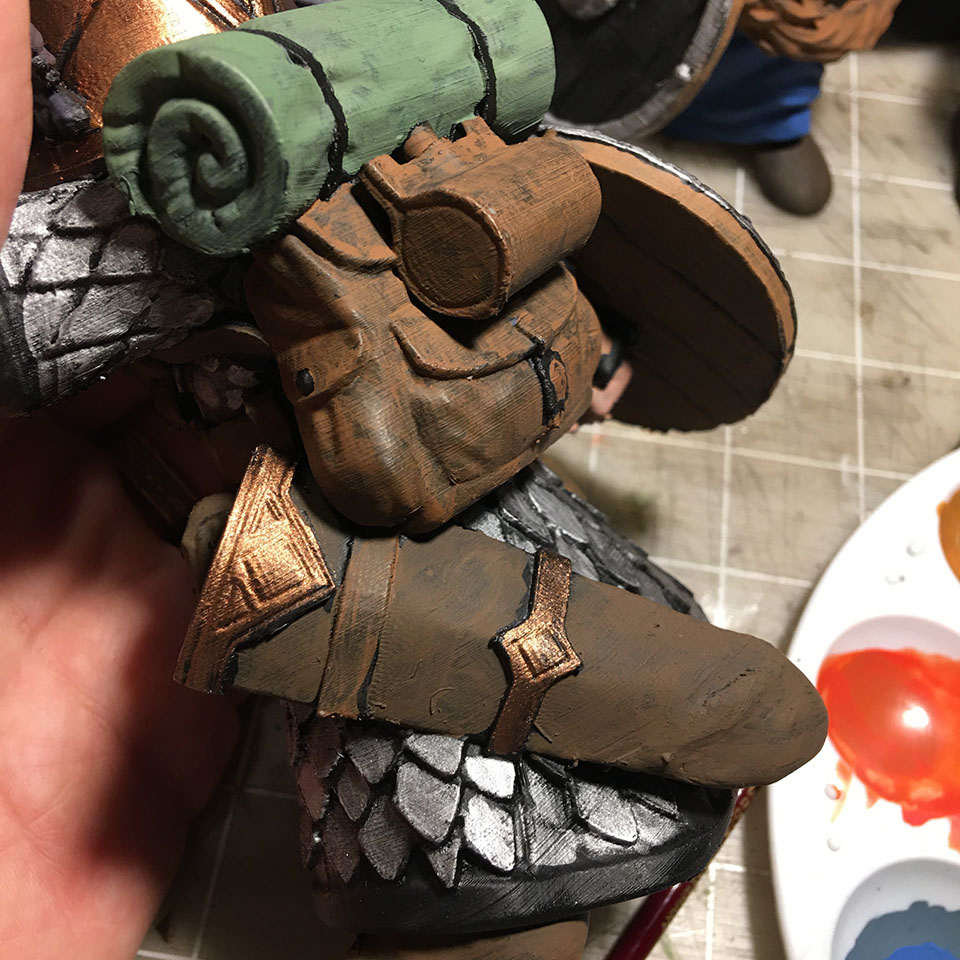
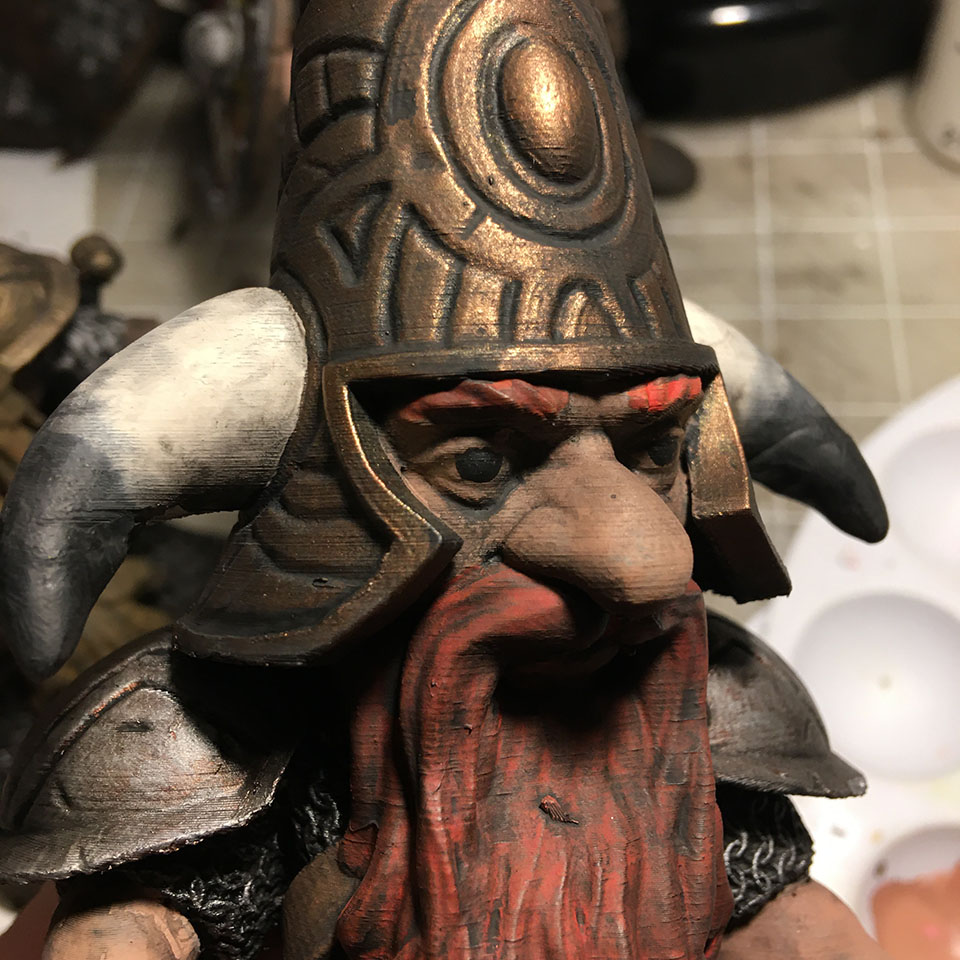
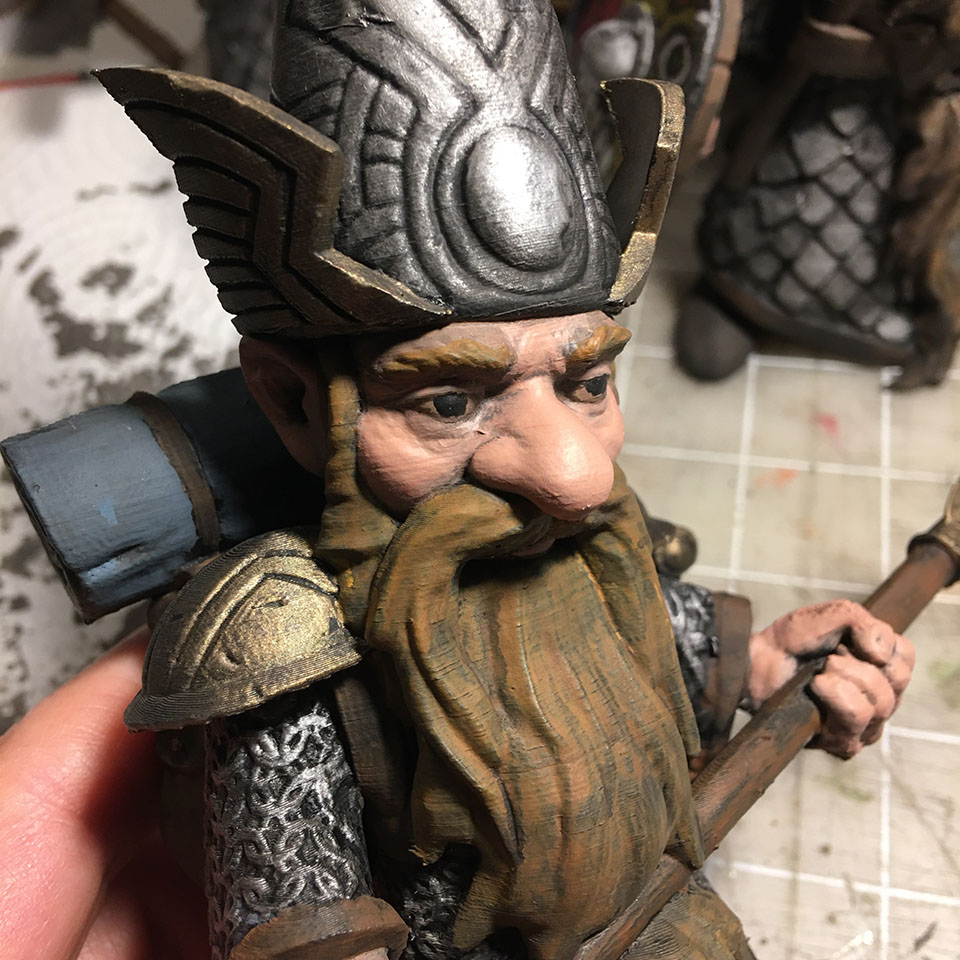
The next coat of paint is done with the same colors as the first coat. You can also add a couple of drops of glaze medium into your color to thin it, if you want to build up the color. In this step, I want to bring the color and saturation of the original color out, while leaving the recesses dark. Don’t paint over all of the wash that you’ve done, but let your bright color blend into it. You can use wet blending to soften the transition into your recesses. Even the armor and other metallic areas will get a second drybrush coat.
The second coat of color pops out from the darker wash
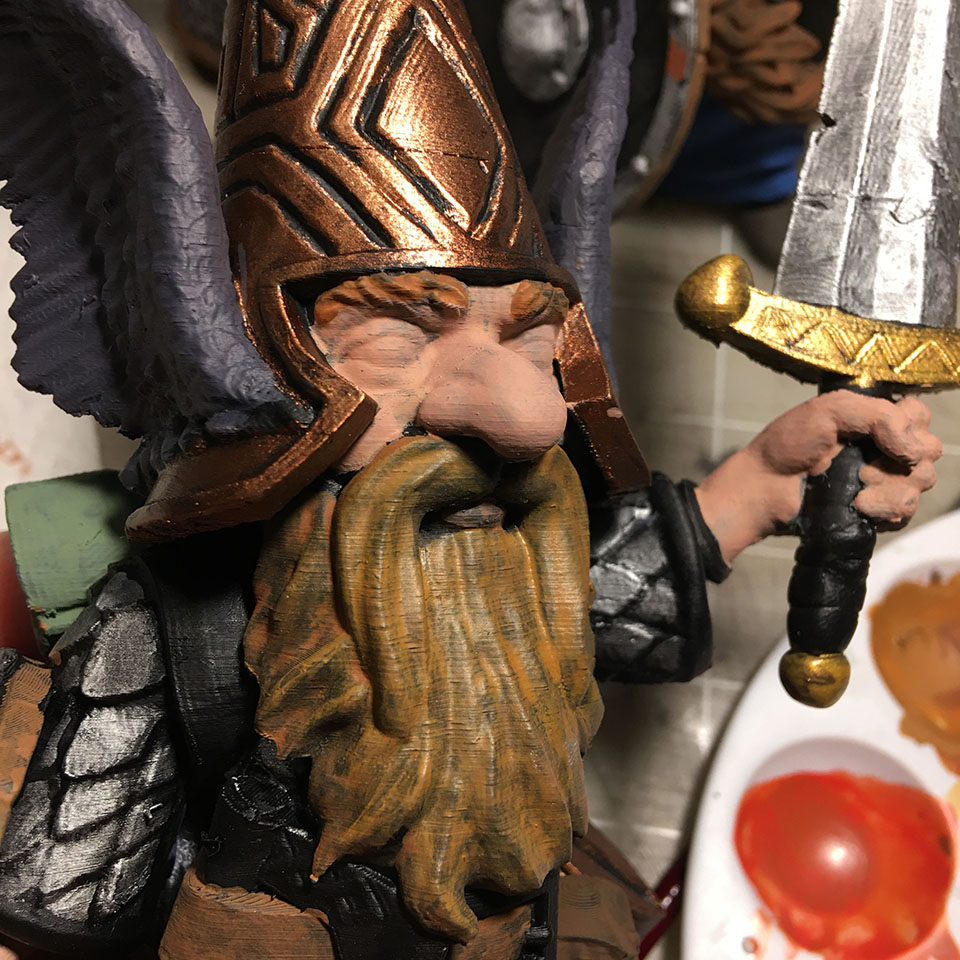
When I’ve finished the second pass of colors, I will go into the details like the eyes, and add the iris color and specular highlights.
details added to the eyes
The last step is to add a gloss varnish to the eyes and lips. And maybe a satin varnish to other shiny areas.
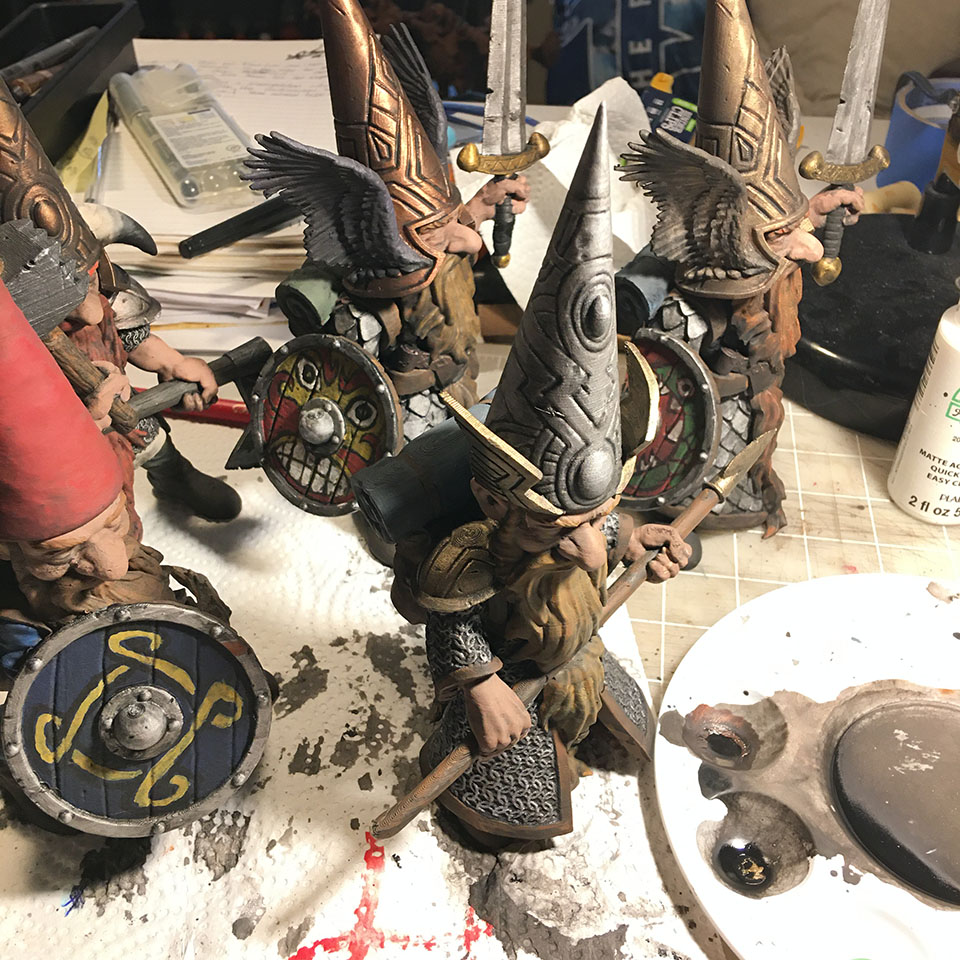
After Painting, your Gnomes are ready for the Garden!
If you would like to 3dprint and paint your own set, you can get the STL files at Cults3D
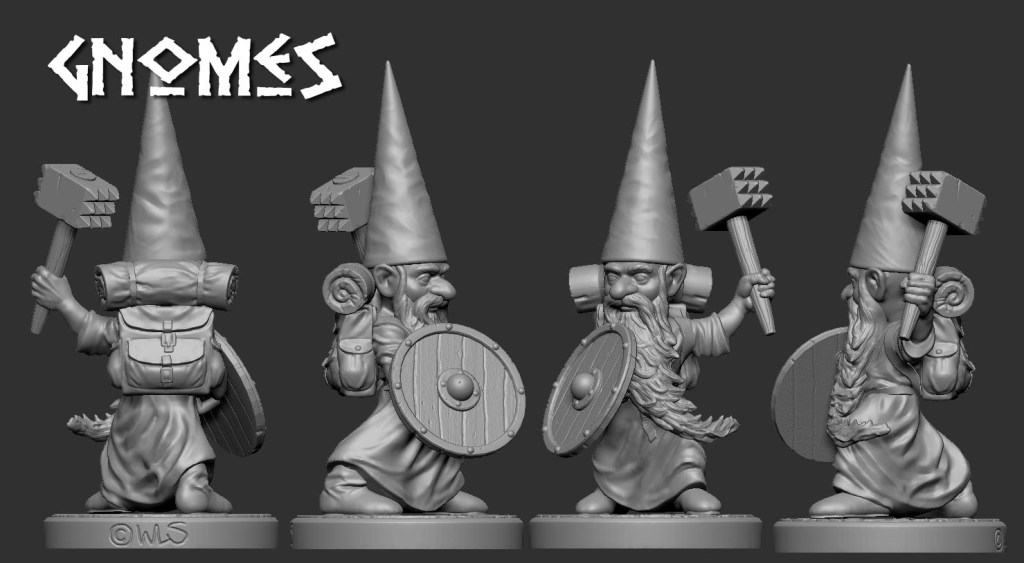
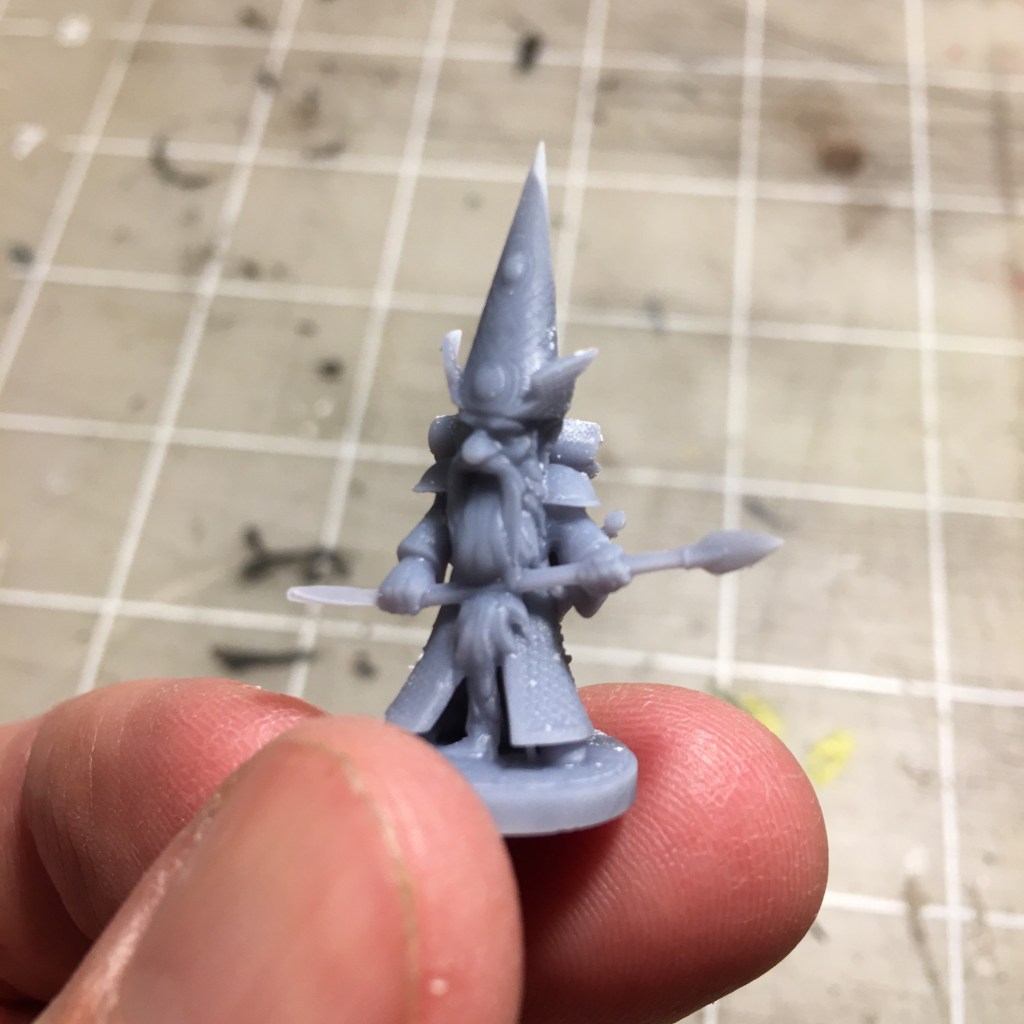
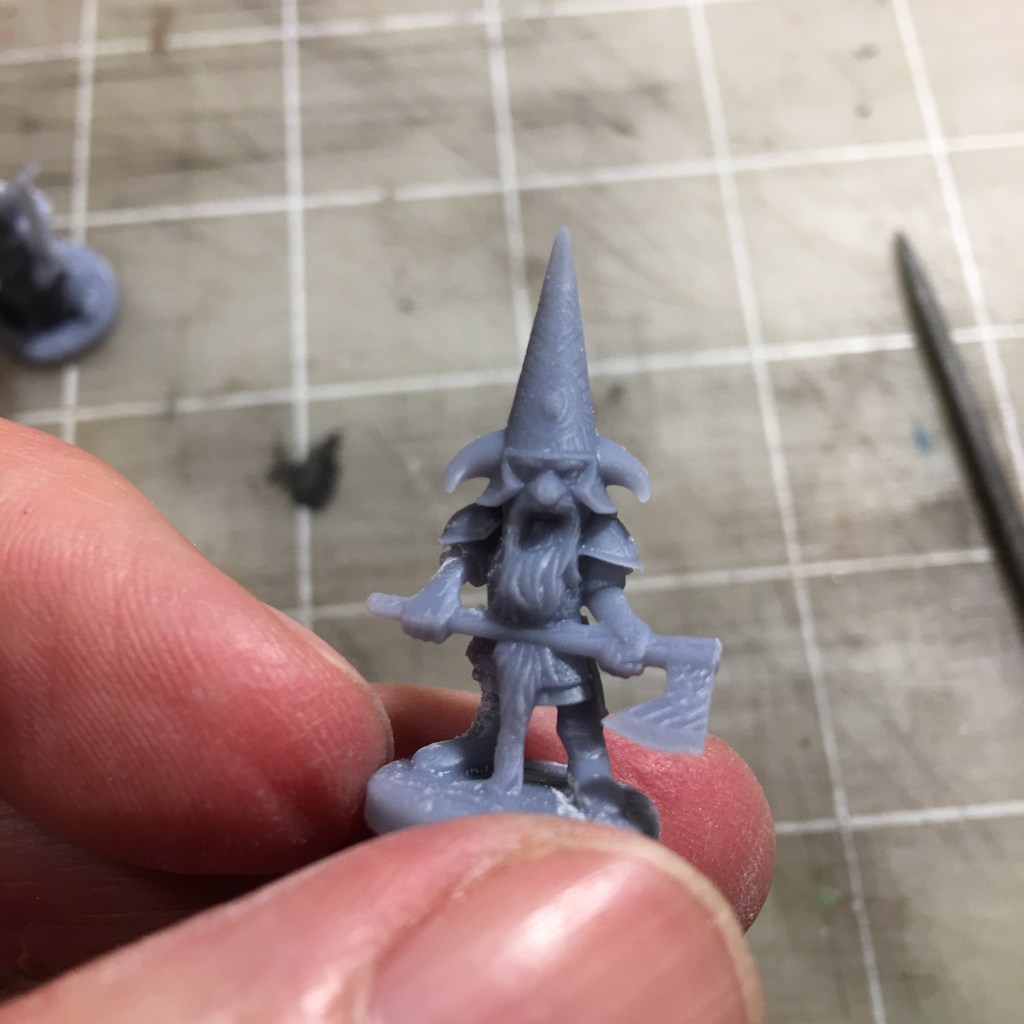
I had this idea that I thought would look pretty cool: Gnomes for D&D, bust sculpted in the style of Garden Gnomes! Where they typically have a pointed cap, I would keep that shape, but make it a pointed helmet. This was a series of sketches that I made the next morning when I woke up with the idea…
Gnome with “meat tenderizer” mace!28mm scale miniGarden-sized!
After I sculpted a few, I decided to make a “Garden-Sized” version for the yard! The mini is printed on my SparkmakerFHD and the big version on my Ender3.
more gnomes and test prints
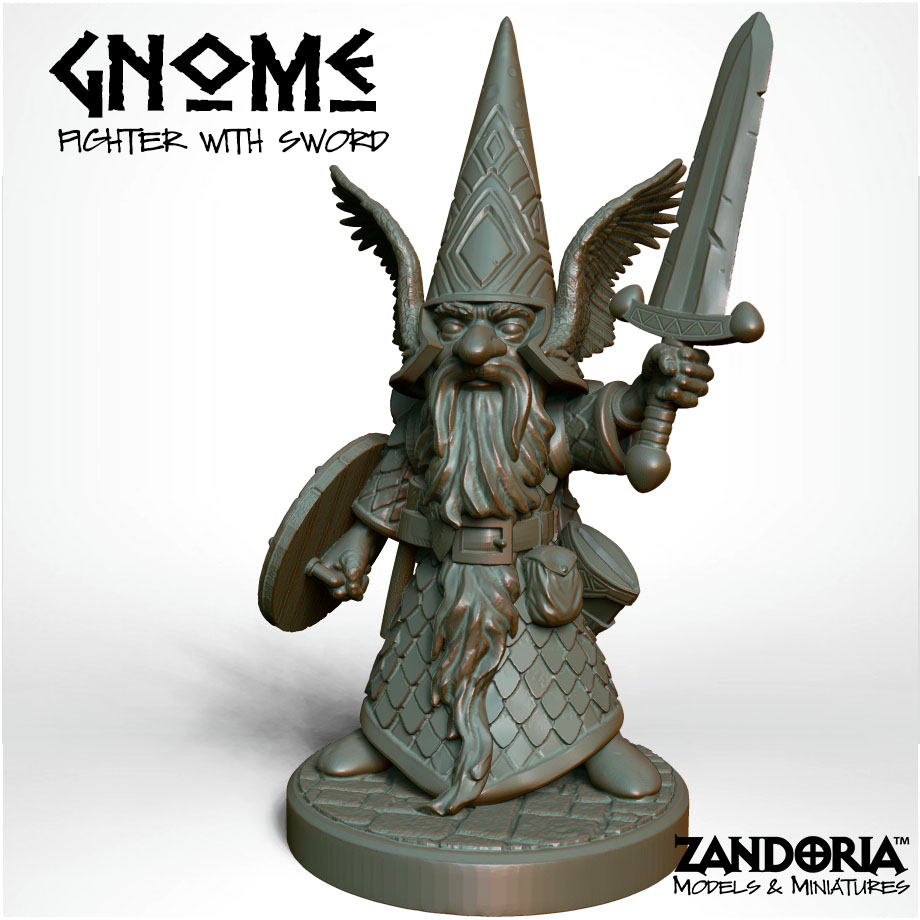
I am sculpting some more for my Patreon for next month, but if you would like to get these you can buy on Cults3D:
Copyright does not protect the idea for a game, its name or title, or the method or methods for playing it. Nor does copyright protect any idea, system, method, device, or trademark material involved in developing, merchandising, or playing a game. Once a game has been made public, nothing in the copyright law prevents others from developing another game based on similar principles. Copyright protects only the particular manner of an author’s expression in literary, artistic, or musical form.
This is the opening paragraph of FL-108, from the US Copyright Office… There is some confusion that I have run into on online forums regarding 3D printed miniatures for games, where there was a concern about being sued for violating the Intellectual Property rights of companies such as Games Workshop or Wizards of the Coast by creating miniatures for their games without a license.
IP rights are Copyrights, Trademarks, or Patents. There isn’t any other type. You can’t copyright a game–only the art or text within it. Ideas are not protected by copyright, only their artistic expression in fixed form. Some people think that the rules (game mechanics) are protected since they are within the copyrighted rule book, but that aspect of the work is specifically not protected by copyrights:
In no case does copyright protection for an original work of authorship extend to any idea, procedure, process, system, method of operation, concept, principle, or discovery, regardless of the form in which it is described, explained, illustrated, or embodied in such work
This is from a ruling on a cloned tabletop game, where the judge ruled summarily that there was no infringement. The artwork and story can be protected by copyright–The rules cannot.
This issue came up in 2011 when an artist created 3D printable versions of pieces for the game Settlers of Catan and made them available on Thingiverse. The 3D printed tiles are not based on the printed tiles from the game (which could make them derivative work), so are perfectly legal in regards to copyright.
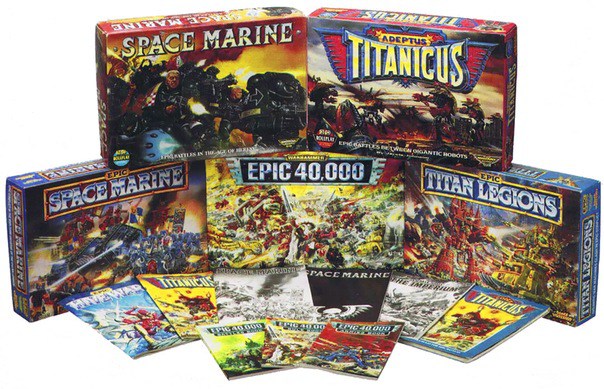
Trademarks are a different type of intellectual property, that identifies the source of a product or Service. Games Workshop has a trademark on the term “Space Marine” as the name of a product:
The Trademark (word mark) identifies “Space Marine” as a product of Games Workshop. This trademark identifies the source of the product–specifically the tabletop wargame. It does NOT mean that Games Workshop owns the word, except as the name of a game.
The actual miniatures and illustrations from the many Warhammer Codexes are protected by copyrights. To create your own version of these pieces, if based on them, would be to make a derivative work–a violation of copyright.
Games Workshop “Space Marines”
However, there is nothing preventing an artist from creating miniatures intended to be used as space marines, which is why you see miniatures from 3rd parties such as Scibor Miniatures:
As long as your sculpture is original and not based on a copyrighted drawing or painting, it is not a violation of anyone’s intellectual property. As stated above, games are not protected under copyright.
There is an “Open Gaming” movement, which I have an issue with–The copyright holder granting you a “license” to use their rules to make your own content! Wizards of the Coast started this with their D20 System, to encourage 3rd parties to create content that was compatible with their game.
But game rules are not protected by copyrights, there is no need for permissions at all. The OGL license does not grant the right to use any of Wizards of the Coast’s copyrighted artwork, so it is essentially granting a license where none is required. Maybe this is a way to relieve 3rd party creators concerns that they could be sued, and to encourage them, but it also creates an illusion of “IP Rights” that don’t exist….
In this new era of 3D printed tabletop games, an artist could not only create a line of miniatures for 3D printing, but also publish stats (warscrolls) for playing them in Warhammer 40K, Hordes, Warmachines, D&D or Pathfinder!
Another possibility is to create standardized tabletop rules, where players can bring in their armies that they have bought, built or printed and play them against any army–regardless of the setting they were originally created for–A Multiversal Wargame™


























 Zandoria Studios