Page 2 of 14

Princess Cottongrass

This is an illustration by John Bauer from a fairytale about Leap the Elk and Little Princess Cottongrass, written by Helge Kjellin and illustrated by John Bauer (1913). I thought it would be a fun project to try to make a sculpture based on this story.

concept sketch

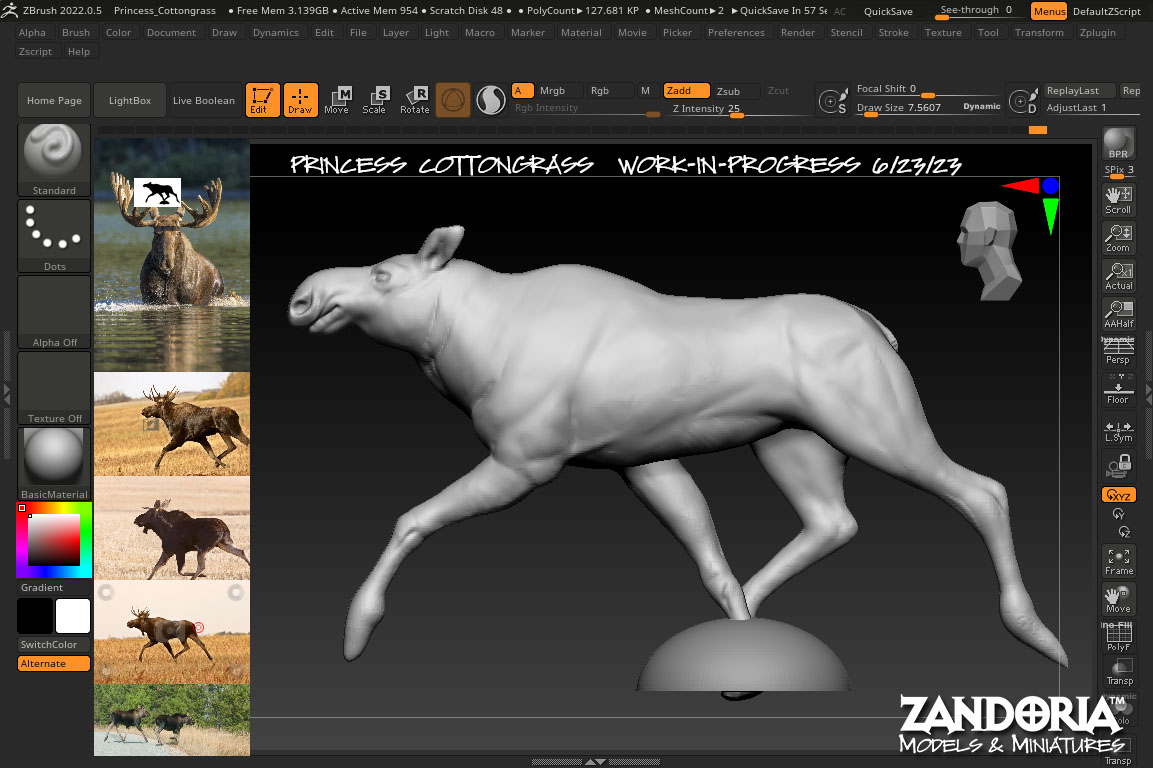
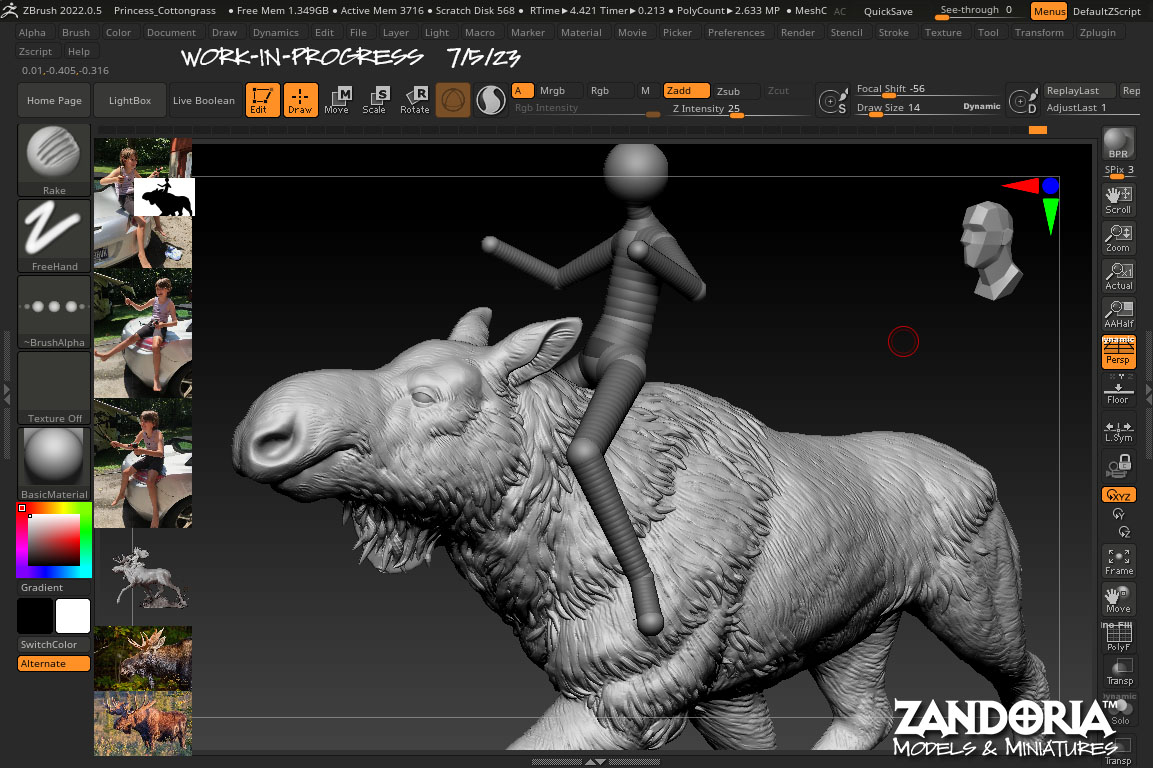
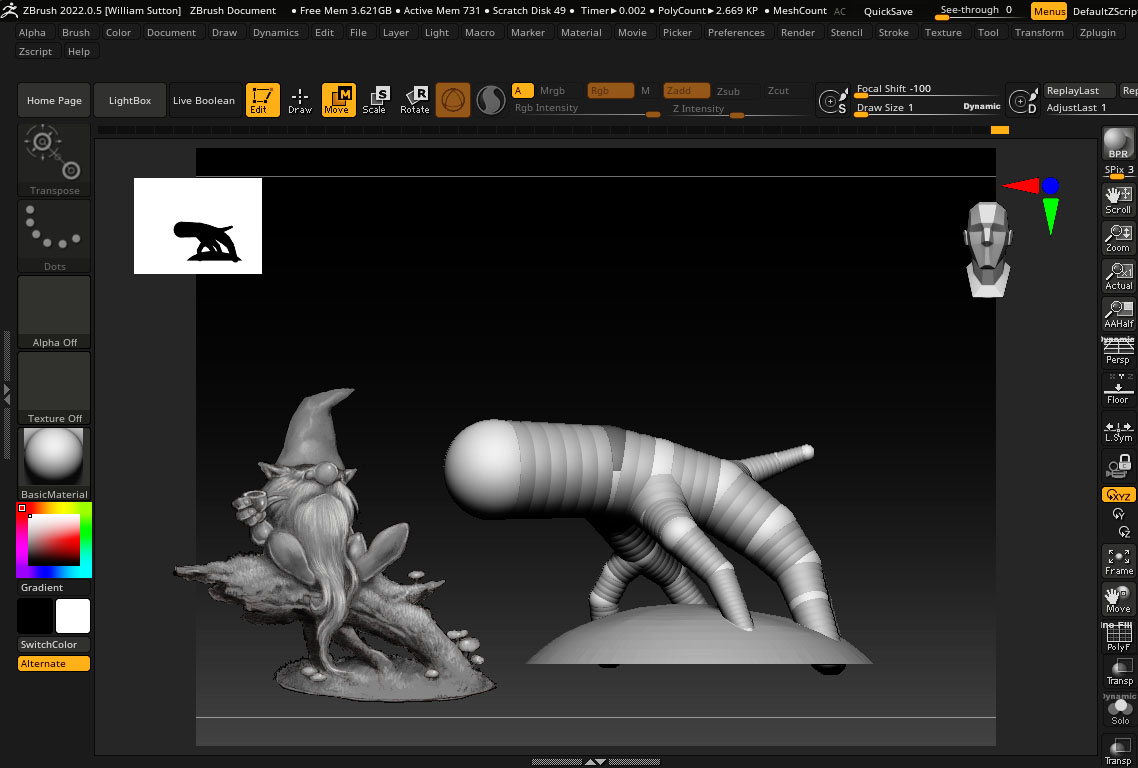
I started with some mesh balloons in ZBrush to block out the basic moose shape. Next I used Dynamesh to merge it together and sculpted the details. I made a ZSphere armature for the princess to give myself a basemesh to sculpt.

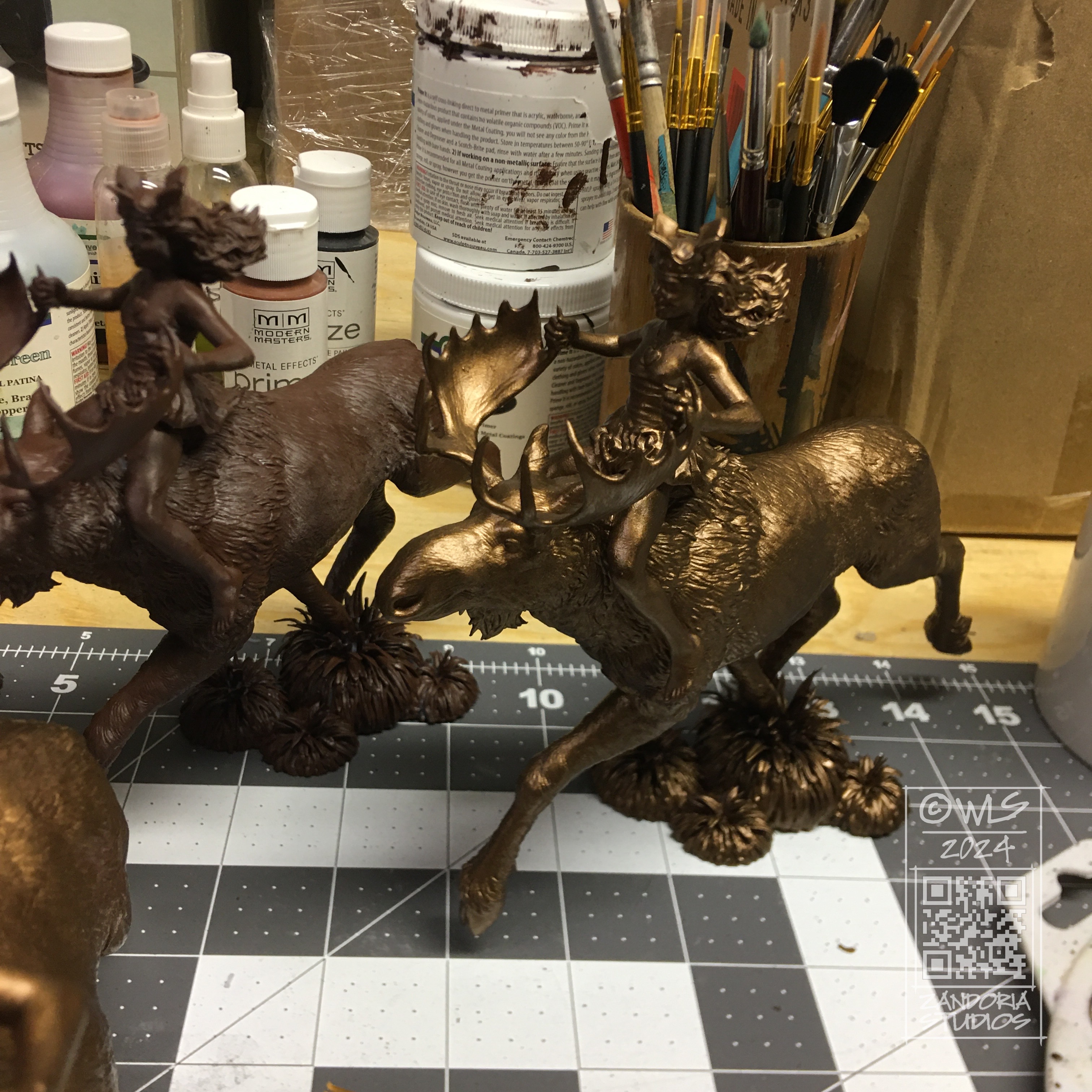
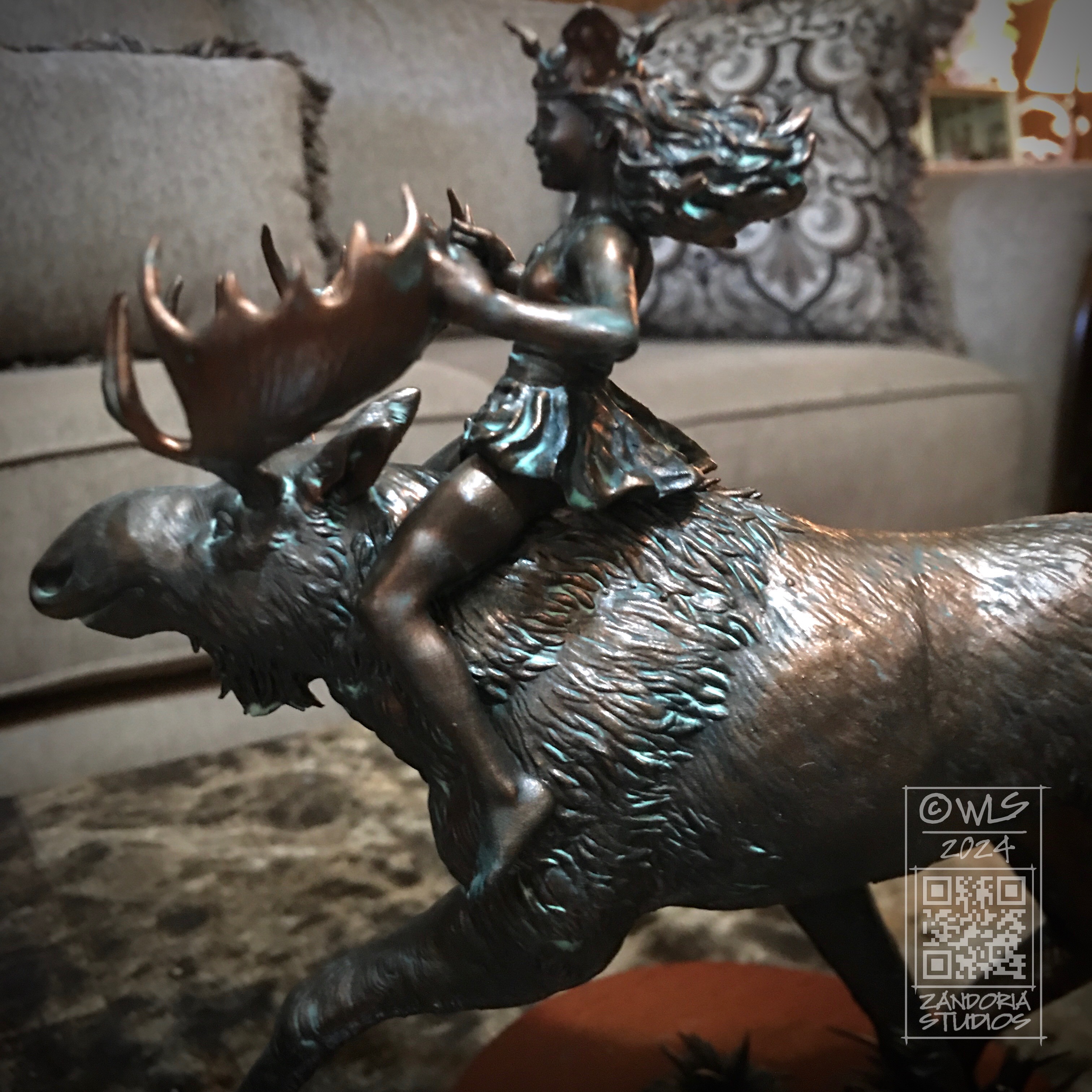
After the digital sculpture is finished, I use a resin 3Dprinter to reproduce. Next is a 3 step process of applying a bronze metal coating and acid patina.

This edition is limited to only 20 pieces, and comes with a certificate of authenticity. It is 6″ tall and about 8″ from end to end.

https://zandoria.etsy.com/listing/1685783997

PuzzleLock Dungeon II

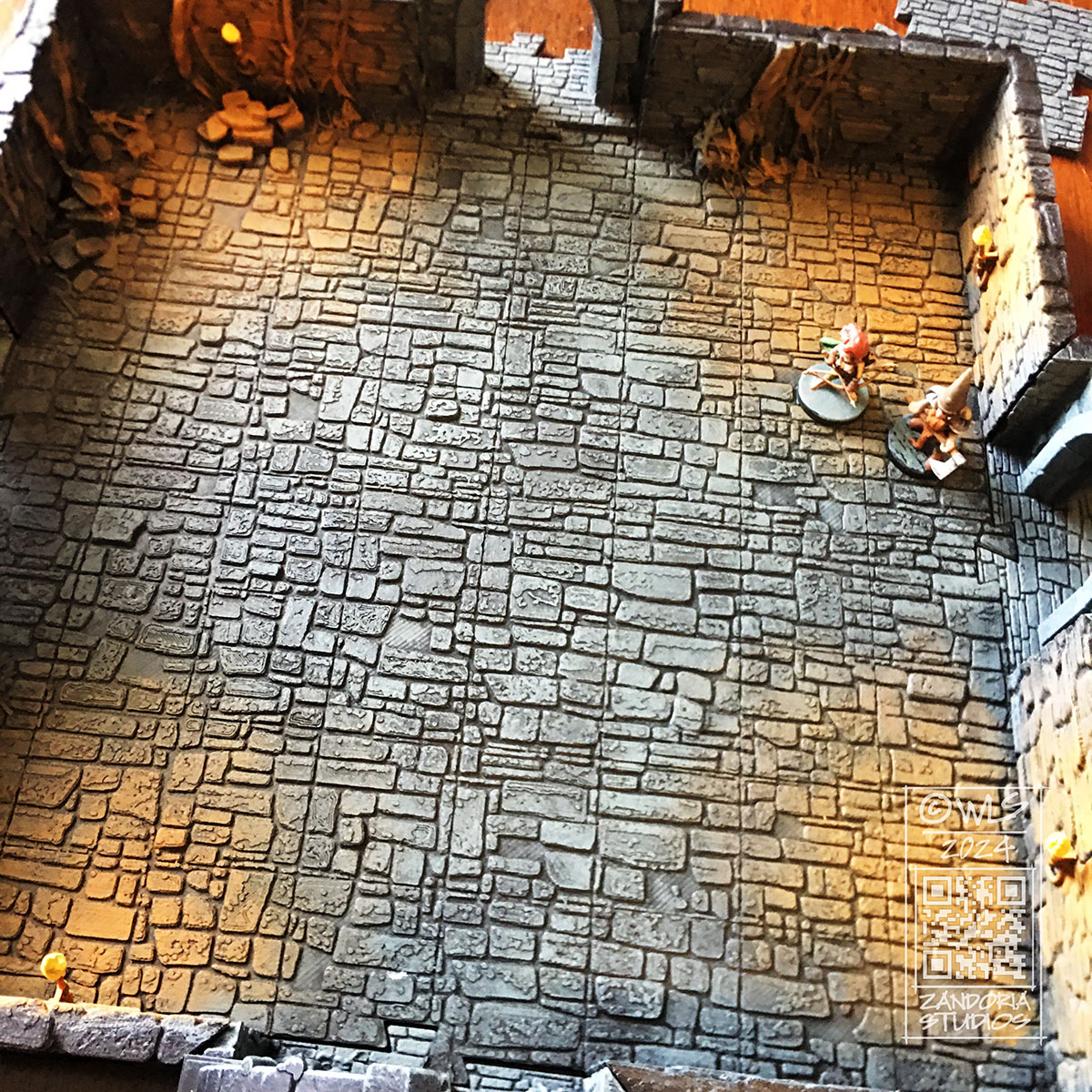
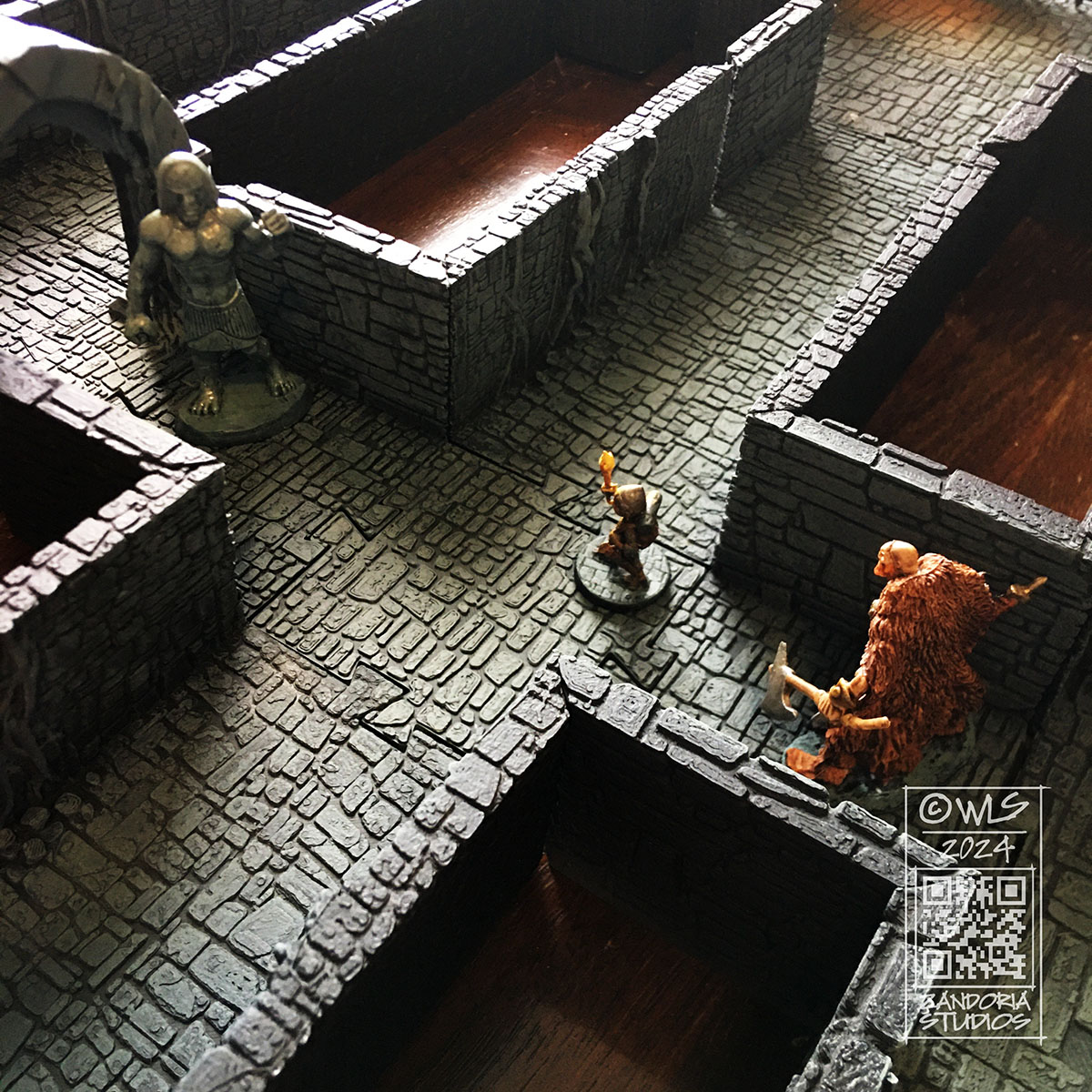
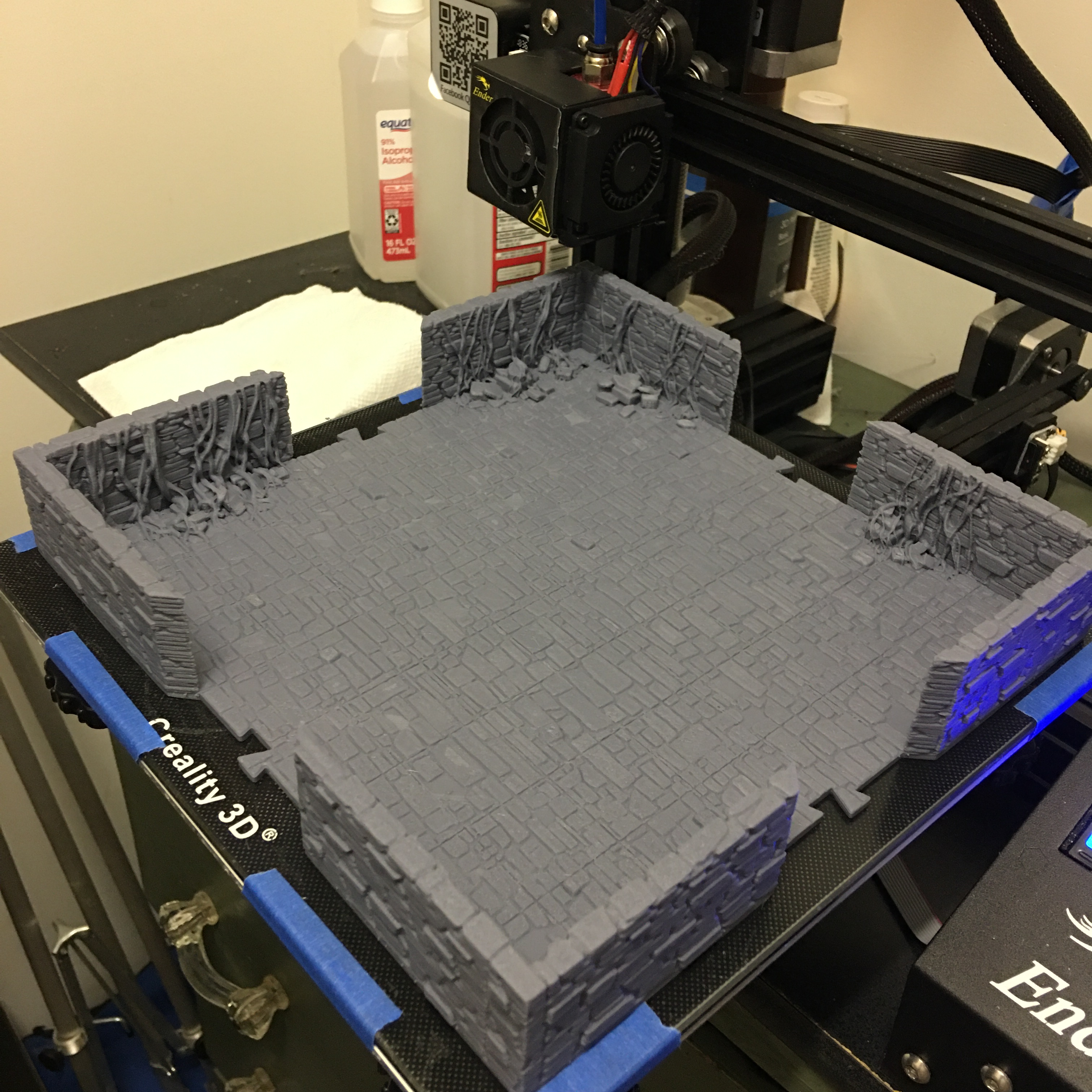
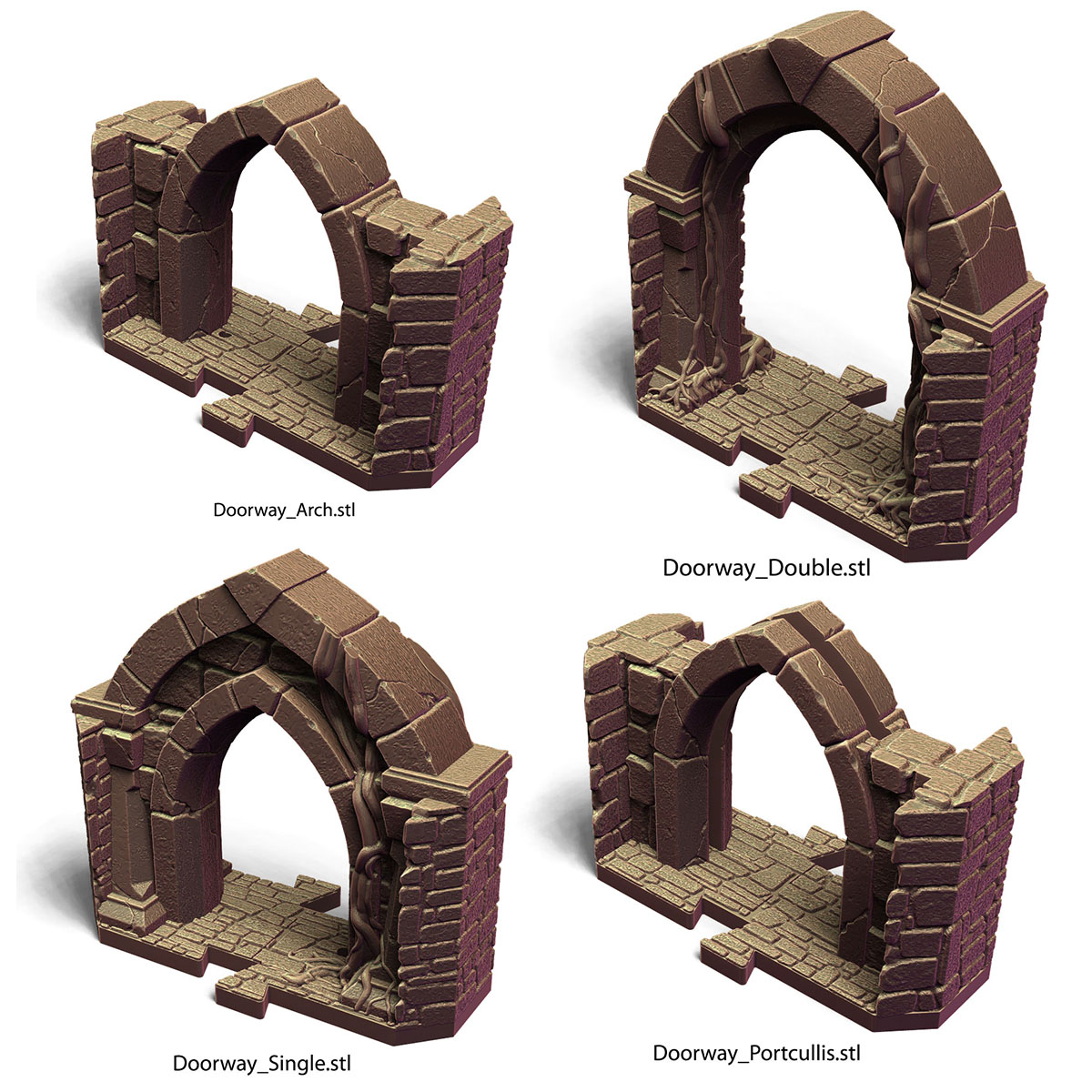
PuzzleLock Dungeon II is a 3Dprintable terrain system for tabletop RPGs like Dungeons and Dragons or Pathfinder. Bring your miniatures game to life with this immersive, detailed dungeon.

There are 47 unique STL files in this set. Not just tiles–print entire rooms and corridors! The innovative offset wall design gives you the full grid to play on. The walls are 32mm tall (overall 35mm), so they will not obscure the miniatures. The pieces connect with my original PuzzleLock. No clips, no magnets, they connect like a jigsaw puzzle!

The doorways feature working doors! There is a pin edge to the doors, with corresponding holes in the doorways.

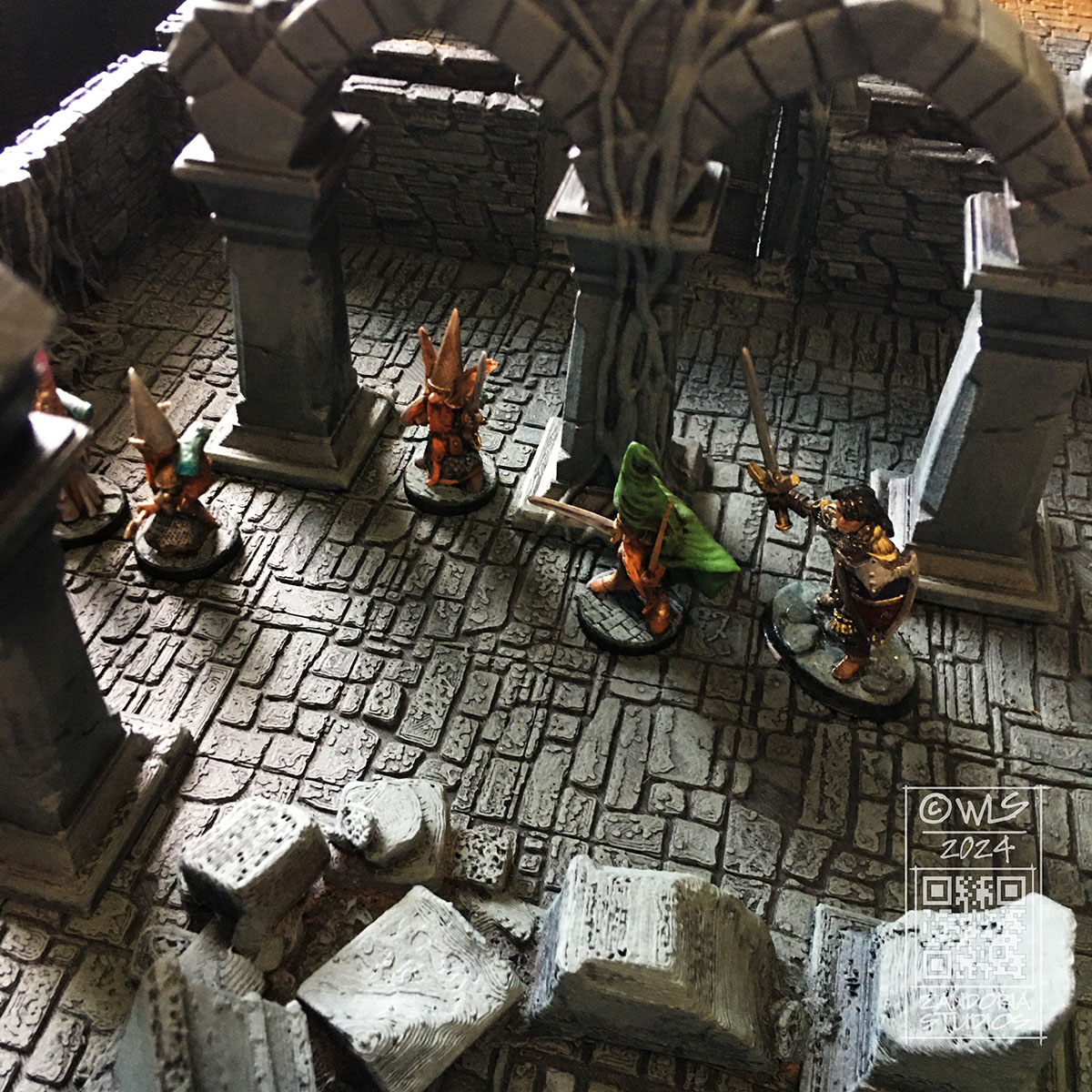
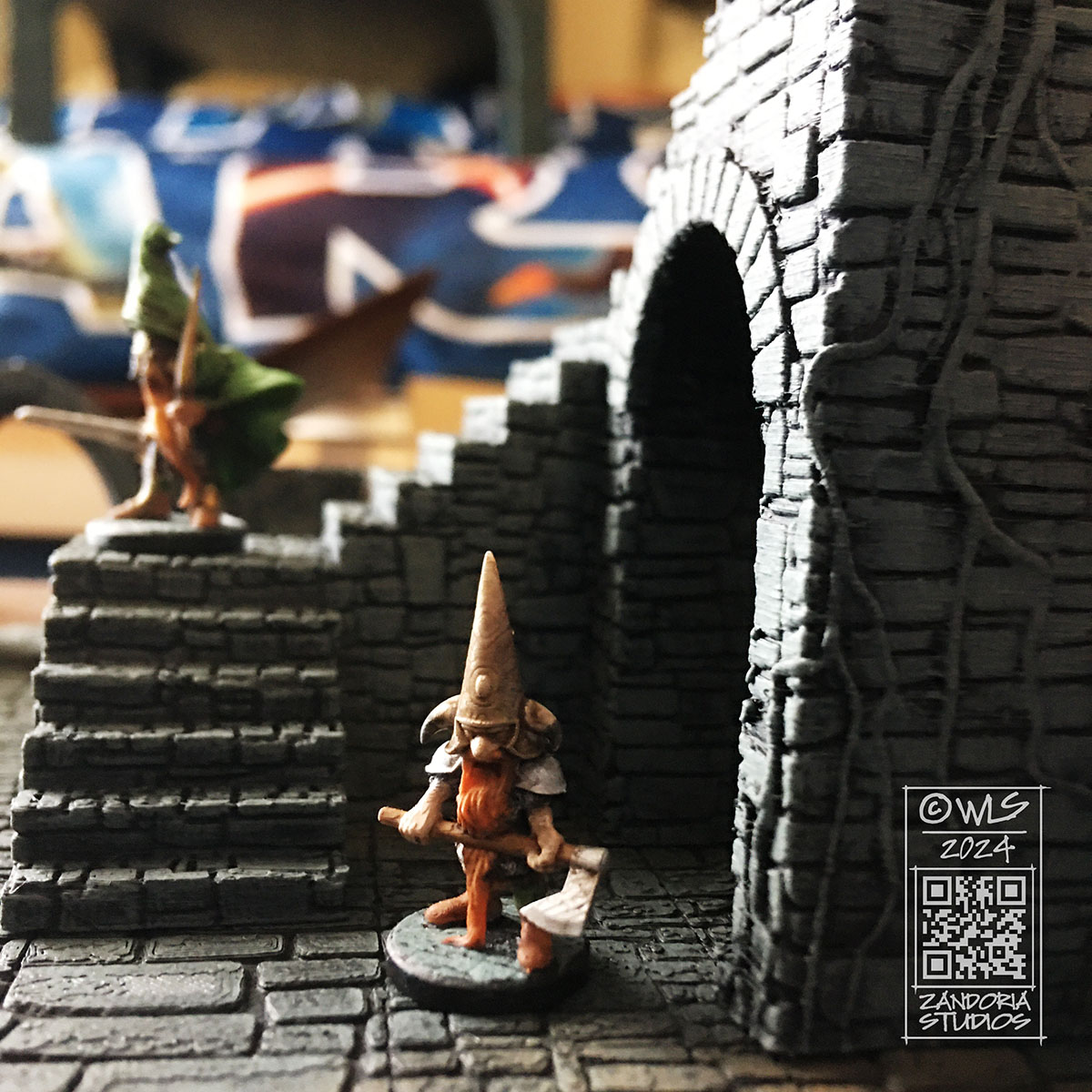
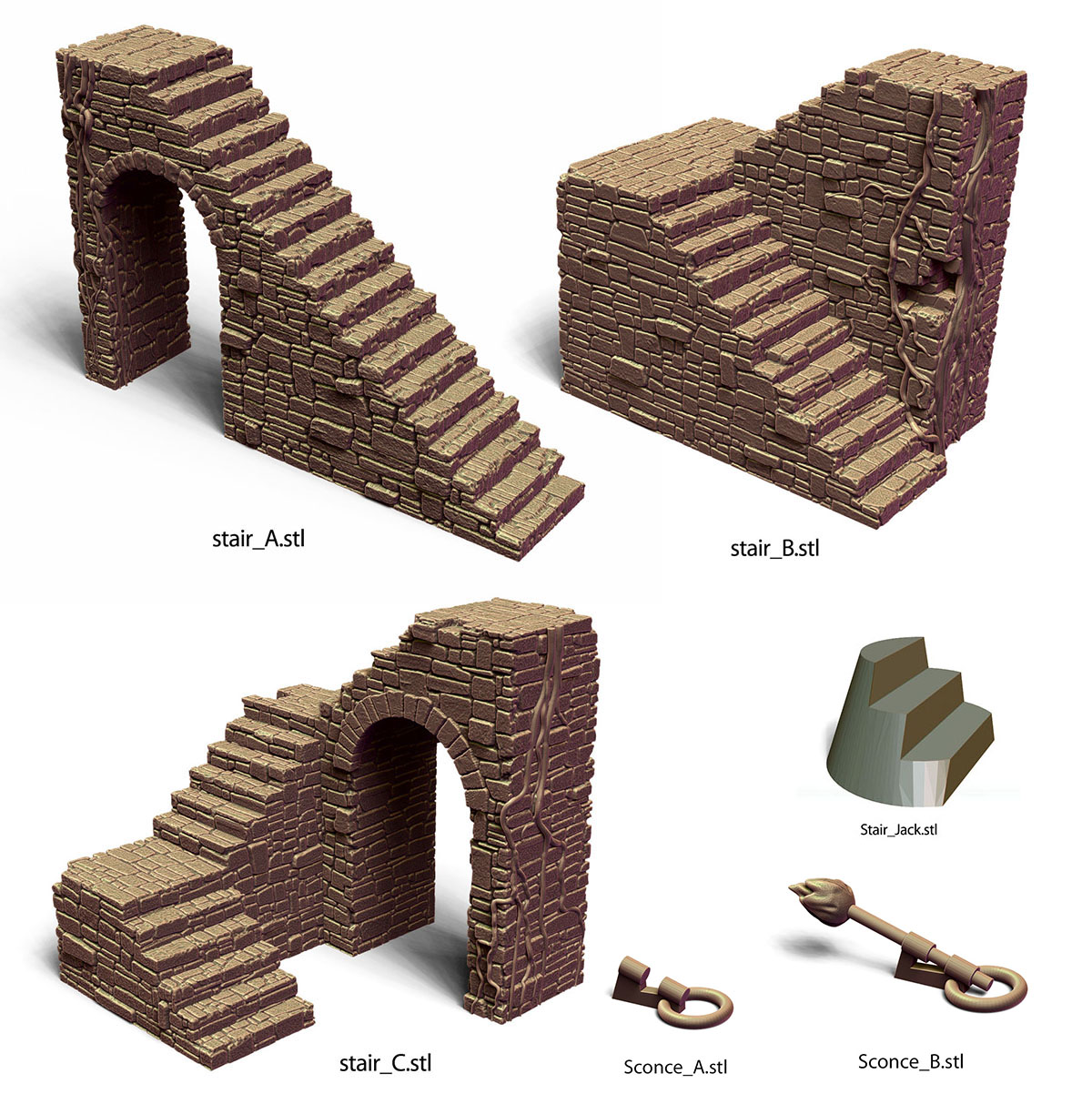
Pillars, stairways and rubble are scatter terrain. Place them directly on top of the tiles to create unique rooms.

There are also many tiles to let you build any room that your dungeon may require.

The entire PuzzleLock Dungeon II set of STL files is exclusively available on Cults3D for only $10.

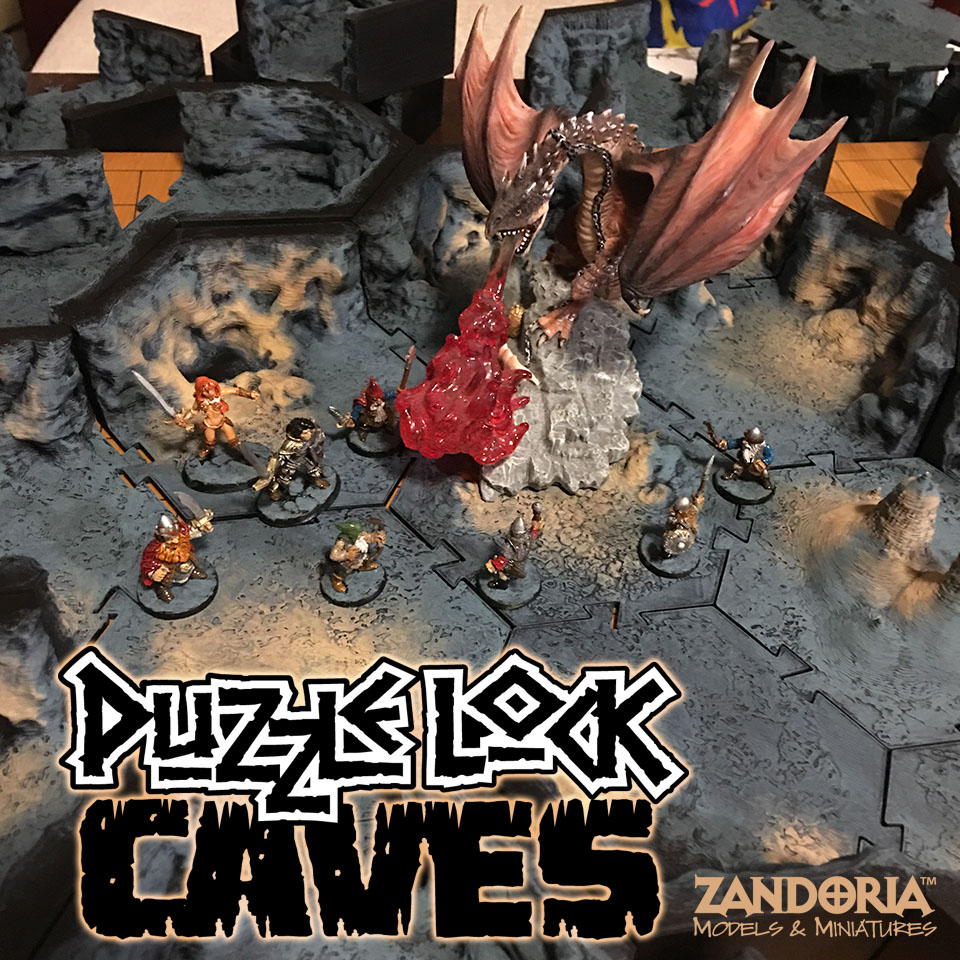
If you have just discovered PuzzleLock, you might also like to check out PuzzleLock Caves and PuzzleLock Sewers & Undercity!

Art vs Artist 2023

As the year wraps up, I have been thinking about projects that have been on the back burner that I would like to finish. I have been working on freelance projects the past few months, so haven’t had as much time to devote to them…

I also want to start using this blog, instead of social media. I am going to post new work here first, and then share it to social media instead of directly posting it there. I have been following the rise of AI over the past year, and companies like Meta are scraping up every piece of content to train them. It is very disheartening to me.

At long last, I am ready to launch the new version of my Puzzlelock Dungeon 3Dprintable terrain. I have test printed it and am painting it up for photos, and will put it up on Cults3D soon.

Another project that I want to finish is my interpretation of a fairytale about Princess Cottengrass. In it, the young princess goes on an adventure riding on the back of a moose elk named Leap.

This is my concept sketch. Below is a screenshot from ZBrush of a work-in-progress of the moose. This will be a resin sculpture with a bronze finish, for my Etsy shop.

Of course, there will also be more gnomes in 2024

I made this for you!

When I’m sculpting or painting, I’m just trying to do my best to put the vision into a physical form. Where it comes from is a mystery, some liminal place like a dream…

I have to trust that whatever Muse inspired me to create a piece of art also plays a role for the viewer, because I don’t know who it is for when I’m creating the work…

If my art resonates with you, if it calls to you, then it was made for you.

What is Patreon?

It is really that simple. Artists like myself are struggling. Things like AI are taking over illustration work, and may soon even start generating digital sculpture. With all of the competition and uncertainty, it is hard to know what the future hold for the artist in our culture.

Patronage of the arts is no longer something reserved for the wealthy or philanthropists. Patreon is like crowdfunding for individual artists–small donations, only $1 a month, from the fans who love their work, can help them keep creating.

If you are a fan of my art, and would like to go behind-the-scenes and follow along as I create new concept art and sculptures, I would really appreciate it if you would join me on Patreon!

Artificial Images: AI and the Death of Art

One of the things that I find particularly sad is when fellow artists say that they want to use AI for inspiration…

I have written before about the homogeneous look of Artstation, or Marvel movies and CGI—where artists are trying to emulate a look, in order to get an “industry” job. It is understandable, because the artists are using the same tools and bounce between studios and projects. Artists also spend a lot of time studying each others work and taking influence from each other. My own artwork is not immune to this influence–and in the Internet Age, It is difficult not to be influenced–yet this is not the original meaning of the word inspiration….

When artists say they want to use AI (Artificial Images) generated images for inspiration, It seems they are used to this bad habit of regurgitating the same derivative ideas.– AI generated images are doing exactly that; pulling latent images from a database of billions and creating a mashup through a process called Diffusion. The Artificial Images suffer from an even worse homogeneity than the art that they are derived from, which is one of the reasons they seem so soulless and uninspired.

Many artists (especially young artists who are just learning the craft) will copy or imitate the art that they have seen—and maybe some of that original inspiration kindles their work…But as they mature, their work will draw from a liminal source, and their own art and style will emerge. What do I mean by this?

In my own imagination and dreams, there is an ineffable connection to something BEYOND—I don’t know how to explain, but the vision doesn’t really come from me. It is from somewhere else. It is a liminal experience, like a Muse has just granted me a glimpse of something, from a deeper reality, or world—It is given to me from beyond…As an artist, I TRY to bring it to life, with the limitations of my skills, but the inspiration is from somewhere beyond my self.

I believe that an Artist is somewhat akin to a shaman or seer—bringing a boon to the people from the visions granted to him. So inspiration comes from a special connection to the Muse (which is as close to putting it into words as I can). That is the value of Art, and why I think it is important to humanity.

The AI images are a counterfeit, soulless mockery of art. There is no connection to the liminal reality that I’m trying to describe, and so no message or vision to share with the people… We will be left with just this poor substitute in the place of Art.

Where there is no vision, the people perish…Proverbs 29:18

Paracelsus

In 1566 Paracelsus, a German physician, alchemist and philosopher published a tract On Nymphs, Sylphs, Pygmies, and Salamanders. He categorized the denizens of Faerie, known by many different names in folklore, as different types of elemental beings.

The name of the water people [nymphs] is also undina, and of the air people [sylphs] sylvestries, and of the mountain people [pygmies] gnomi, and of the fire people vulcani rather than salamandri.

On Nymphs, Sylphs, Pygmies, and Salamanders

You know that there are four elements, air, water, earth and fire; and you also know that we, men from Adam, stand and walk in air and are surrounded by it as a fish by water, and can just as little be without it as a fish without water. As the fish has it’s abode in water, where water takes for it the place of the air in which it lives, so air takes for man the place of water,in relation to the fish.

Thus everything has been created in its element, to walk therein. From this example you understand that the undinae have their abode in water, and the water is given to them as to us the air, and just as we are astonished that they should live in water, they are astonished about our being in the air.

The same applies to the gnomi in the mountains: the earth is their air and is their chaos. For everything lives in chaos. That is: everything has its abode in chaos, walks and stands therein. Now the earth is not more than mere chaos to the mountain manikins, for they walk through solid walls, through rocks and stones, like a spirit; this is why these things are all mere chaos to them, that is, nothing…

That amounts to: as little as we are hampered by the air, as little as they are hampered by the mountain, by earth and rocks. And as it is easy for us to walk through air and air cannot stop us, so rocks and cliffs are easy to them. And so, things are all chaos to them which are not chaos to us, for a wall, a partition, stops us so that we cannot go through, but to them it is a chaos. That is why they walk through it; to them it is their air in which they live and walk, as man does in the air that is between heaven and earth. And the coarser the chaos, the more subtle is the creature; and the more subtle the chaos the coarser the creature. The mountain people have a coarse chaos; therefore they must be more subtle; and man has a subtle chaos; therefore, he is all the coarser…

…Know also that two of them, namely the earth manikins and vulcans, are considered spirits and not creatures, being looked on as a mirage only, or as ghosts, You must know, however, that just as they appear, thus they are, flesh and blood like another man, and with that, quick and fast like a spirit, as was told in the beginning.

On Nymphs, Sylphs, Pygmies, and Salamanders

This was and interesting book to read, as the existence of these types of creatures was not in question, just something to be studied. The only existential question seemed to be whether nymphs, sylphs, gnomes,etc. had a soul, like man (He did not think so).

He was writing centuries before the discovery of the electromagnetic spectrum, frequencies or even ideas of different dimensions and vibrations, but had an insightful way of it relating to the properties of the four elements.

Smokin’ Gnome

I was sitting on the edge of the woods, smoking my pipe. listening to the wind in the trees and watching a couple of squirrels. I had work that I needed to do, but I decided that I also needed a break.

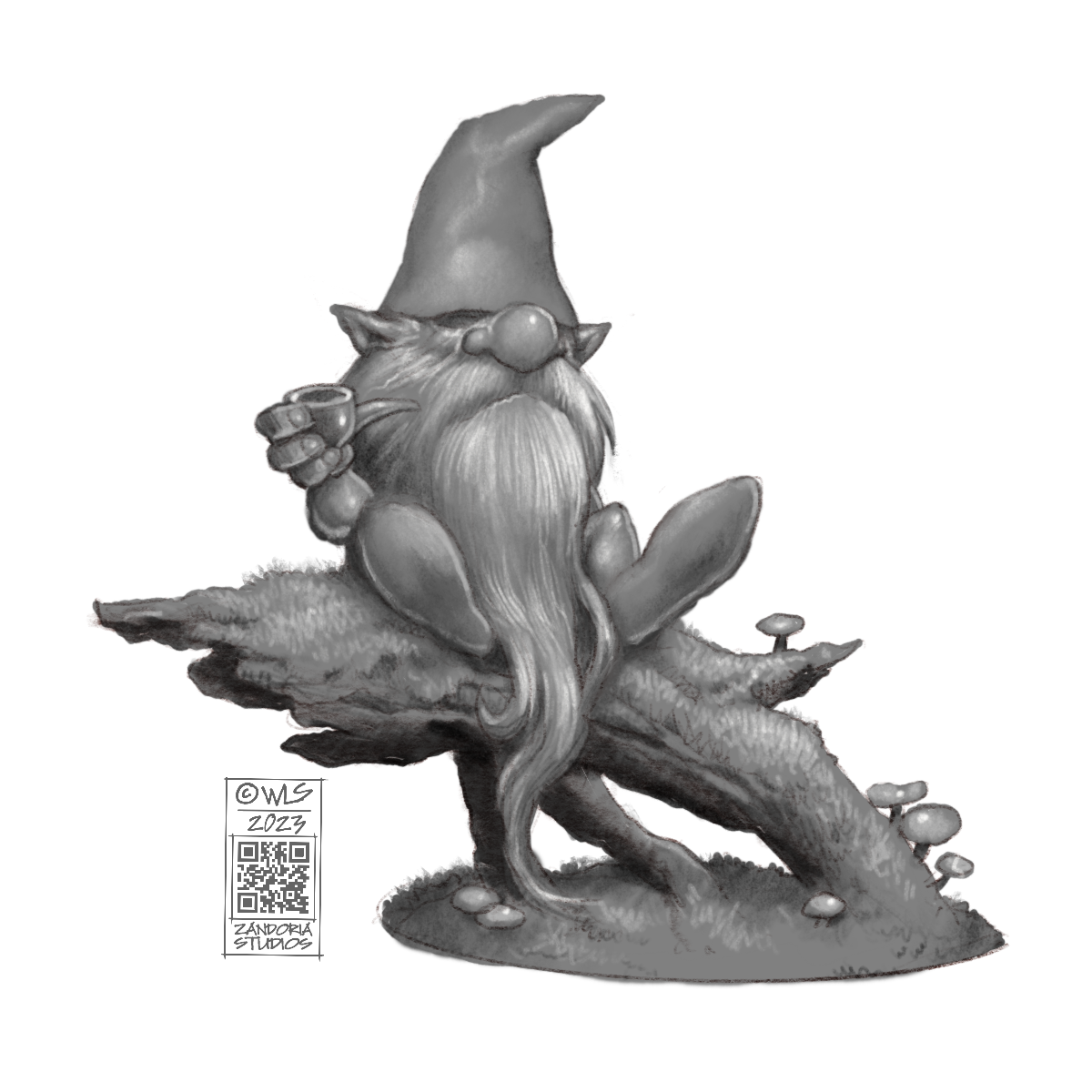
That became my inspiration for a new gnome. I did a few doodles and came up with a pose that I liked. I also wanted to have him on a mossy log or branch, so I adjusted the sketch until I had a final concept.

The first thing that I did in ZBrush was to rough in where the gnome would be sitting, and also match the diameter of the base with a 3″ wood base that I planned to use.

I exported my sketch from Procreate with a transparent background as a .PNG file. This allows me to load the image into Spotlight inside of ZBrush and float it above my workspace as a reference, without the background obscuring my viewport. The Stump is drawn with Zspheres to match the sketch.

After converting it into a mesh, I sculpted the wood and extracted some bark. then once that was ready, I masked and extracted the areas that I wanted to be covered with moss. To create the moss texture, I used surface noise and inflate.

I started blocking in the gnome with two spheres and a cone. I used the curve tube brush to draw the legs and arms (you can see the right arm in this screenshot is still just a tube). Those simple shapes are subdivided and dynameshed so that the details can be sculpted. the beard area is just roughed in, because I know I will be building it later.

Here is a closeup of that arm. The arm and hand are finished, holding the pipe. I’ve extracted geometry to make the sleeve. I will use the cloth move brush to shape it before sculpting the details and stitching…

The beard is made using the Alpha curve brush. Each lock of hair is drawn as a curve, with an irregular shaped black and white image defining the cross-section of the lock of hair as it is extruded along the curve. The lock is tapered at one end, and because the stroke is a curve, you can manipulate it, twist it and move it into place before you commit to it.

Here is the model, 3Dprinted in resin. I was very pleased that all of my mushrooms printed and nothing broke off! Printed with Mighty4K using 3DRS Hard Grey resin.

Using an airbrush, I primed the model in black. Then I used grey primer at a downward angle to simulate ambient lighting. The “zenithal” priming brings out the details and will enhance the painting, even though it will be covered.

I have made a step-by-step tutorial, if you are wanting to paint your own gnomes–Here is the link

Here is the finished gnome, enjoying his pipe!

I hope that you enjoyed this look at the process. If you are into 3Dprinting, you can get the STL to print your own on my Patreon. If you would like to just buy the finished figurine, I have them available (unpainted, bronze, hand-painted) on my Etsy shop.

Design for Manufacturing

I was talking to a friend of mine today about a 3Dprinting project. He was unaware that I had a 15 year background in design for manufacturing, and I realized that maybe it would be a good idea to talk about CAD (Computer Aided Design), and how I integrate it with some of the work I create for 3Dprinting.

When creating an object that is to be manufactured, or that has to mate up with other components, It is critical to use CAD to make sure that all of your dimensions and tolerances are going to work. Much of my freelance work combines CAD with digital sculpting, allowing me the best of both worlds–especially when dealing with 3Dprinting.

Part of a Tap Handle designed in Rhino

For this tap handle for Big Bridge Design, which is manufactured with resin 3Dprinting, the handle needs to mate up with a brass insert nut, so that the handle can be screwed onto the beer tap. Using Rhino I am able to utilize the clients 2D Illustrator file (.ai) to create a 3D model with the basic graphic design elements at the precise size, and also create the threads to receive the metal insert. The skulls are sculpted in ZBrush.

Turning the World of Calindria into a 3D model

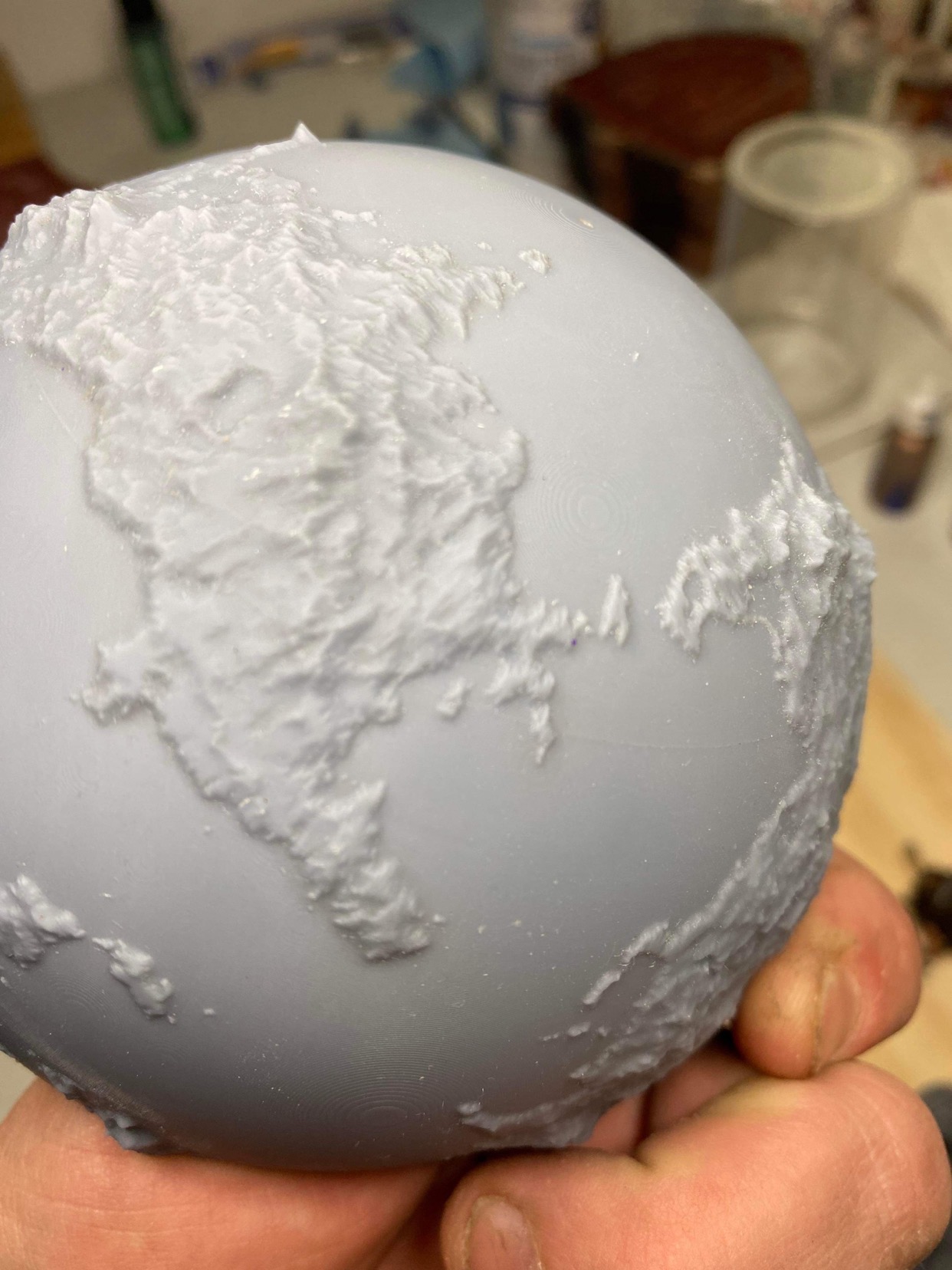
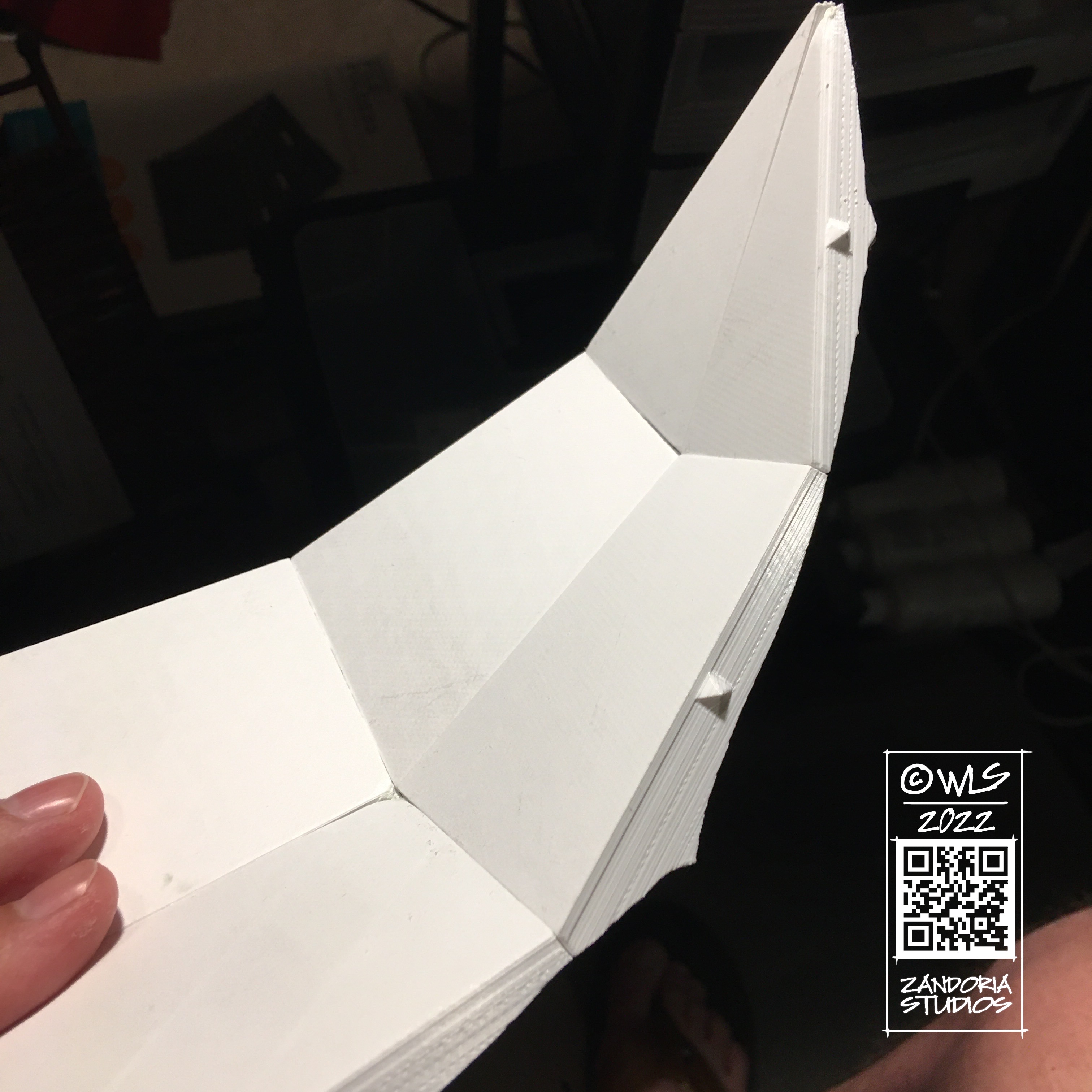
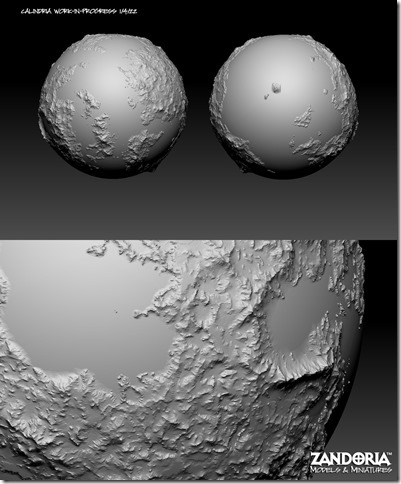
This globe project was to create a 3Dprintable world for Noble Dwarf, the publisher of a tabletop role-playing setting Legends of Calindria. It is not too difficult to generate terrain based on the clients map, but it also needed to be printed in sections and have keys for assembly.

I created a globe in CAD and split it into sections. then used ARRAY commands to position all of the interlocking keys. The surfaces of the sections were subdivided and projected against the terrain in ZBrush to get the final shape.

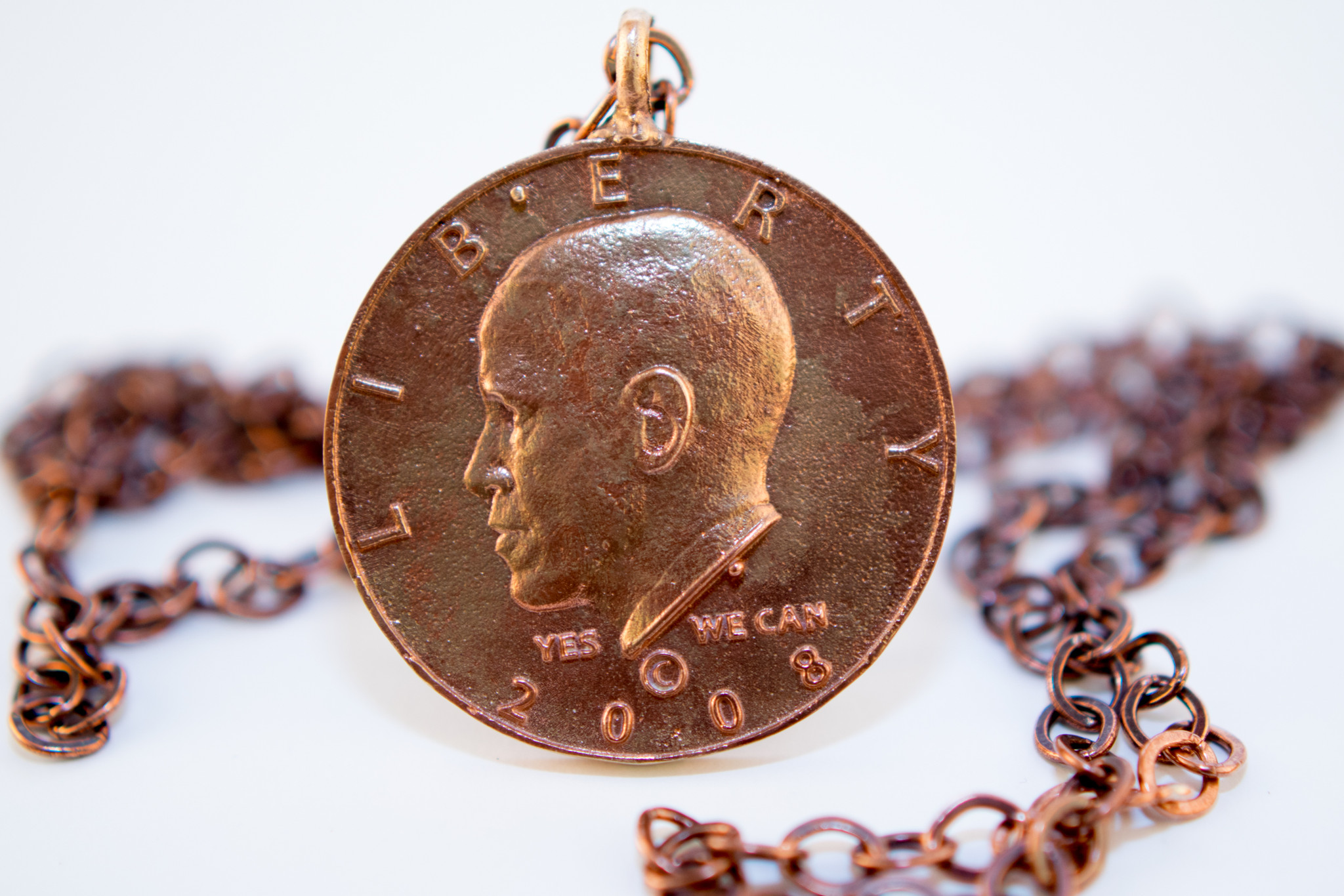
Jewelry is also something that is a good opportunity to mix sculpted elements with CAD. This set of cuff links and pendant for 44th Legacy combined a relief sculpture from ZBrush with elements modeled in Rhino. The final pieces were created in bronze with the lost-wax process.

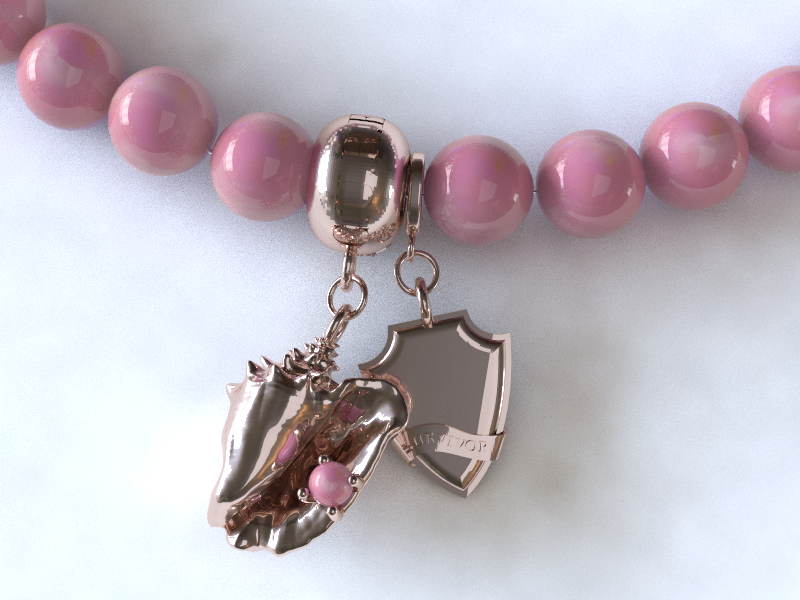
Another jewelry example combines a conch shell with other elements for a custom bracelet for BEACH BY JEWEL

Girl Gnomes

These are some gnomess miniatures that I made, which you would not be embarrassed to give your daughter for her D&D character. There is no shortage of female character minis out there, but many of them have a “pinup” aesthetic… I’m not against that, but I wanted to make my figures attractive rather than sexy.

The Gnomess Cleric was my first girl gnome,created to go with my other Guardin’ Gnomes.
This Gnomess Warrior has scalemail armor, helm and shield. She also has a Scarlet Johannson smile!

The Gnomess Ranger has studded leather armor, short sword and bow. She is super cute–but I may think so because she looks like my granddaughter!

All of these girl gnomes are available on my Etsy shop. Scales are 28mm D&D, 32mm Heroic, 54mm, 75mm, and 100mm.