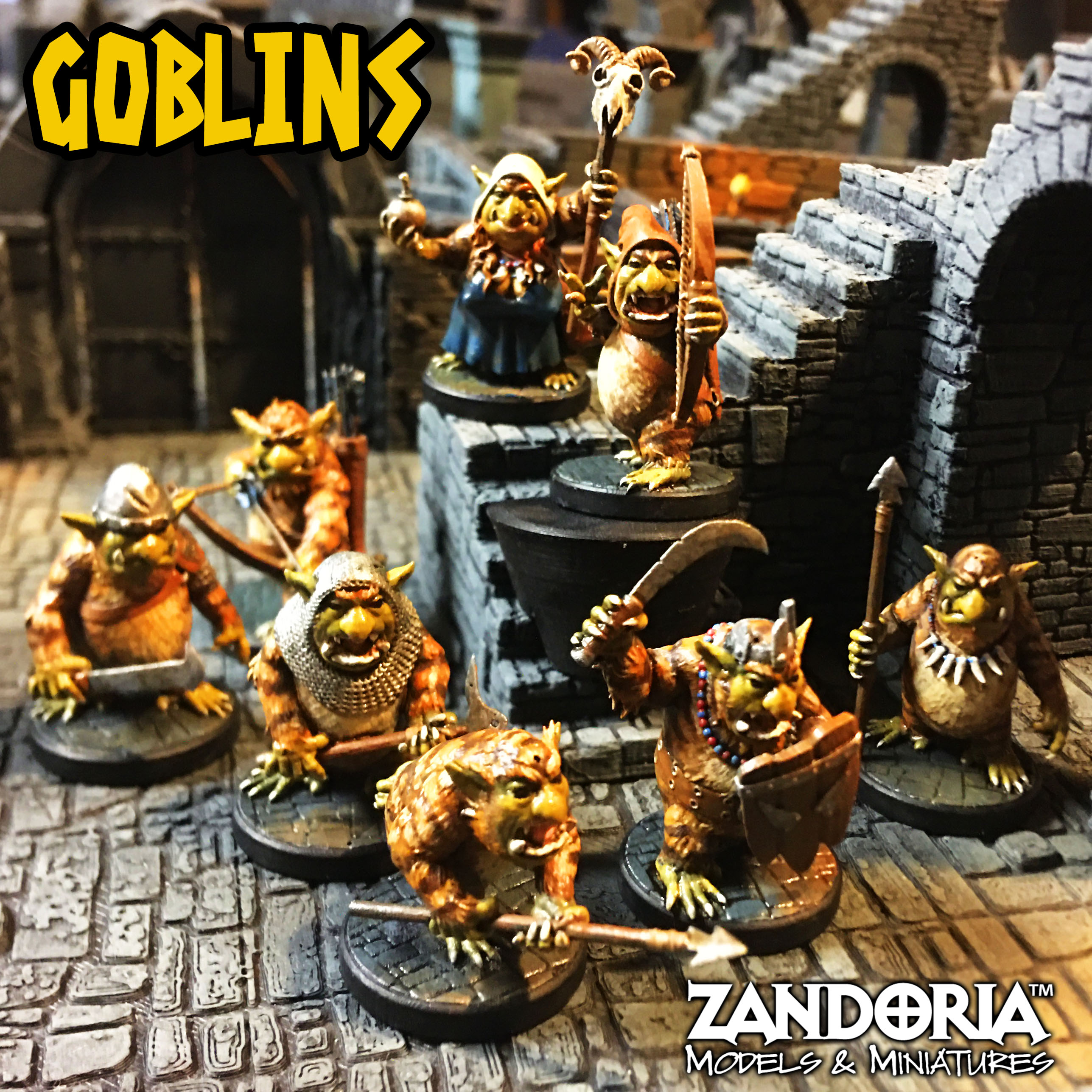
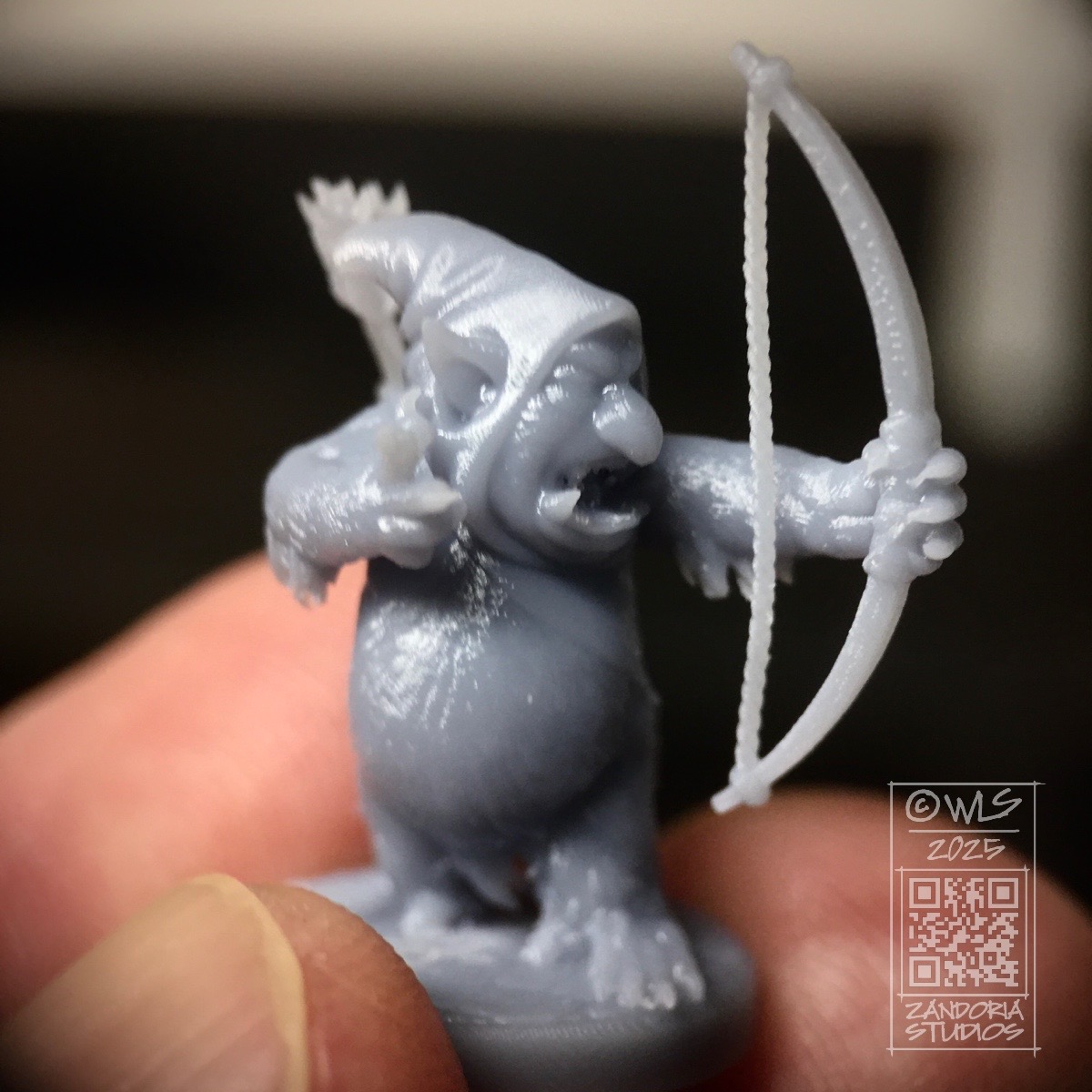
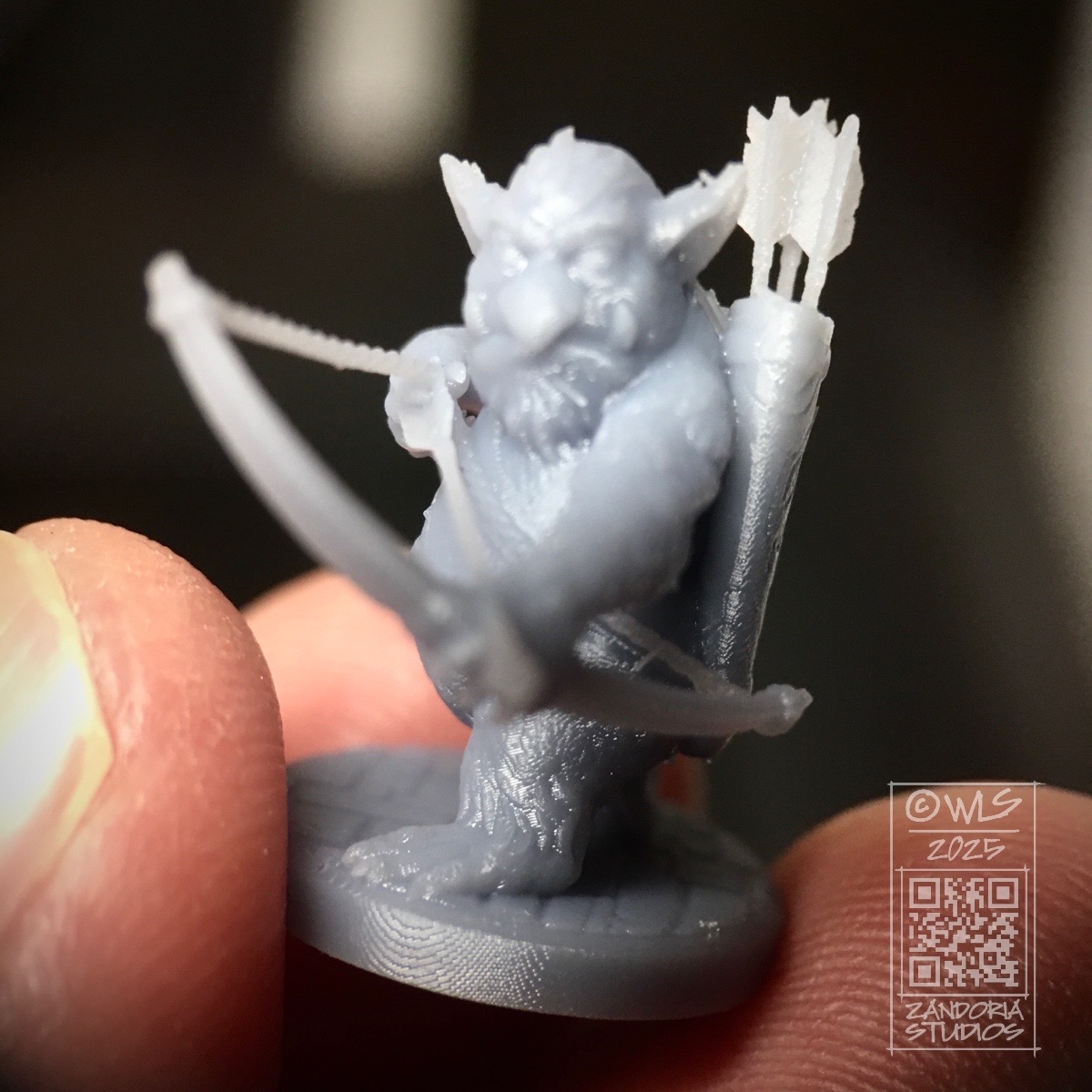
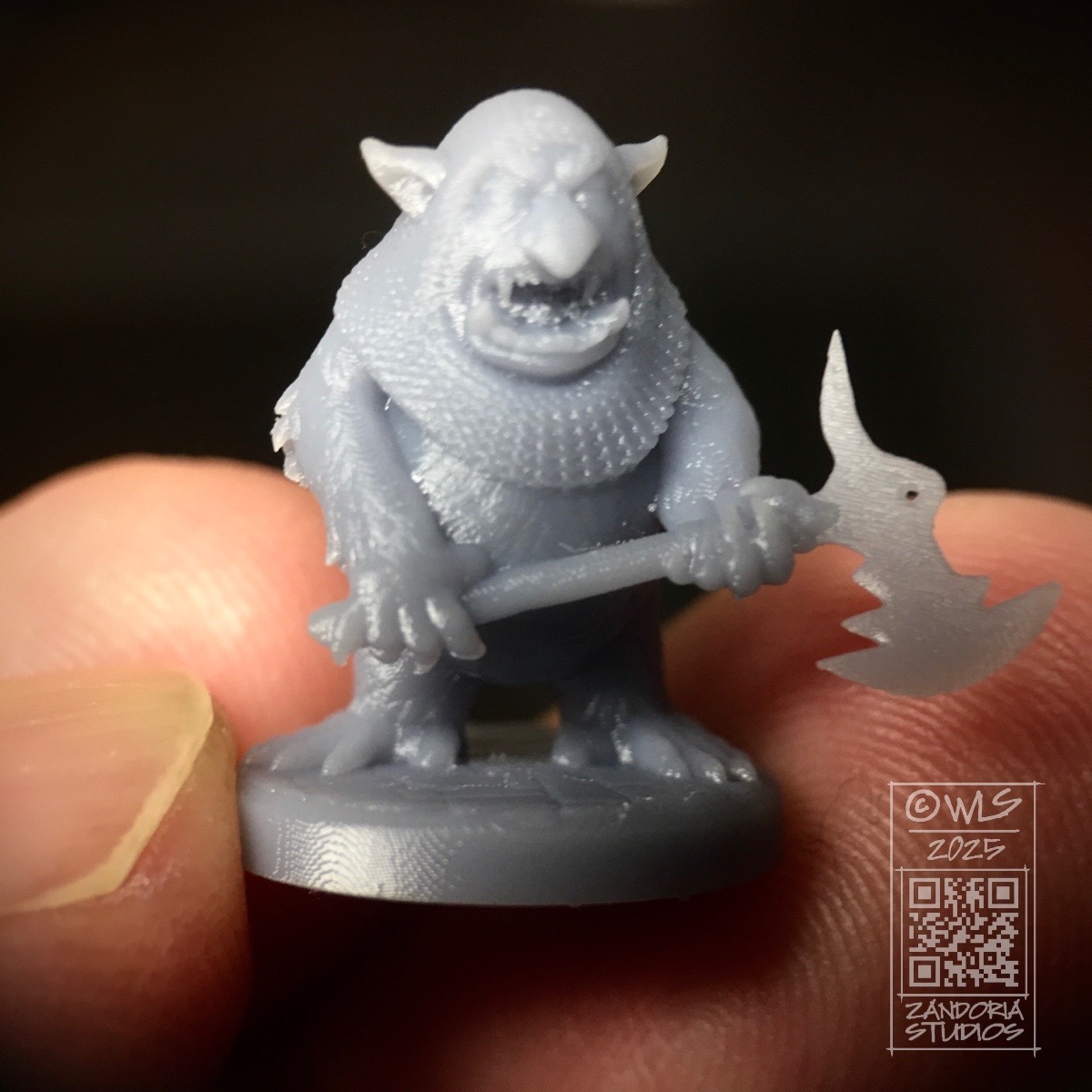
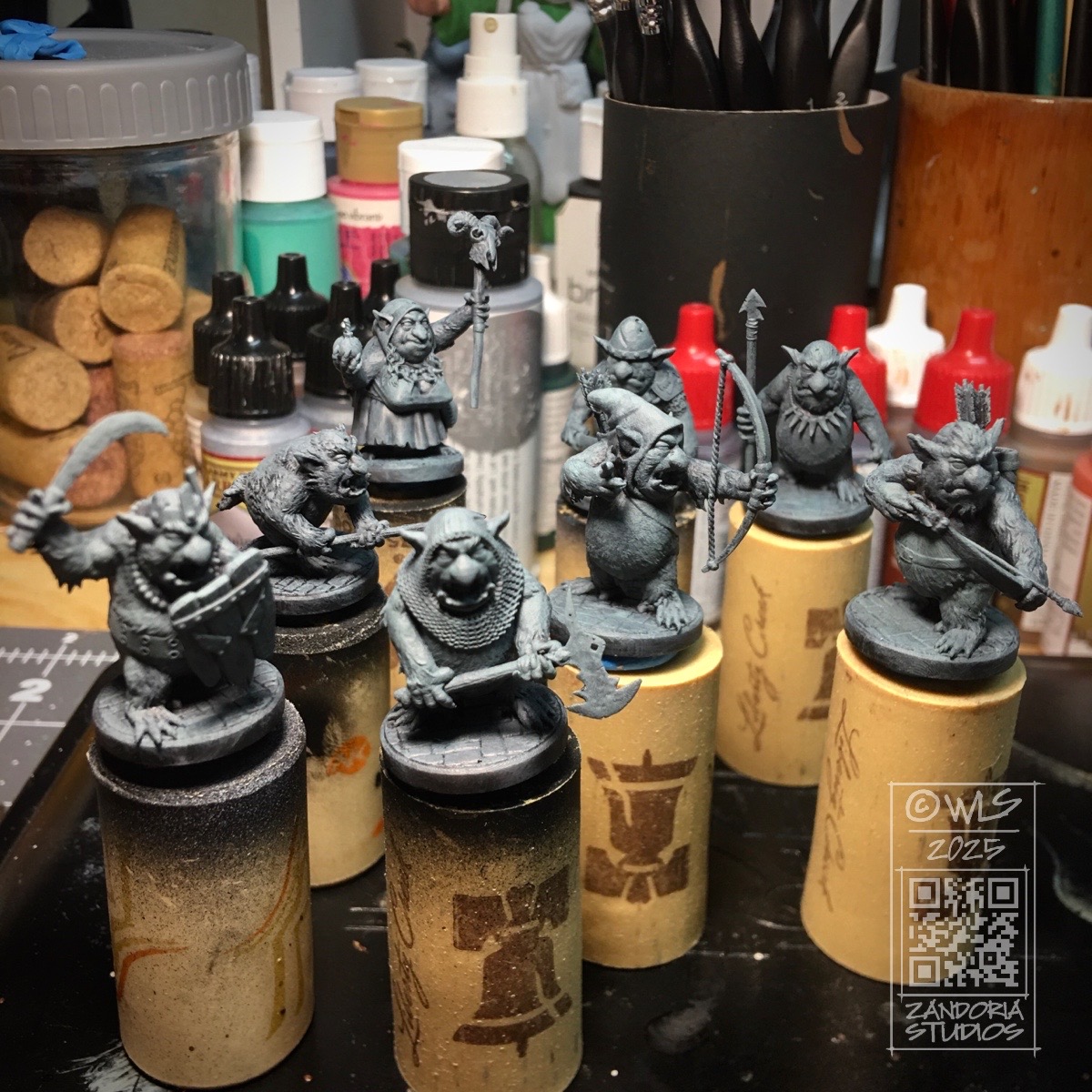
This is a set of 3Dprintable goblins that I just finished. They are bestial and vicious, covered in fur, with large teeth and claws. Their weapons and armor are scavenged scraps that they have collected from raiding,
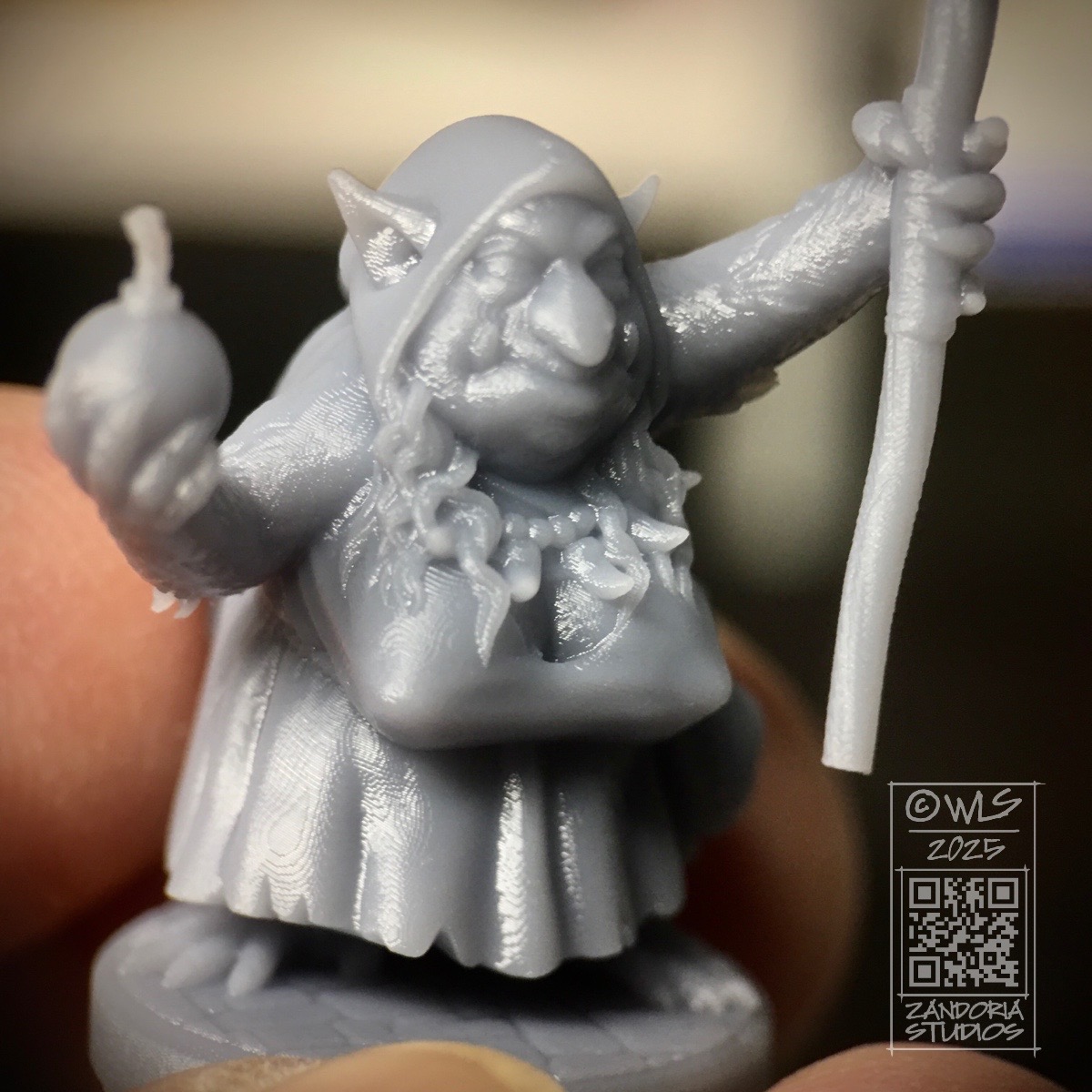
Goblins combined foul and stinky substances from their caves–batshit, sulpher, ashes–accidentally discovered a crude gunpowder, and invented the goblin bomb! This goblin mother is the leader of her pack. She has a bomb in one claw, and a magic staff topped with a goat skull in the other.
There are 8 different goblins in this set. I have them available in resin on my shop, or you can also buy the files to print them yourself.
Playing D&D is great fun, and I have been adventuring with my friends for many years. We have always played the game around the table with just our character sheet, notes and dice. The DM might have a hand drawn map, but for the most part all encounters are just described in what is called the Theater-of-the-Mind style of play.
TotM can lead to confusion. “Wait, how many goblins are left?”, or “I said I was hiding behind the pillar!”, or the classic: “I didn’t ask you how big the room is–I cast Fireball!” Many of the rules in D&D are very tactical in nature. Players are aware how many feet they can move per turn, their weapon ranges, what the bonuses are for 1/2 or 3/4 cover, and are constantly peppering the DM with questions to clarify the described situation. Miniatures solve many of these issues.
With terrain and miniatures, it is very easy to see who is in the area of effect when the Fireball spell goes off. Miniatures provide clarity vs. chaos, save time and avoid unnecessary arguments.
Theater-of-the-mind may be great for most D&D encounters, and some players think that playing with minis will make the game feel too much like a boardgame. This is a valid. If the Dungeon Master gives a great description of the boss encounter, it can really come to life in the players imagination. However, what gets imagined is going to be slightly different for each player….
This party of gnome adventures is exploring the room, when behind them they hear the scrape of stone on stone…
The Dungeon Master says, “You turn and see a large mountain troll, with a stone axe”. As a player you may wonder what a mountain troll looks like, or how big it is relative to you; whether you should start running or draw your sword.
The DM says, “roll initiative” ominously, as he places the mountain troll mini onto the table. The players eyes go wide. They see it’s size. The immediate, visceral understanding of the threat is an “oh $#!%” moment.
Don’t just describe the threat. Make them feel it…
The moment you place that troll on the table, the game’s tension skyrockets. It is no longer an abstract concept; it’s a physical problem they need to solve. Miniatures are not mere game pieces, but are tools for creating sharper, more dramatic, and more memorable stories at your table.
These are all miniatures and terrain that I have sculpted, and are available in my shop
Maybe you are a “Theater of the Mind” player that has avoided using minis and terrain… Sometimes there just isn’t room on the table for terrain. I see very impressive 8′ long tables with thousands of dollars worth of Dwarven Forge tiles, and while it looks awesome, it just isn’t going to work for a group of players at the kitchen table.
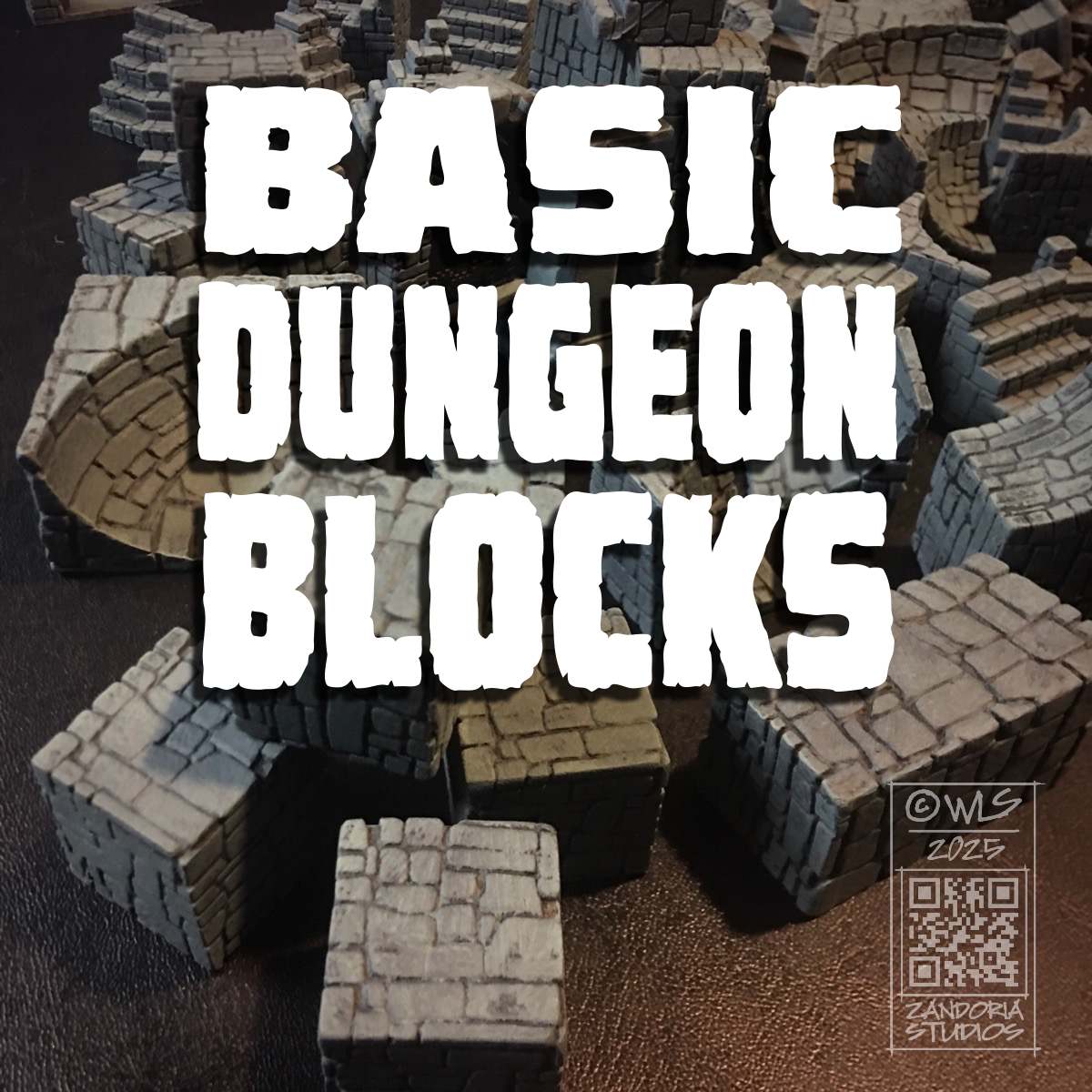
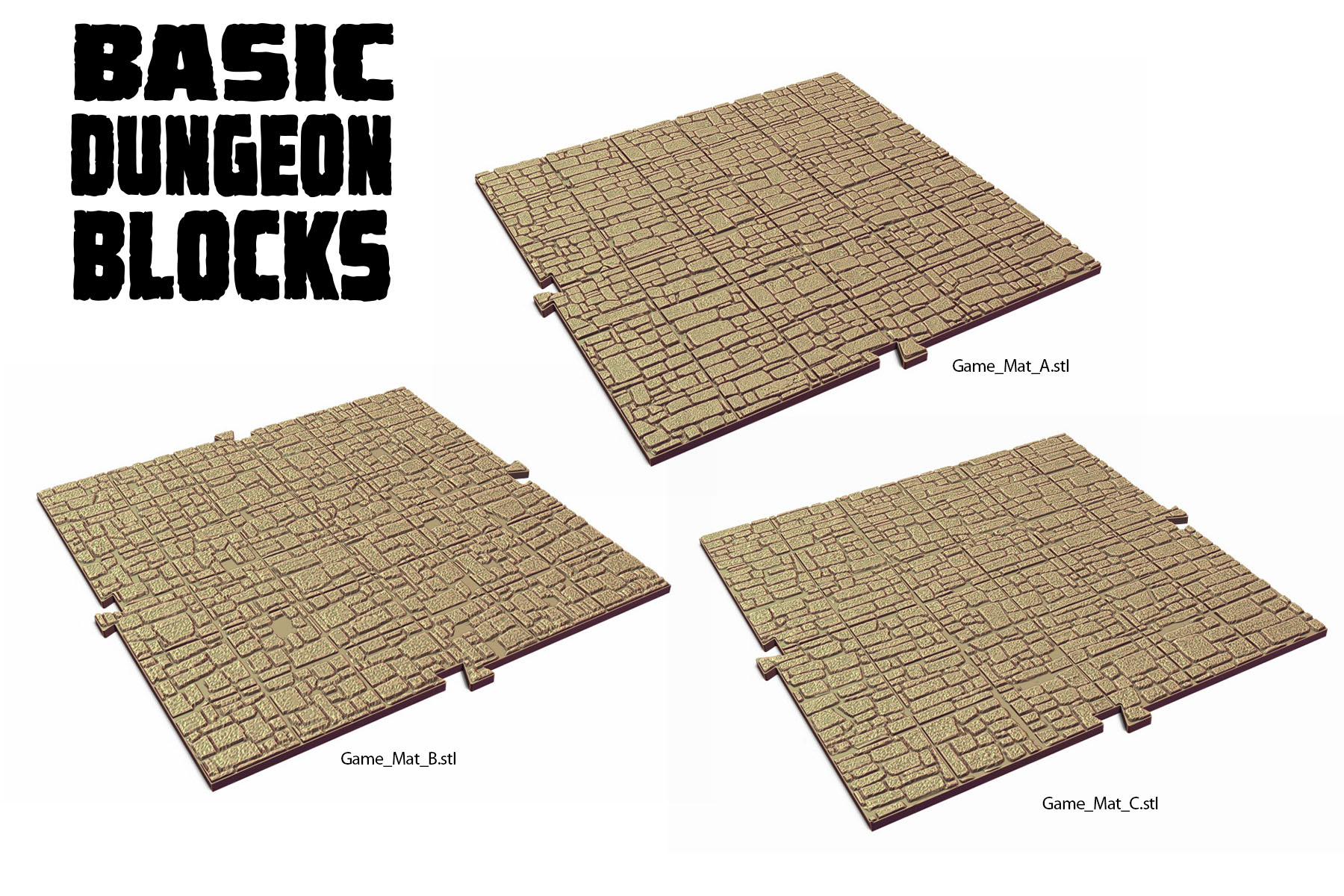
While a dry-erase mat is a good compromise, it lacks the appeal of seeing your carefully painted minis in their natural setting–the Dungeon. I felt there was a need for something small and simple, that would allow the DM to quickly layout the map for a combat encounter or boss battle. That led me to creating these Basic Dungeon Blocks. You arrange them and stack them just like children’s toy blocks!
They are simple building blocks based on a 1″ cube. There is also a game mat made from 6″ tiles, so that you have a gridded surface to build and play on.
Using these building blocks, you can quickly layout the dimensions of the room or corridor. How many times have you had a player insist that they weren’t in the room when you asked their character to roll a saving throw? Having some terrain and minis avoids confusion and allows the DM to be clear with the obstacles that the characters are facing.
There are a variety of Blocks, stairs, arches, doorways (with working doors), pillars. Even curved blocks for building a sewer–Or a Dwarven Skatepark! And because they are based on 1″ cubes, they can also be used with ANY other terrain system (such as PuzzleLock Dungeon II) to customize an area.
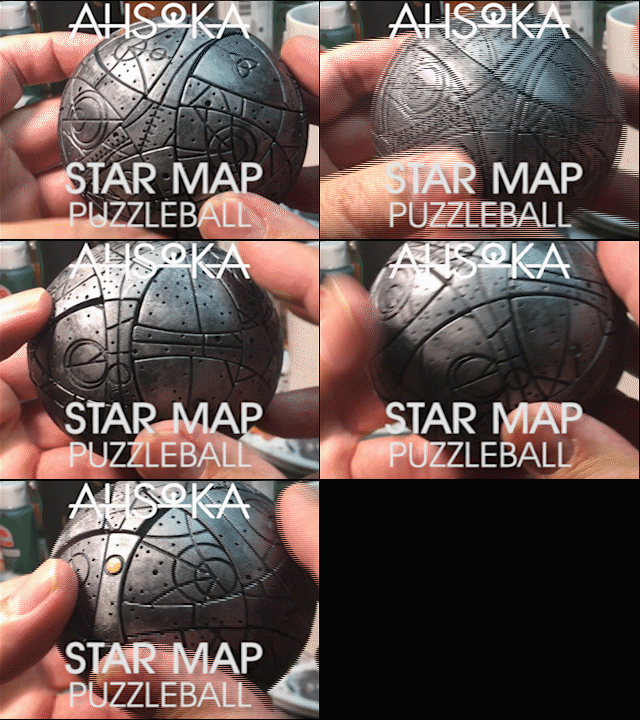
When I first saw the Ahsoka Star Wars show, I was fascinated with the Star Map prop. I thought it would be awesome as a 3Dprintable project. It turned out to be very challenging to engineer the pieces. there are 62 moving parts and 12 axis of rotation!
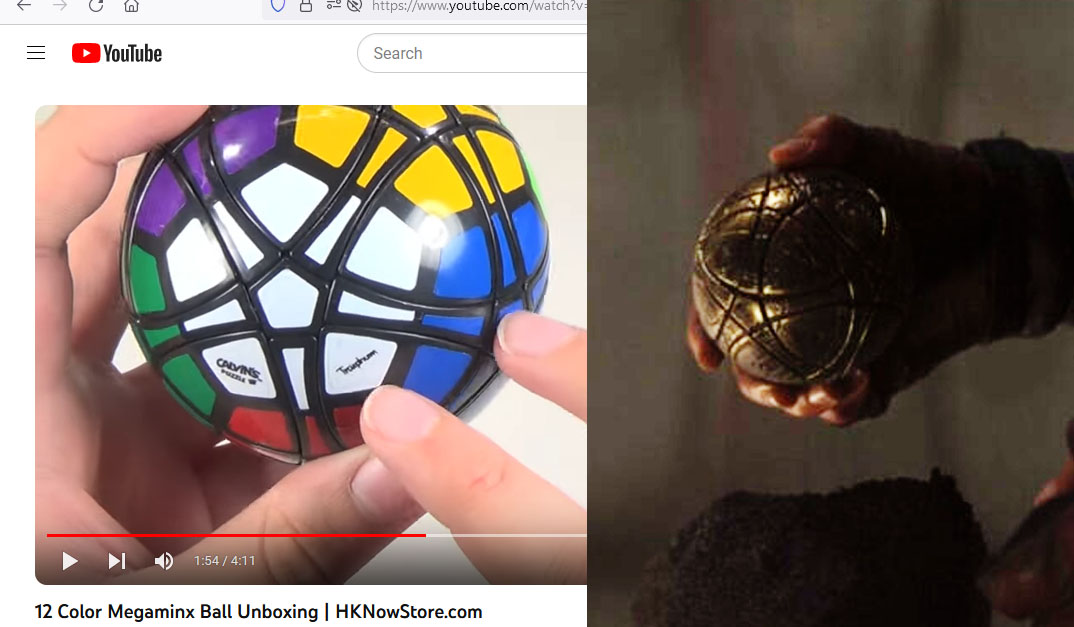
The prop in the Ahsoka TV show seemed to be a repurposed Megaminx puzzle with engraved star map. I couldn’t find a Megaminx ball (it looks like it was last manufactured in 2008), so I had to figure out how to interlock the shapes as well as how to make it work.
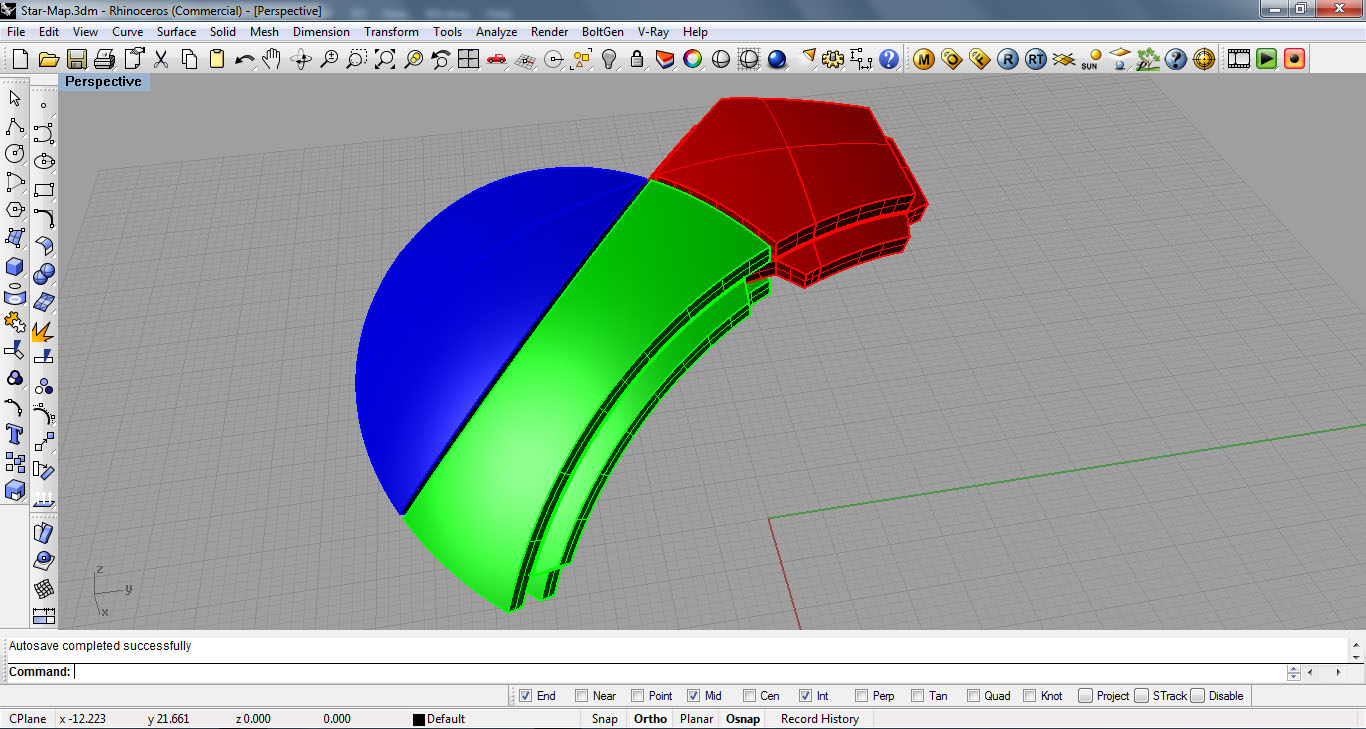
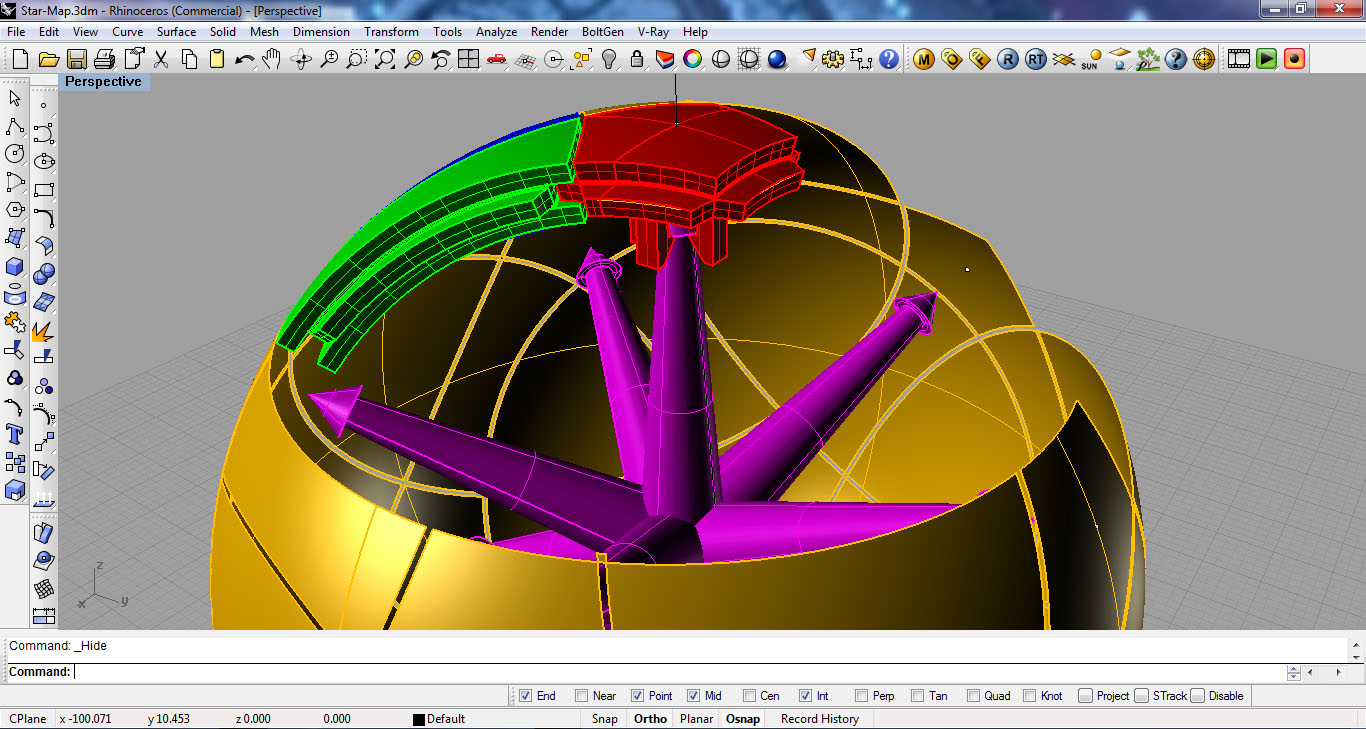
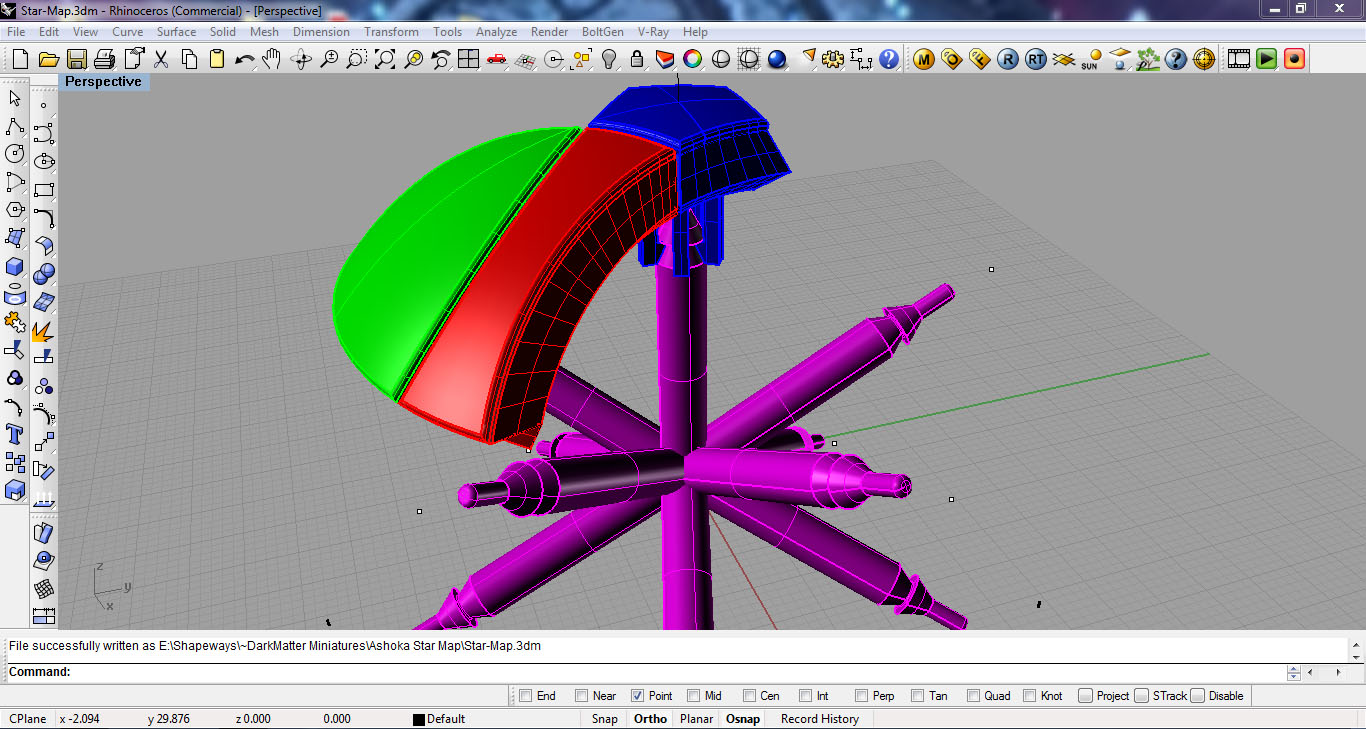
I started in Rhino with an 80mm sphere. The main pieces are just 3 parts, arrayed around the puzzle. The 5-sided shape is the cap at the axis of rotation. I called the 3-sided shape a “petal” and the 4-sided shape the “rib”.
My first iteration fit together, but wouldn’t spin or slide… so I ended up tweaking and revising until I got a version that would work.
Once I had printed a version that would work, I had to figure out how to draw the star map. Rhino only had a limited ability to draw a curve on the surface, so I had to draw a curve interpolated on the surface and then snap to the points on that curve to draw spheres that I could intersect to create the circles on the main sphere.
I piped a tube around those circular curves to create geometry that I could boolean subtract from the final pieces. Such a boolean operation would easily crash my computer in Rhino, so my plan was to export all of the geometry into ZBrush and use the Live Boolean feature.
From the Umesh results, I first autogrouped the parts and gave it a name before splitting it to subtools. this gave me each piece as a separate subtool, named sequentially. Then I used the 3Dprint Exporter to save as STL using the subtool names!
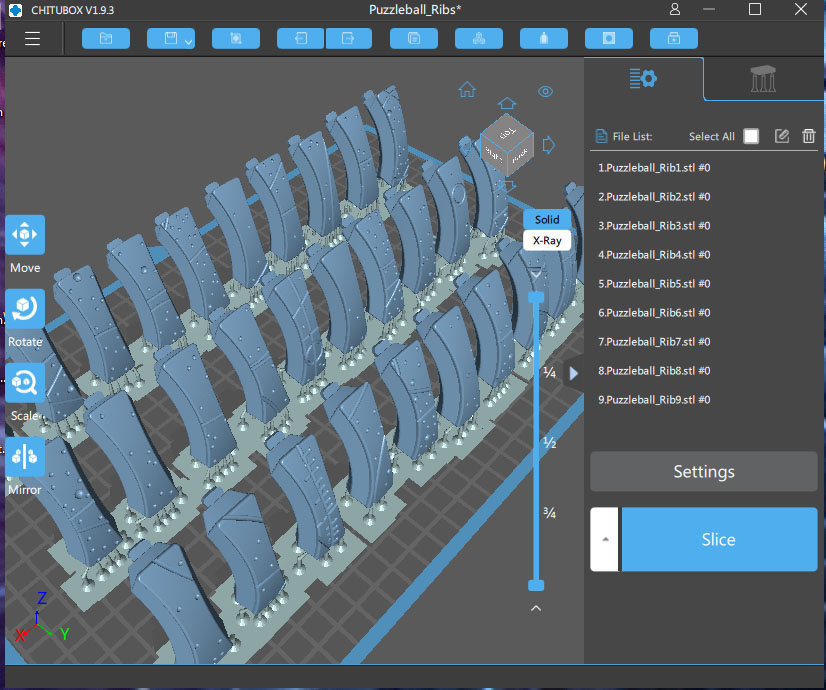
In Chitubox I created a separate project for each type of piece: Axis, Caps, Petals and Ribs. I 3Dprinted all of the pieces in ABS resin. I also saved the Chitubox projects with all of the supports, so that I could include the pre-supported files along with the STL files. Since all of the files exported in their final orientation on the model, they had to be rotated and positioned on the build plate–I didn’t want to make the customer have to do all of that!
Here is a video of how to assemble. I used some graphite lubricant (it is a very fine black powder) on a Q-Tip to swab the v-shaped notches on the Petals and Ribs, so that they would slide more freely.
I’m very happy with how it turned out! It works! all of the 62 moving parts slide and rotate just like the one in the show!
If you would like to 3Dprint this project, the files are available here on Cults3D.
For 3Dprintable files of my work, I have decided to sell the exclusively on Cults3D. I have been on there since they first started, and I think that it is the best platform.
Here are some facts about Cults, from their website:
Created in 2014, Cults is the 1st independent platform in the 3D printable files market (we do not belong to a group).
Today, we have 11.1 million international makers members registered on our platform.
We welcome more than 5,000 new members every day.
The platform currently hosts 2.07 million printable designs and a community of 176 thousand designers specialized in 3D printing.
Our platform is visited more than 200,000 times per day and we have an audience of 7.3 millions visits per month.
We have 55.4 millions page views per month and 3.2 millions unique visitors.
We are translated into 7 languages: English, German, Spanish, French, Brazilian Portuguese, Russian, and Simplified Chinese.
The geographic breakdown is as follows: 50% Europe – 40% America – 10% Asia & Oceania.
I have tried other platforms, like DriveThruRPG and MyMiniFactory, but they do not have the same reach and visibility as Cults, and it just made sense to me to have all of my STL files in one location.
STL files are used to 3Dprint miniatures and terrain at home on a personal 3Dprinter. For physical minis and figurines, those are available from my Etsy Shop.
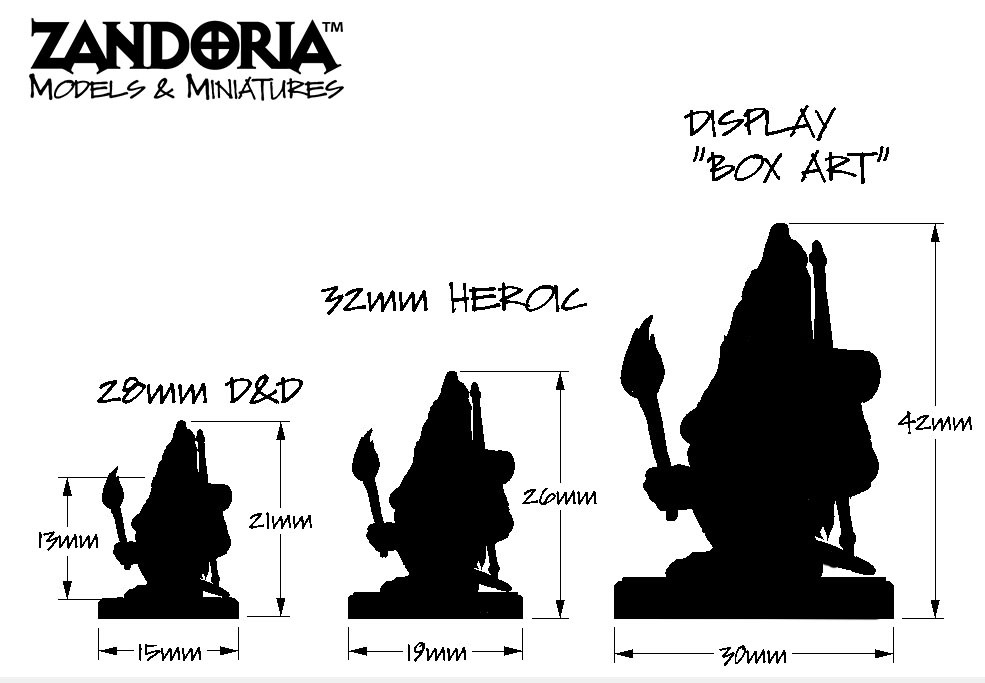
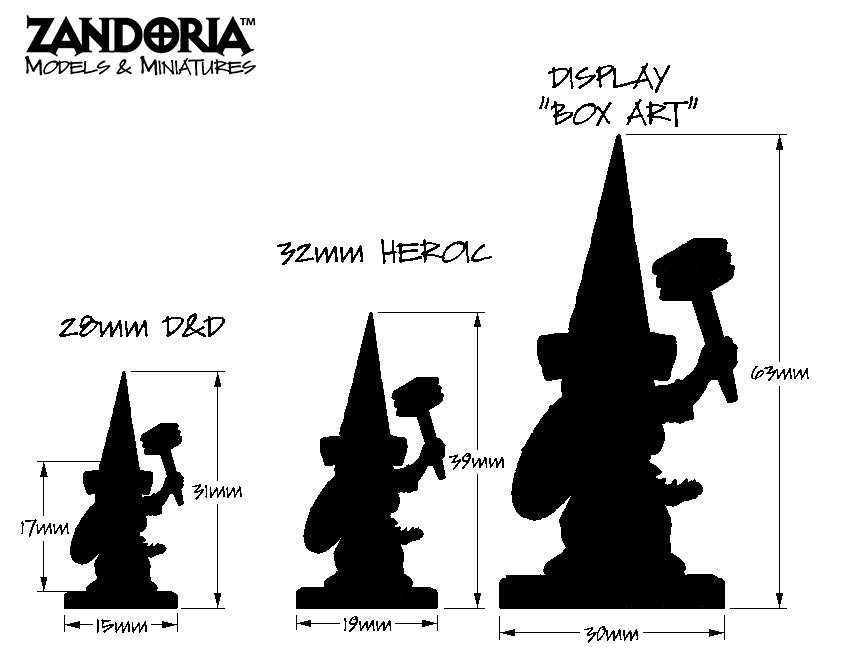
I’ve added these dimensioned drawings to all of the miniatures in my shop, because there can be a lot of confusion about scale when it comes to miniatures.
D&D is nominally 28mm scale, but what does that mean when it comes to miniature gnomes? The grid for D&D is 1″ squares, and each square represents 5′ (60 inches). So the actual scale is 1:60.
A 6′ tall (72″) human would be 1.2 inches (30.5mm) at this scale. Because of the history of wargaming, some people would measure from the bottom of the foot to the eyeline (ignoring hats and helmets) and see that is was around 28mm, while others might measure the whole figure and see it around 32mm…However, the true scale for the game is still 1:60
A Gnome is only around 3′ tall in D&D, and a Gonk Gnome maybe 2′-3′ which will mean that they are a lot shorter than a human. At 1:60 scale, a gnome might stand between 15-18mm tall (not including his cap)! A Gonk would be a little shorter, about 12-15mm without a cap.
Now what gets confusing is the “Scale creep” where the miniatures started getting bigger, and called “28mm Heroic”–which itself is not actually any scale! and then the oversized minis started to be called 32mm scale. And since the advent of 3Dprinting, the sizes of the minis has gotten all over the place!
This is the reason for the dimensions in my shop. The 28mm D&D is the default, which is true to 1:60 scale to match the grid. I am also selling the 32mm Heroic size (which is 125% of the original), and a Display/”Box Art” size which is 200% of the original–This is for miniature painters, and collectors who want to be able to see more details, rather than for playing the game.
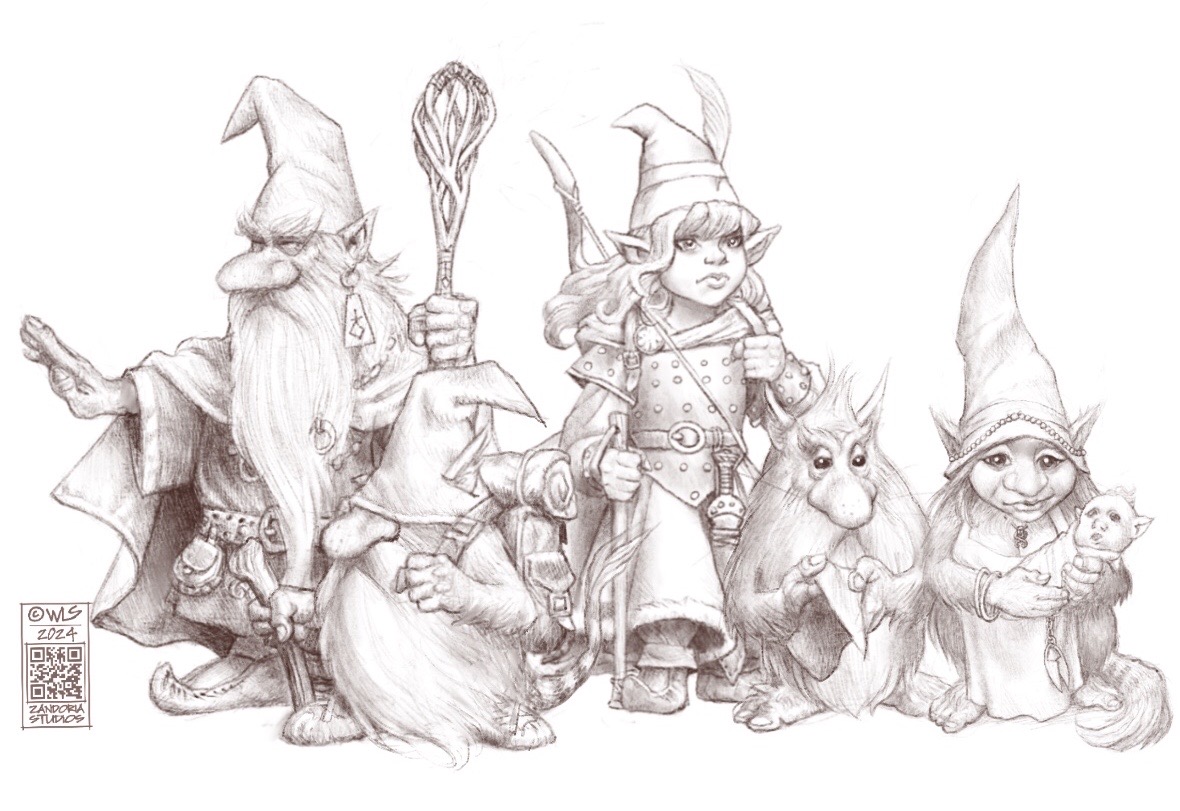
A Gnome is a mythological creature: A small, ageless dwarf in European folklore who lives underground and guards treasure. The 16th-century Swiss alchemist Paracelsus popularized the term, describing gnomes as able to move through solid earth like fish in water. They are known as Nisse or Tomte in Scandinavian folklore, where their long beards and pointed caps originates. They were also guardians of the home and farm, and popularized as Garden Gnomes in the 18th century. The modern style of “Gonk” Gnome, used as a home decoration, is essentially all beard with only a nose and large cap–They may get their name from a novelty toy from the 1960’s called a Gonk.
As Fantasy characters in Dungeons & Dragons and other TTRPGs, Gnomes are very popular. They are of small size, generally around 2′ tall. They are surprisingly strong for their size, at least as strong as a full-grown man! Because of their connection to nature, gnomes are often Druids or Rangers, but may be any Class.
A Gonk is a subspecies of Gnome. They are a little shorter in proportion, and covered in fur. Gonks are are a more feral wild version of their taller kin, and live underground in burrows. They have a natural ability to shape-shift, which leads to some remnant animal traits in their appearance. Some Gonks even have tails!
Gnomes wear tall cone-shaped felt caps, and take great pride in them. You can tell a lot about a gnome and his social status by the height of his cap. Caps are often embroidered and ornamented as well. Gnome warriors wear tall pointed helmets, which can also act as dangerous spikes to deter the big stompy feet of Trolls. Gonks also wear caps, and usually wear them pulled down to their nose to protect their sensitive eyes.
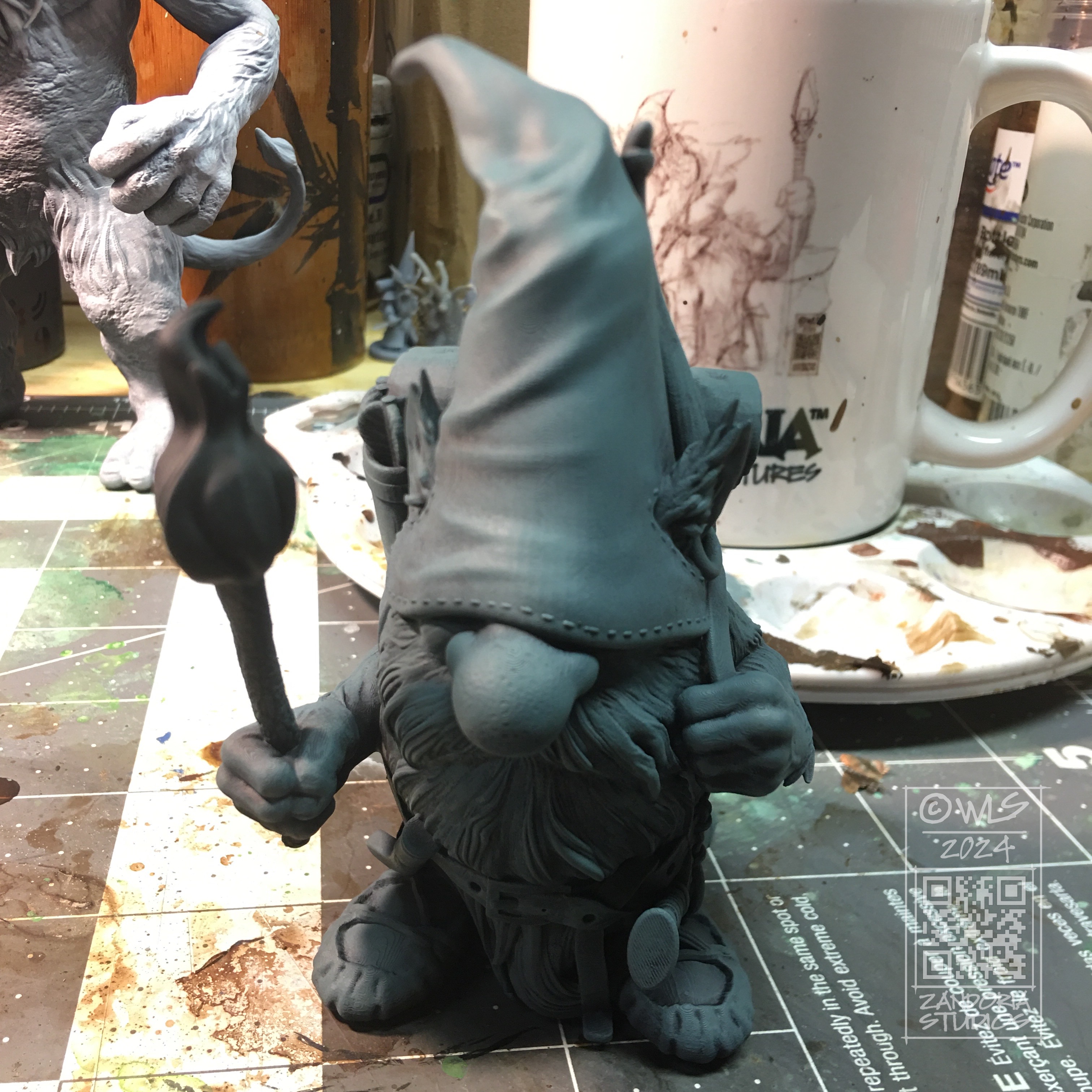
When I painted my PuzzleLock Dungeon, I simulated torchlight with drybrushed oranges and yellows. In the same way, I wanted to give a “dungeon vibe” to these minis by painting an undercoat to simulate torchlight. This is a variation on zenithal highlighting.
Starting with a black primer over the entire mini, then came back with a blue-gray ambient light which is drybrushed on top. Since the idea is to give it an ambient occlusion, I payed attention to the angle of my brush, leaving the underside and recessed areas black.
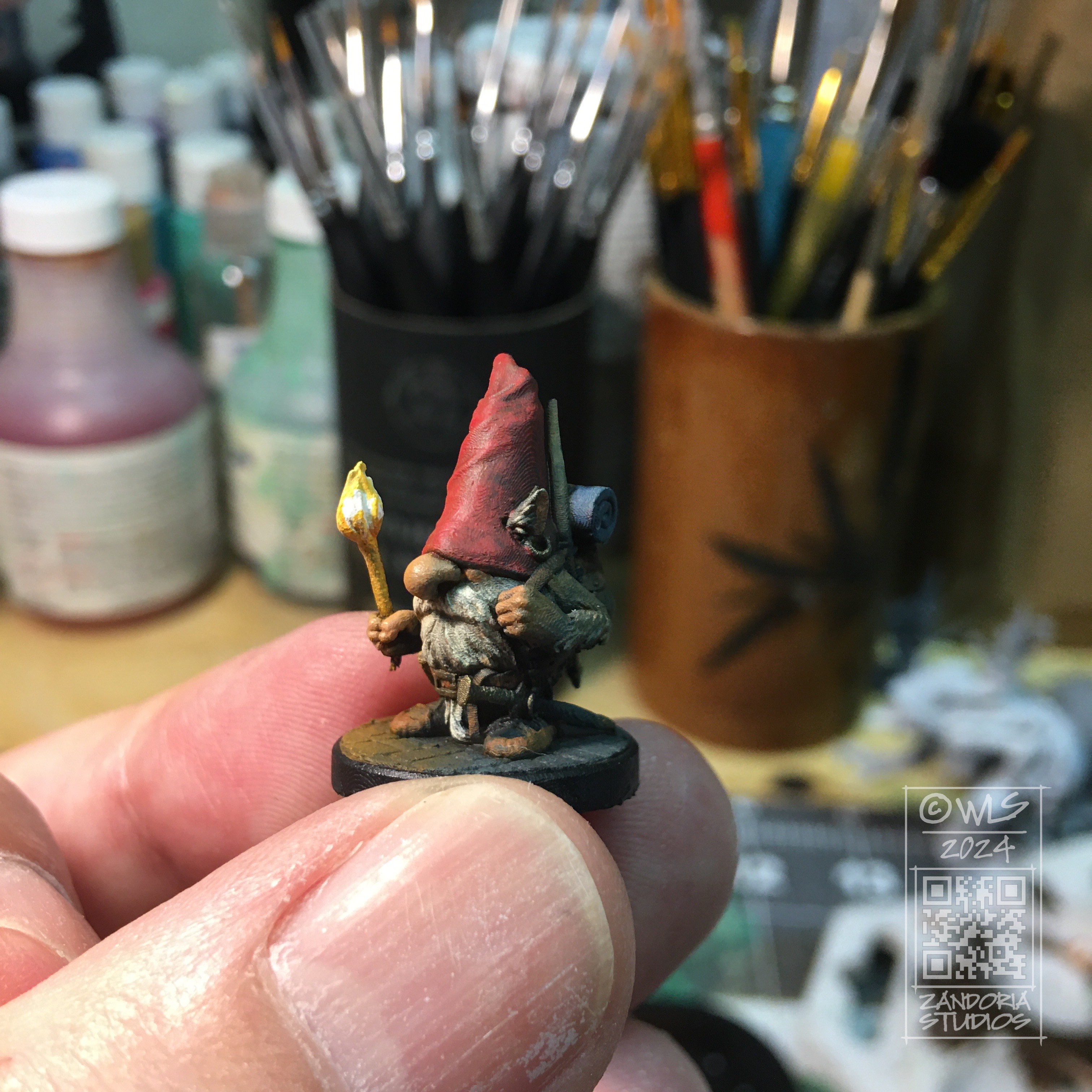
Next I used some oranges to start simulating the torchlight. I chose one side/direction for the mini which would be accented with torchlight, and carefully drybrushed the areas that would be hit by this light. Using the handle of the brush as the direction of the light, I was able to see where the light would hit, and where it would falloff.
I started with a pretty deep orange, and then added a little yellow to it as I went back over the areas that would be closest to the light. When I painted the actual torch, I went another shade lighter by adding more yellow, and finally white.
Here I’ve repeated the same steps on a larger figurine
I painted the colors in thin layers, allowing the underneath colors to influence it. The only place the color is almost the pure hue is on the bright side closest to the torchlight. The colors on the far side end up a bit muted and darker.
I used a wash of Army Painter Soft Tone over the paint job, which darkened the colors even more in the recessed areas.
Overall I am happy with the way it turned out. Even the minis not carrying a torch have one side accented with the torchlight, and they all fit together naturally as the under painted lighting ties them all together.
Give this a try on your next group of adventurers! Let me know what you think in the comments.
These minis and figurines are available in my Etsy shop. If you would like to 3Dprint them yourself, the STL files are available at Cults3D.
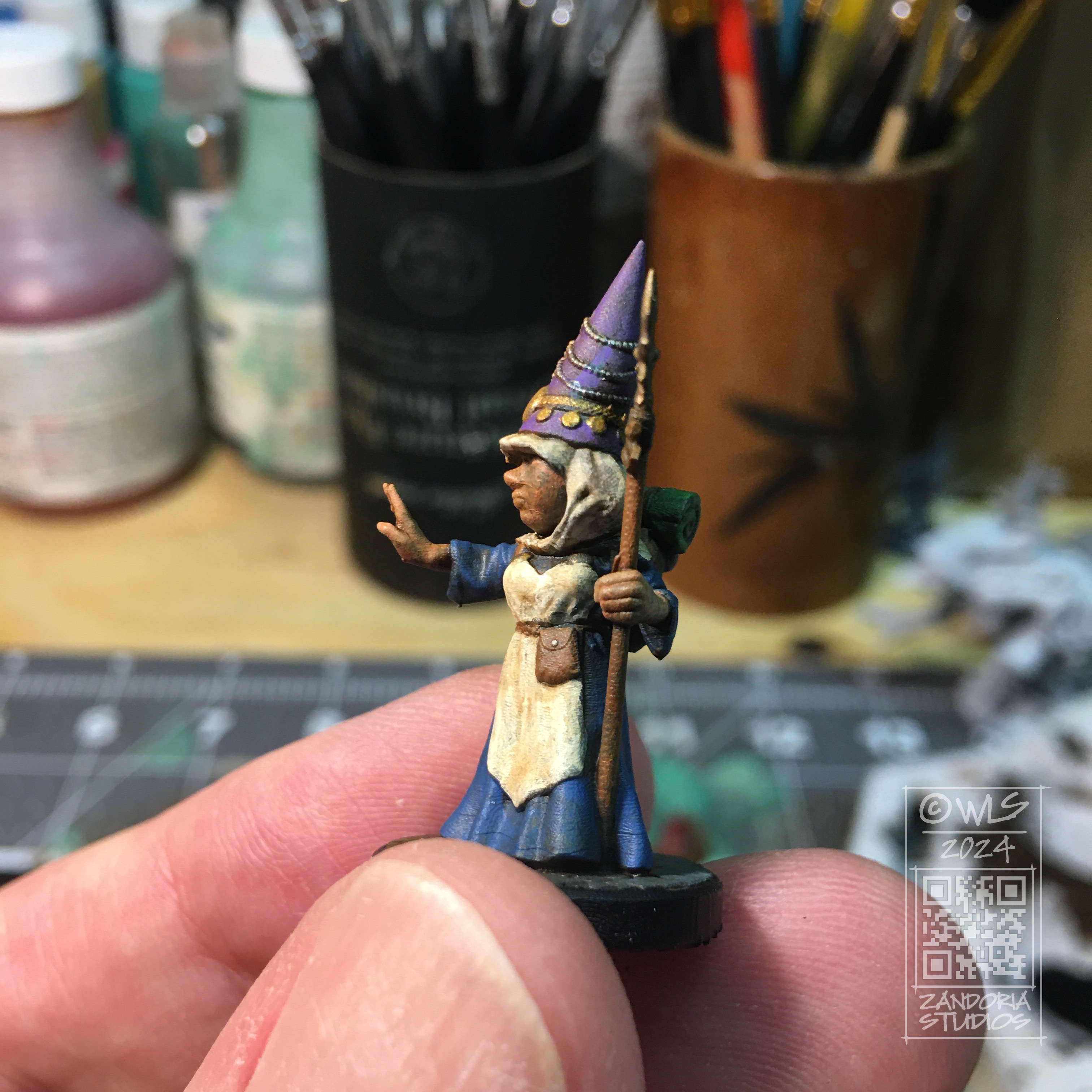
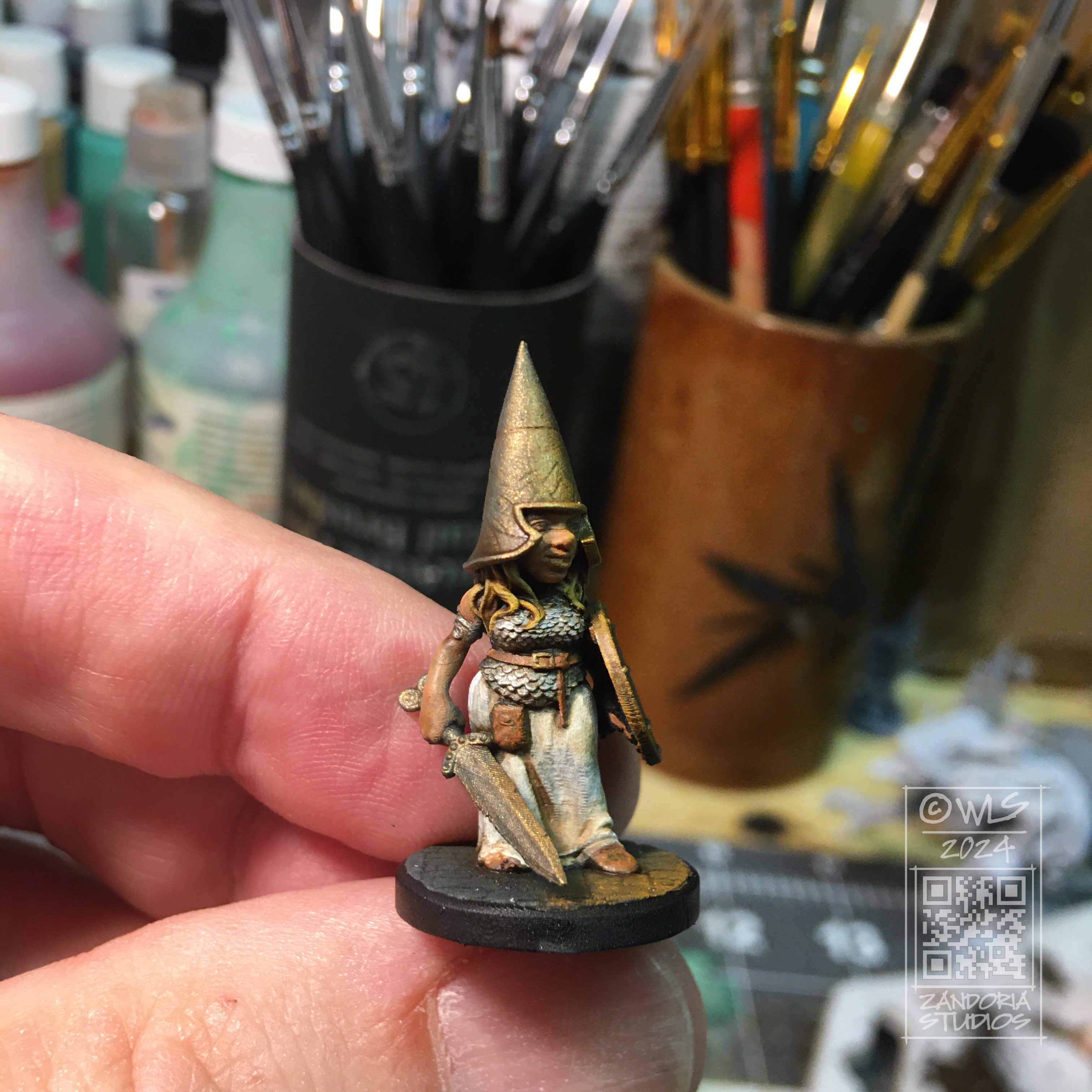
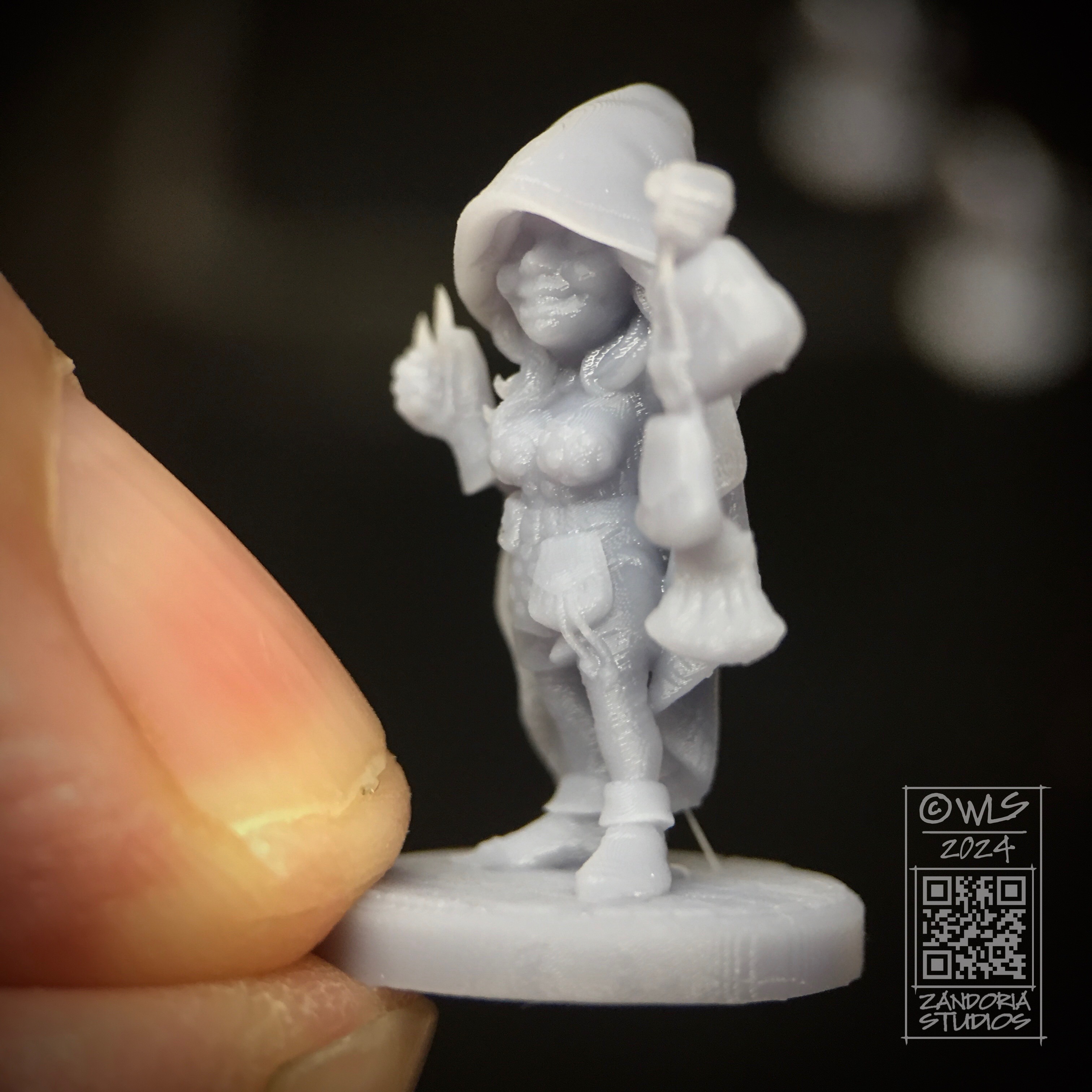
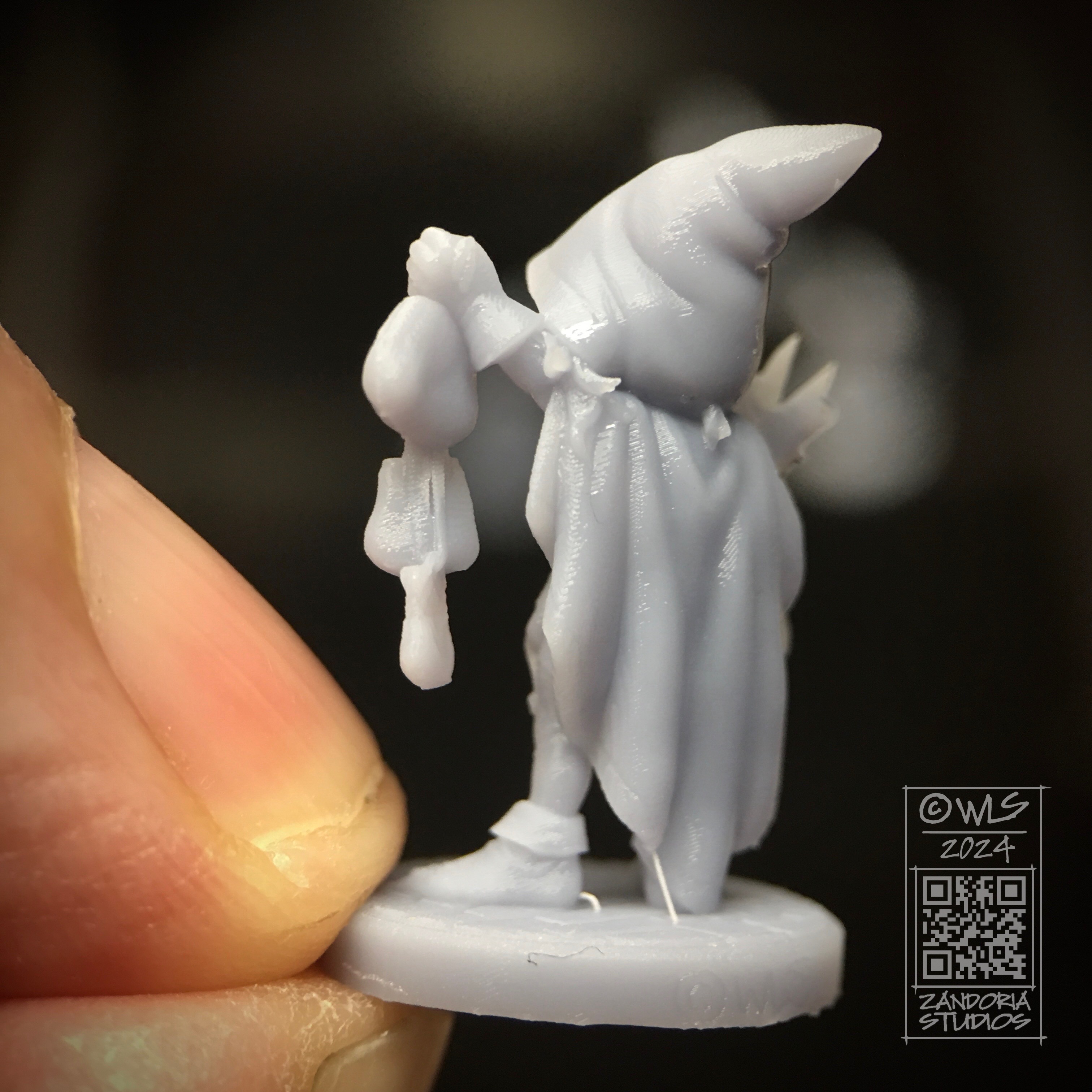
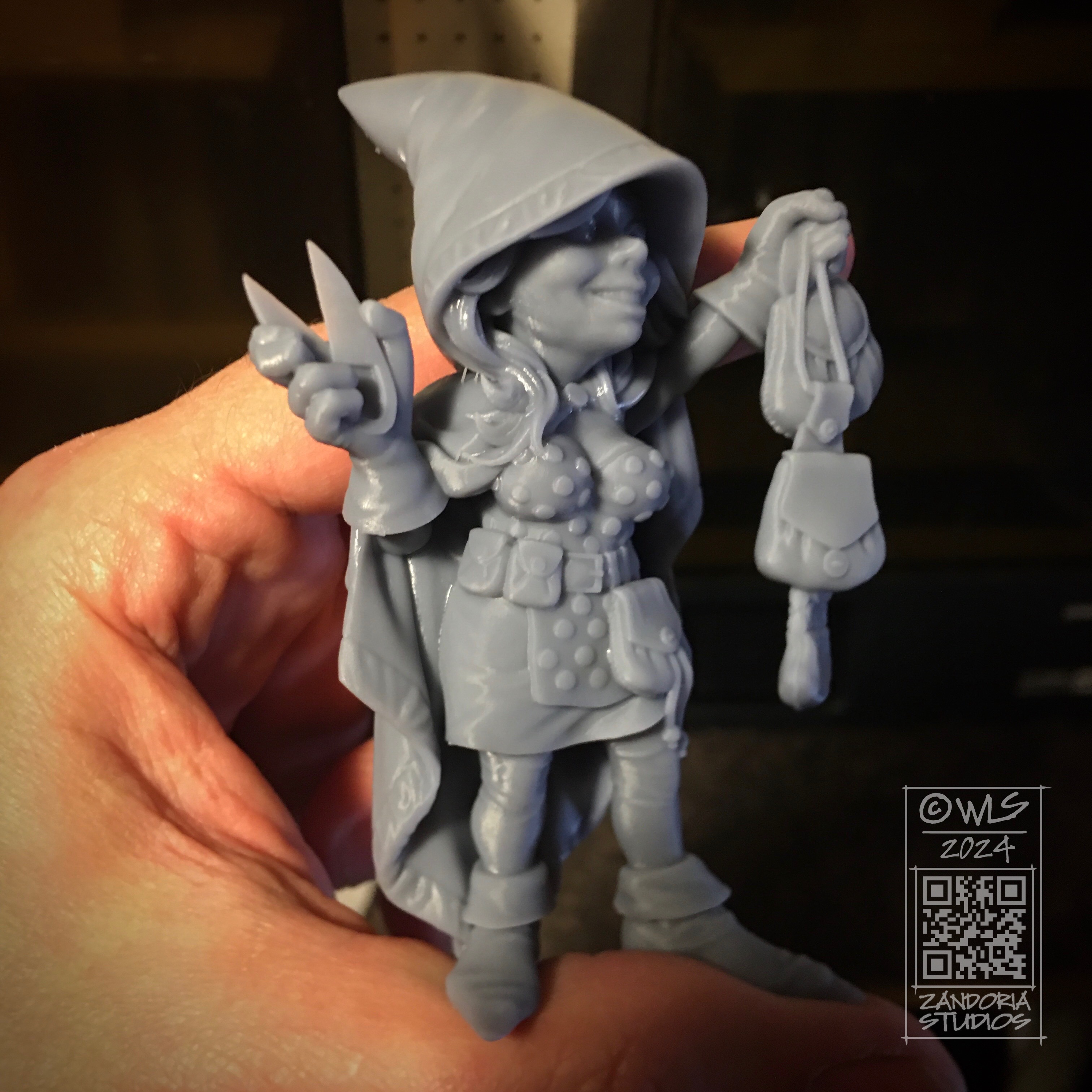
She is a little cutpurse female gnome that I sculpted for my Etsy shop. I offer her painted or unpainted, as a D&D sized miniature, or display sized–even Garden sized!
Are you a discerning gamer who demands the best? Do you want to take your tabletop experience to the next level? Look no further! My handcrafted gnomes are designed to bring a touch of magic to your game, with intricate details and textures that will amaze your players.
By choosing my gnomes, you’re not just buying a miniature – you’re making a statement. You’re showing that you have an eye for quality, a passion for the game, and a desire to create an unforgettable experience for your fellow players. My gnomes are not mass-produced or generic; each one is carefully crafted with love and attention to detail, ensuring that every aspect is a delight to behold.
Whether you’re a seasoned collector or a gamer looking to upgrade your game, my gnomes are the perfect choice. They’ll add a personal touch to your game, spark conversations, and inspire new adventures. So why settle for ordinary when you can have extraordinary? Choose my gnomes and elevate your game to new heights! #GnomeMiniatures #TabletopGaming #MiniatureCollectors #GamingWithStyle
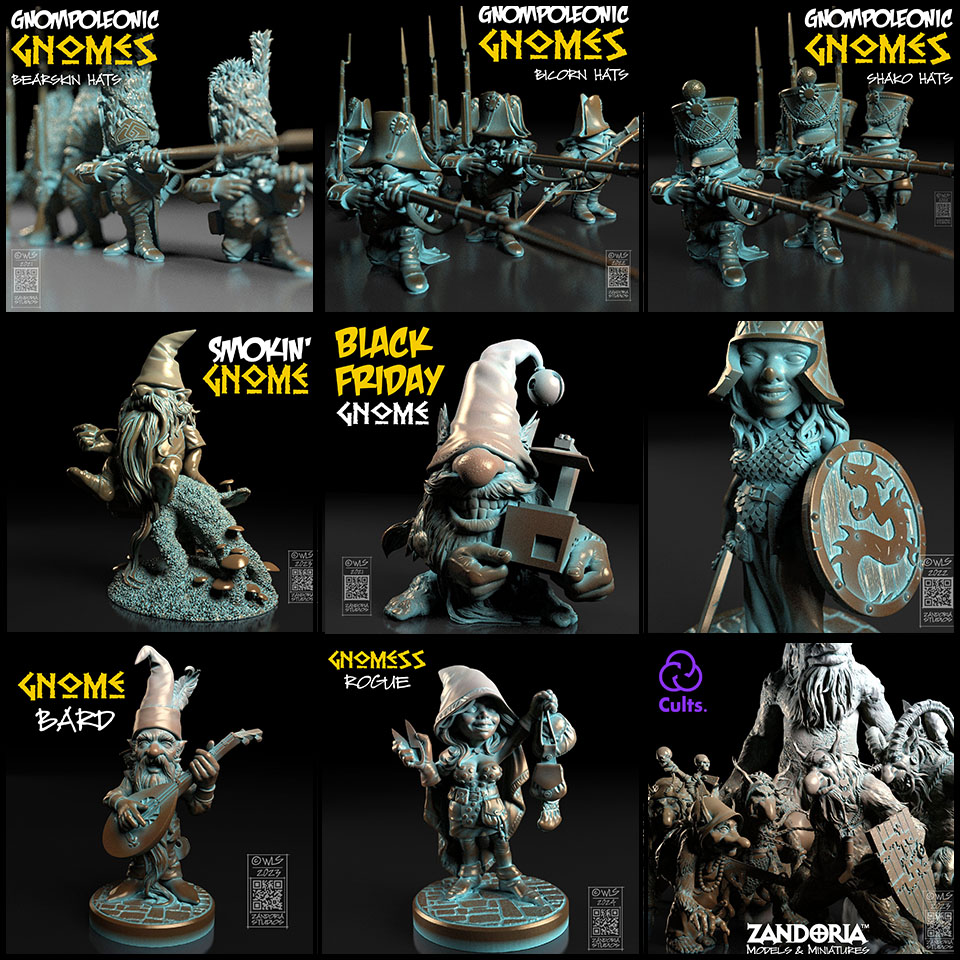
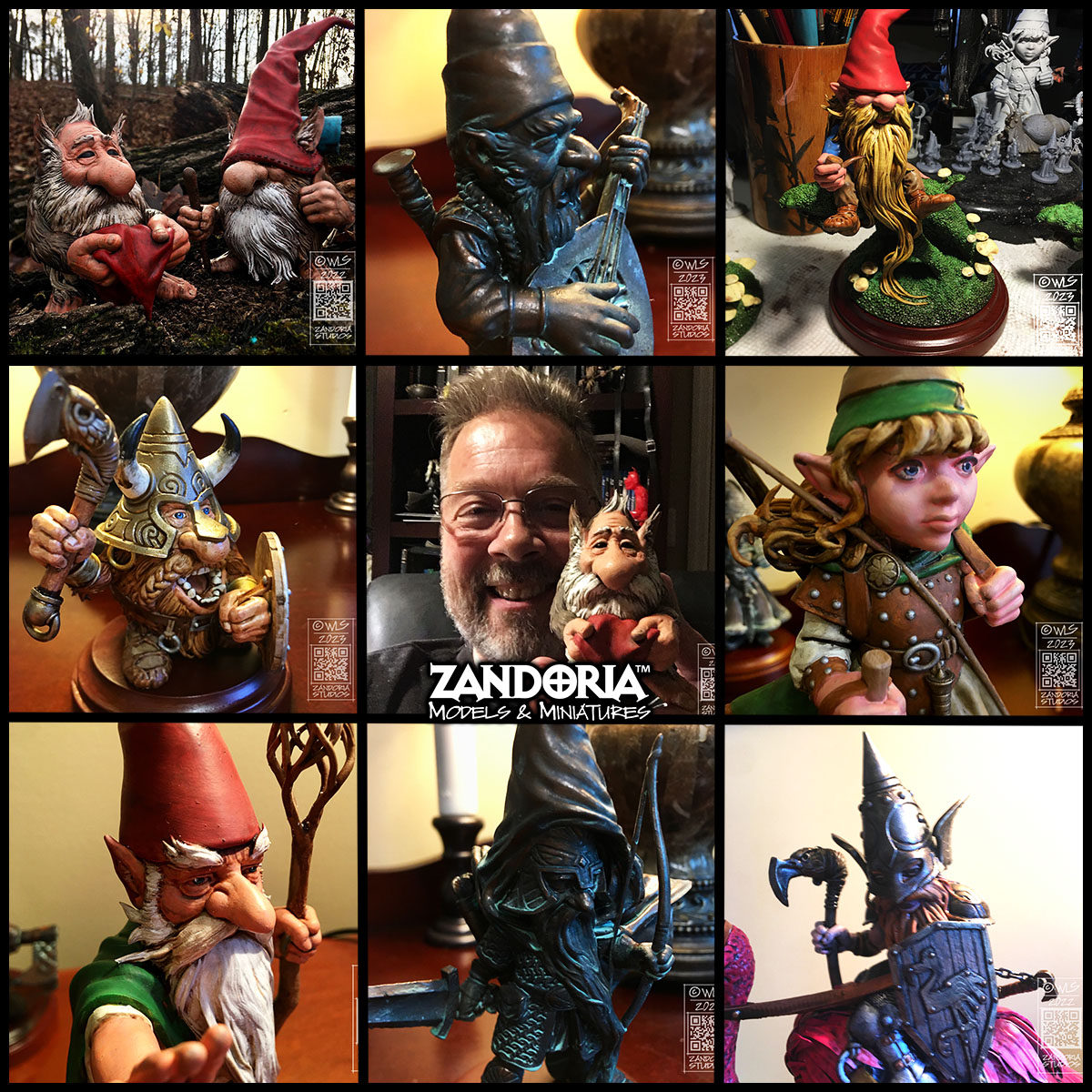
Now when you buy one of my Gnome miniatures on Etsy, you can choose between 3 size options, and whether you would like it unpainted, or hand-painted!
28mm (D&D)
10cm (4″), Display
20cm (8″), Garden
There are a lot of different designs available, and I’m always adding more. So whether you are looking for a mini for your Dungeons & Dragons character, or you want to make a badass fairy garden, there is a gnome for you!

























 Zandoria Studios