Page 11 of 14

Resolution Independence

20120616-171729.jpg

If you are familiar with Adobe Illustrator and Photoshop, you know that vector artwork is scalable to any size, from business card to billboard, and it will look good. A raster or pixel-based image will not look good if you try to print or display it larger than it was created for.

Similarly, most 3D models are created with a level of detail appropriate for the intended output; different models for animating, higher resolution for rendering, even higher (billions of polygons) for 3D printing…

Animation:Master’s splines are very similar to Illustrator’s curves. You can create a very detailed model without a lot of polygons (actually A:M doesn’t use polygons at all). The splines connect to form a network called “patches”. Because the model is light, there is usually no need to use a proxy model when animating.

Because the geometry is spline-based, you can view it at any scale and it still looks good. It is resolution independent, so you can render it at any size. Technology continues to evolve, and what is considered high-definition today may seem low-res in a few years. However, the models that you create in Animation:Master today will still be good no matter what future display requirements might be.

20120616-210319.jpg

Cloak Test

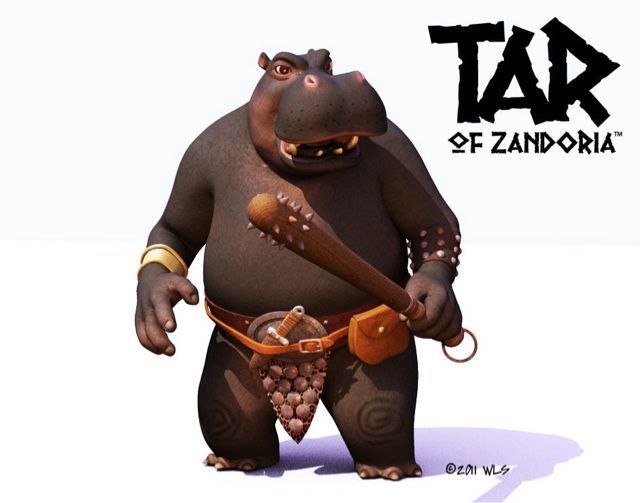
Tar walking out of the desert (finally). I’m happy that I’m finally getting some work done. I had to replace my laptop, which meant that I had to switch to Windows7–that has been a pain, because of having to update a lot of software to be compatible. I had to upgrade Animation:Master to version 16 64bit–which made me a little nervous to switch versions in the middle of a project. But everything seems to be working ok.

One of the things that I was trying here was compositing everything directly within the render. but I’m going to switch back to rendering everything as separate passes, just for the ease of fixing things or making changes without having to rerender the whole shot.

Texturing

Just finished-up the texturing…I used 3D painter and Photoshop to paint the maps, and used Simbiont A:M materials for the gear…

Rigging

I’ve been working on the rigging for the new version of the “Tar” model. I’m using the TSM rig for these characters –though it is no longer supported by Anzovin. That’s OK, A:M isn’t really a mainstream software….
the most tedious part of this process, no matter what control rig you choose, is the CP weighting and smartskinning. On this model, I am taking the time to stick with the recommended process and work with the “pre-rig” version and literally work-out the “kinks”.
I’ve just finished weighting and smartskinning the model ( I still need to add some little tweaks, eyes, ears, tail–but almost ready to run the “rigger” plugin).
My hope is to get an animation-ready model done, textured, and rendered for the Hash, Inc. ‘mascot’ contest layer this month.

Watusi Warrior

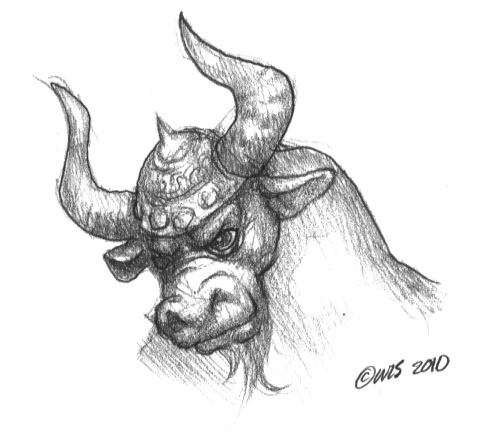
I was watching History Channel this weekend, and saw some piece about dairy cows….It gave me an idea for a group of Watusi warriors having a drink at the waterhole (bar). Typical fantasy “horned helmet” types–except that those are their real horns.

The same idea for antelope, gazelles, goats….

Adventures with Boomer

Kevin Detweiler’s long-awaited DVD project is finally available: Here

I built some of the character models and sets a couple of years ago, and I have been looking forward to seeing what they were to be used for 🙂